The Power of habit
sd
The Power of habit
Benefits of Reading Books
Boosts Knowledge
Every book you read fills your mind with new information and ideas, making you smarter and more informed.
Enhances Focus
Reading regularly improves your ability to concentrate and stay focused on tasks longer.
Improves Communication
Exposure to new words and writing styles helps you express yourself better, both verbally and in writing.
Reduces Stress
Getting lost in a good book relaxes your mind, lowers stress levels, and improves overall well-being.
Develops Critical Thinking
Books challenge you to think deeply, analyze viewpoints, and solve problems creatively.
Inspires Growth
Books offer practical advice and motivation to guide your career and personal development.
Related E-Books
.webp)



Free
सुपर-पावरफुल माइंड का राज धन का आधिपत्य प्राप्त करो
सुपर-पावरफुल माइंड का राज धन का आधिपत्य प्राप्त करो


Free
1.The Complete Holy Quraan PDF file in Arabic with Hindi Meaning
1.The Complete Holy Quraan PDF file in Arabic with Hindi Meaning







Free
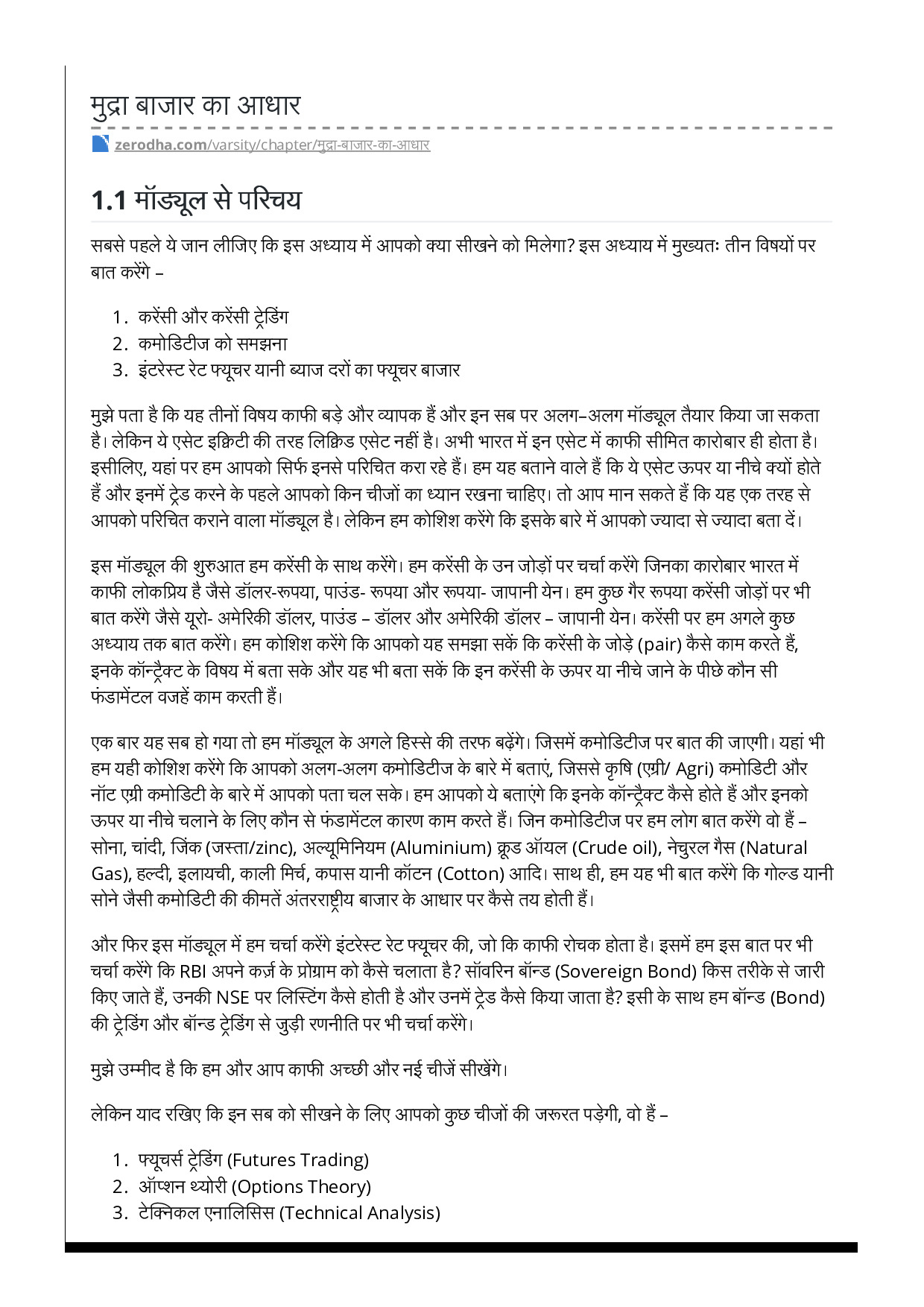
Currency, Commodity, and Government Securities
Currency, Commodity, and Government Securities



Free
Munshi Premchand - The Complete Short Stories
Munshi Premchand - The Complete Short Stories
Free
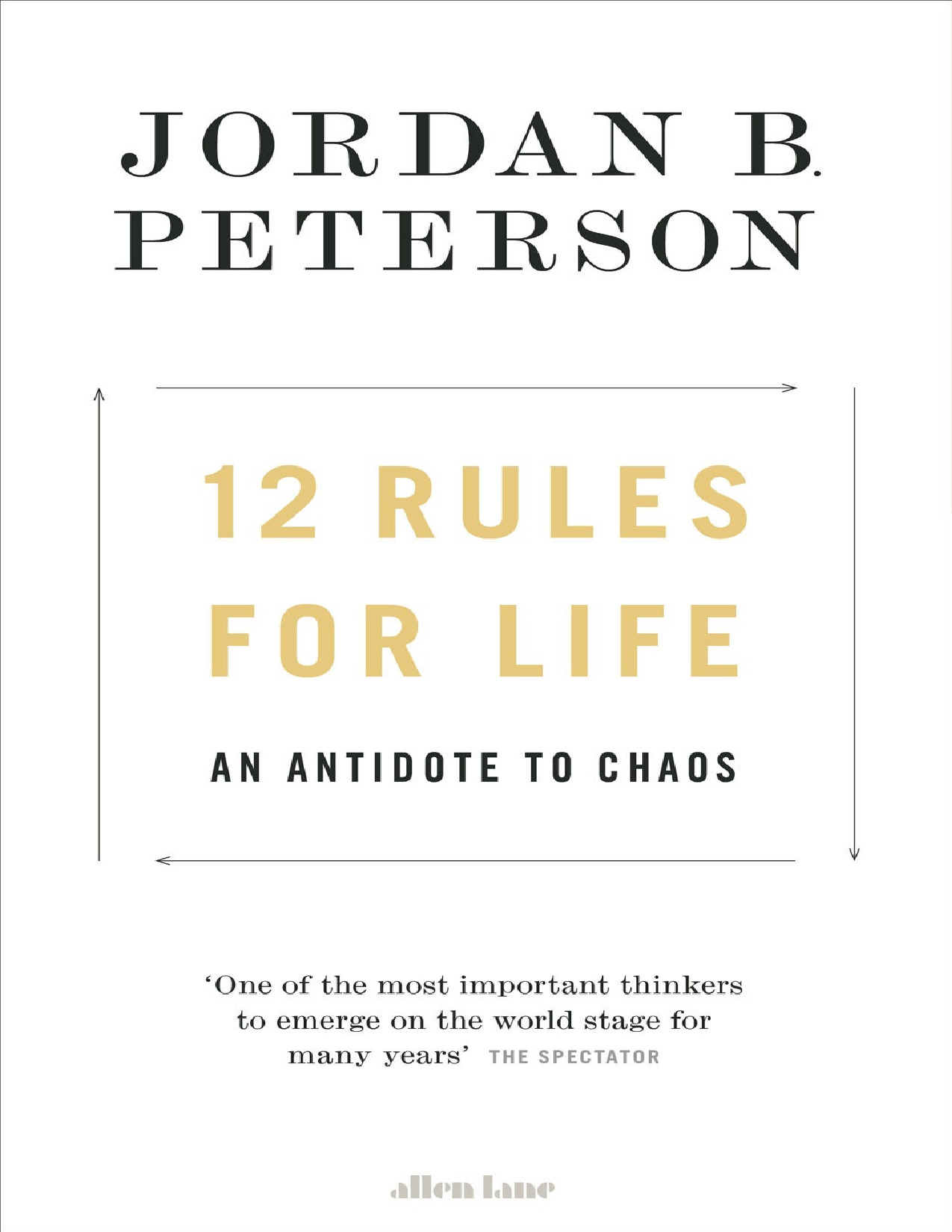
12 Rules for Life, An Antidote to Chaos
We are rule generators. And given that we are moral animals, what must be the effect of our simplistic modern relativism upon us? It means we are hobbling ourselves by pretending to be something we are not. It is a mask, but a strange one, for it mostly deceives the one who wears it. Scccccratccch the most clever postmodern-relativist professor’s Mercedes with a key, and you will see how fast the mask of relativism (with its pretense that there can be neither right nor wrong) and the cloak of radical tolerance come off. Because we do not yet have an ethics based on modern science, Jordan is not trying to develop his rules by wiping the slate clean—by dismissing thousands of years of wisdom as mere superstition and ignoring our greatest moral achievements. Far better to integrate the best of what we are now learning with the books human beings saw fit to preserve over millennia, and with the stories that have survived, against all odds, time’s tendency to obliterate. He is doing what reasonable guides have always done: he makes no claim that human wisdom begins with himself, but, rather, turns first to his own guides. And although the topics in this book are serious, Jordan often has great fun addressing them with a light touch, as the chapter headings convey. He makes no claim to be exhaustive, and sometimes the chapters consist of wide-ranging discussions of our psychology as he understands it. So why not call this a book of “guidelines,” a far more relaxed, user-friendly and less rigid sounding term than “rules”? Because these really are rules. And the foremost rule is that you must take responsibility for your own life. Period.
Free
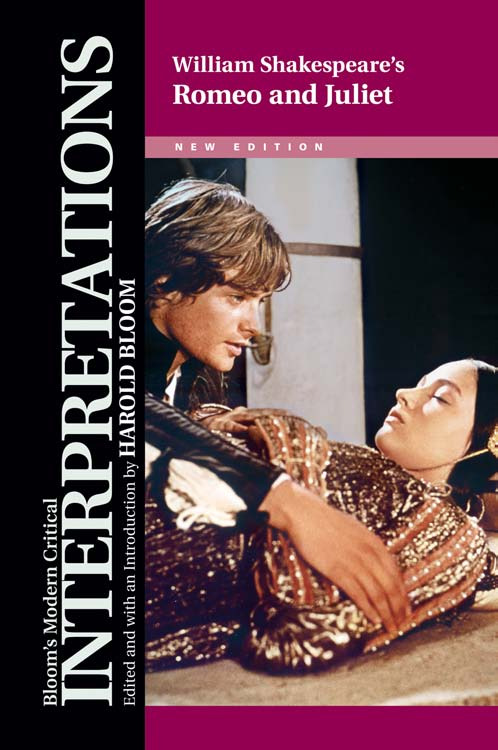
William Shakespeare_s Romeo and Juliet (Bloom_s Modern Critical Interpretations)
When asked to compile a dictionary of Shakespeare’s informal English within a series published by Athlone Press (now taken over by Continuum Books), I naturally reviewed what the attraction of compiling such a diction ary might be. Informal language is a neglected topic—at least from a historical standpoint—and it is not well covered in historical dictionaries like the Oxford English Dictionary [OED] if only because, to illustrate why a word or phrase may be understood as informal, a much longer context is necessary than most dictionaries provide. There are dictionaries and glossaries devoted to other aspects of Shakespeare’s language like legal and military language, sexual innuendo, and neologisms, but his informal language has not been covered though it forms so large a part of conversation. As Shakespeare is primarily a dramatist and he is one of the first dramatists to use informal language for conversation, his informal English should be a major topic of investigation. Indeed, his informal language is often ignored by editors and commentators, who often interpret what could be informal as formal and/or grammatical. I have had an interest in informal language for some time (Blake 1981), and through compiling this dictionary I hope to learn more about Shakespeare, conversational language in the Elizabethan and Jaco bean periods, and to what extent we may need to change our views about Shakespeare through studying this aspect of his linguistic usage. However,

Free
Ajay_K_Pandey_Her_Last_Wish_Srishti_Publishers_&_Distributors_2016
“Always try to represent yourself as ‘happy’, because, initially it becomes your ‘look’, gradually it becomes your ‘habit’, and one day, it becomes your ‘personality’.” — Astha Sharma
Free
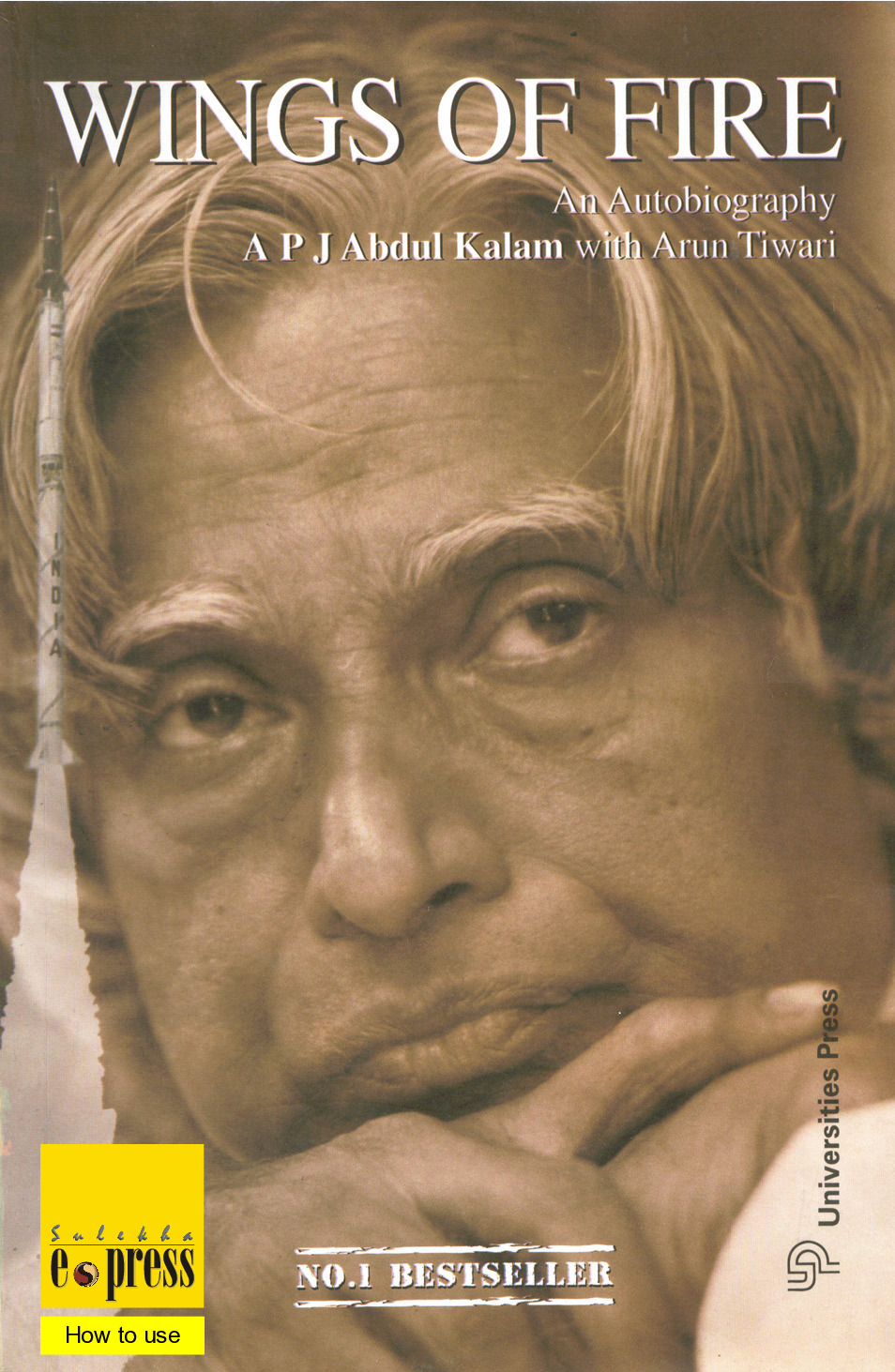
APJ Abdul Kalam with Arun Tiwari Wings of Fire An Autobiography
APJ Abdul Kalam with Arun Tiwari Wings of Fire An Autobiography
Free
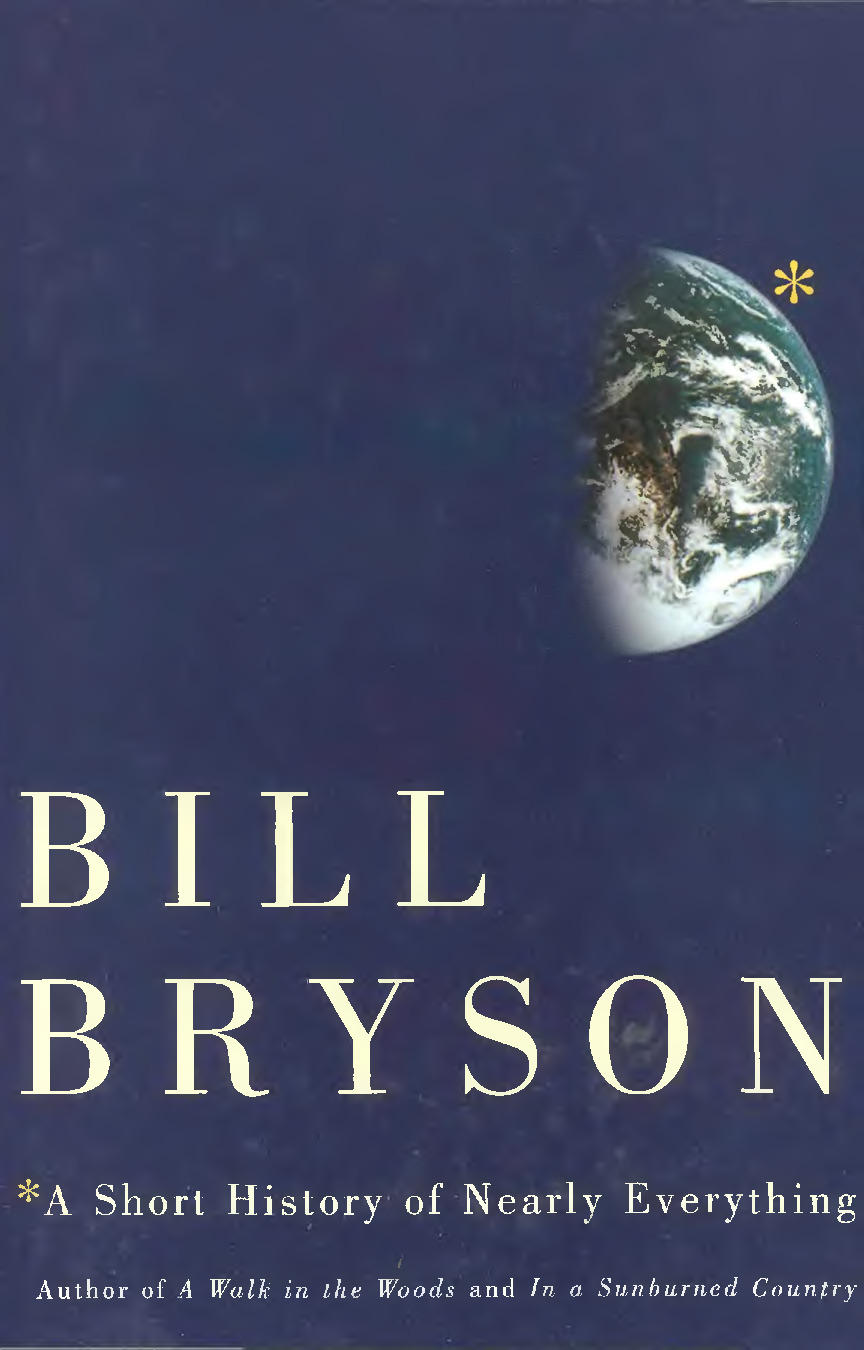
A Short History of Nearly Everything | Bill_Bryson_A_Short_History_of_Nearly_Everything_Broadway_Books
A short history of nearly everything. Copyright © 2003 by Bill Biyson. All rights re served. No part of this book may be reproduced or transmitted in any form or by any means, electronic or mechanical, including photocopying, recording, or by any means, electronic or mechanical including photocopying, recording, or by any information stor age and retrieval system, without written permission from the publisher. For informa tion, address Broadway Books, a division of Random House, Inc. PRINTED IN THE UNITED STATES OF AMERICA BROADWAY BOOKS and its logo, a letter B bisected on the diagonal, are trademarks of Random House, Inc. Visit our website at www.broadwaybooks.com First edition published 2003 Book design by Elizabeth Rendfleisch Illu strated by M ary Evans Picture Library The cataloging-in-publication data is on file with the Library of Congress
Free
Brené_Brown_Dare_to_Lead_Brave_Work_Tough_Conversations_Whole_Hearts
People often ask me if I still get nervous when I speak in public. The answer is yes. I’m always nervous. Experience keeps me from being scared, but I’m still nervous. First, people are offering me their most precious gift—their time. Time is, hands down, our most coveted, most unrenewable resource. If being on the receiving end of one of life’s most valuable gifts fails to leave you with a lump in your throat or butterflies in your stomach, then you’re not paying attention. Second, speaking is vulnerable. I don’t memorize my lines or have a set shtick that I do verbatim. Effective speaking is about the unpredictable and uncontrollable art of connection. Even though it’s just me onstage and possibly ten thousand people sitting in folding chairs in a convention center, I try to look into as many pairs of eyes as I can. So, yes. I’m always nervous
Free
Corey_Wayne_Mastering_Yourself | _How_To_Align_Your_Life_With_Your
There are important questions everyone has to answer, and they have to answer them continuously, over the course of their lives, to themselves. The most important of these questions are: What is my purpose, who am I, and what kind of life and lifestyle do I want to create for myself? Most people never ask these kinds of questions with any real focus, heart, or intent because they are so fixated on getting through the week and just trying to earn a living.
Free
DayTrading andSwing Tradingthe Currency Market
Since the first edition of Day Trading the Currency Market, which waspublished in 2005, the foreign exchange market has changed dra matically. The most notable change is the fact that daily average vol ume now exceeds $3 trillion, a 70 percent jump over the past three years. As a direct result of this surge in interest, more participants have flooded the markets with different ways to trade currencies. The popularity of the Day Trading the Currency Market book has en couraged me to give the second edition a twist—this time I have added swing trading strategies! After having taught seminars across the country on how to trade cur rencies, I have received a lot of good feedbackaboutthebook(thankyou!), and I hope that everyone will enjoy the new techniques in the second edi tion just as much asyouhaveenjoyedthestrategies and lessons in the first!

Free
Edward Snowden Permanent Record Metropolitan Books 2019
My name is Edward Joseph Snowden. I used to work for the government, but now I work for the public. It took me nearly three decades to recognize that there was a distinction, and when I did, it got me into a bit of trouble at the office. As a result, I now spend my time trying to protect the public from the person I used to be—a spy for the Central Intelligence Agency (CIA) and National Security Agency (NSA), just another young technologist out to build what I was sure would be a better world. My career in the American Intelligence Community (IC) only lasted a short seven years, which I’m surprised to realize is just one year longer than the time I’ve spent since in exile in a country that wasn’t my choice. During that seven year stint, however, I participated in the most significant change in the history of American espionage—the change from the targeted surveillance of individuals to the mass surveillance of entire populations. I helped make it technologically feasible for a single government to collect all the world’s digital communications, store them for ages, and search through them at will
Free
EMOTIONAL INTELLIGENCE
Tenth Anniversary Edition of Emotional Intelligence In 1990, in my role as a science reporter at The New York Times, I chanced upon an article in a small academic journal by two psychologists, John Mayer, now at the University of New Hampshire, and Yale’s Peter Salovey. Mayer and Salovey offered the first formulation of a concept they called “emotional intelligence.” Those were days when the preeminence of IQ as the standard of excellence in life was unquestioned; a debate raged over whether it was set in our genes or due to experience. But here, suddenly, was a new way of thinking about the ingredients of life success. I was electrified by the notion, which I made the title of this book in 1995. Like Mayer and Salovey, I used the phrase to synthesize a broad range of scientific findings, drawing together what had been separate strands of research—reviewing not only their theory but a wide variety of other exciting scientific developments, such as the first fruits of the nascent field of affective neuroscience, which explores how emotions are regulated in the brain. I remember having the thought, just before this book was published ten years ago, that if one day I overheard a conversation in which two strangers used the phrase emotional intelligence and both understood what it meant, I would have succeeded in spreading the concept more widely into the culture. Little did I know. The phrase emotional intelligence, or its casual shorthand EQ, has become ubiquitous, showing up in settings as unlikely as the cartoon strips Dilbert and Zippy the Pinhead and in Roz Chast’s sequential art in The New Yorker. I’ve seen boxes of toys that claim to boost a child’s EQ; lovelorn personal ads sometimes trumpet it in those seeking prospective mates. I once found a quip about EQ printed on a shampoo bottle in my hotel room.
Free
Gottman John The Seven Principles for Making Marriage Work A Practical
First and foremost, I need to acknowledge the brave gift that several thousand volunteer research couples have contributed to my understanding. Their willingness to reveal the most private aspects of their personal lives has opened a hitherto closed door that has made it possible to construct these Seven Principles for making marriages work. This book was based on research that received continuous support from the National Institute of Mental Health, the Behavioral Science Research Branch. Of great assistance was the dedicated guidance of Molly Olive ri, Delia Hahn, and Joy Schulterbrandt. This book was also made possible by a number of important collaborations that have been a joyful part of my life. These include the main collaboration that has graced my life for the past nineteen years with Professor Robert Levenson of the University of California. Also important to me has been my collaboration with NeilJacob son of the University of Washington and my work with Dr. Laura Carstensen of Stanford University I have been blessed with rich associations inside my laboratory. The cornerstones have been Sharon Fentiman, whose elegance greatly improves my life and keeps me from chaos; Dr. Sybil Cart ere, who runs my lab and is a terrific colleague; and Cathryn Swan son, my programmer and data analyst. Not only are they friends and intellectual companions, but they help make coming to work a pleasant experience. I also wish to acknowledge the contributions and stimulation of Lynn Katz.

Free
Haddish, Tiffany The Last Black Unicorn Gallery Books Cela, Cnib
Hello, my name is Tiffany Haddish. I would like to invite you to read about a few of my experiences in life so far. I know that a lot of these stories will seem unbelievable. Shit, I look back over my life and I’m like, “For real, that happened?” Either you will cry or laugh, and I try my best to figure out how to do the second one. I know life is no laughing matter, but having experiences can be. ey can be the best learning lessons—just fuck ups but still lessons. at’s how I think of my life, all my wins are lessons and all my failures are lessons that will one day become wins. I decided to write this book in the hope that someone will read it and feel like, “If she can do it, I know I can!” I am inviting you to read it, because I never want you to say I didn’t invite you to nothing. So come on in! Mascots and Bar Mitzvahs: High School Years School was hard for me, for lots of reasons. One was I couldn’t read until, like, ninth grade. Also I was a foster kid for most of high school, and when my mom went nuts, I had to live with my grandma. at all sucked. I got popular in high school, but before that, I wasn’t so popular. Kids would tease me all the time in elementary and middle school. ey’d say I got flies on me and I smell like onions. e flies thing came from the moles on my face. I got one under my eye, I had one on my chin, and so on. at was kind of mean. e onions thing was because my mom used to make eggs in the morning with onions in them. Every damn morning, I had to eat eggs and onions. at would just make you stink. e whole house would stink. Yeah, it was mean to say I stunk like onions, but . . . I did stink like onions. Kids used to make fun of me all the time about shit related to my mom. She didn’t know how to do my hair. From kindergarten on up, I had the craziest hair. I had long, pretty hair, but she didn’t know how to do the ballies, or put it in a cute little ribbon. She only knew how to do the afro puffs, or just one big ponytail, but she didn’t comb it all the way through, so I’d look like a cone head. You know—black women, we got complicated hair. If you do it right, it’s beautiful. But if you don’t, it looks like some crow’s nest. In the black neighborhoods, little girls’ hair is always cute. ey’ve got the barrettes and all that. It’s a big thing to have good hair as a black woman

Free
GENERAL KNOWLEDGE FROM THE QUR'AN
The author, who writes under the pen-name HARUN YAHYA, was born in Ankara in 1956. Having completed his primary and secondary education in Ankara, he then studied arts at Istanbul's Mimar Sinan University and philosophy at Istanbul University. Since the 1980s, the author has published many books on political, faith-related and scientific issues. Harun Yahya is well-known as an author who has written very important works disclosing the imposture of evolutionists, the invalidity of their claims and the dark liaisons between Darwinism and bloody ideologies such as fascism and communism. His pen-name is made up of the names 'Harun' (Aaron) and 'Yahya' (John), in memory of the two esteemed prophets who fought against lack of faith. The Prophet (saas)'s seal on the cover of the books is symbolic and is linked to the their contents. It represents the Qur'an (the final scripture) and the Prophet Muhammad (saas), the last of the prophets. Under the guidance of the Qur'an and sunnah, the author makes it his purpose to disprove each one of the fundamental tenets of godless ideologies and to have the 'last word', so as to completely silence the objections raised against religion. The seal of the final Prophet, who attained ulti mate wisdom and moral perfection, is used as a sign of his intention of saying this last word. All author' s works center around one goal: to convey the Qur' an' s message to peo ple, encourage them to think about basic faith-related issues (such as the existence of Allah, His unity and the hereafter), and to expose the feeble foundations and perverted ideologies of godless systems. Harun Yahya enjoys a wide readership in many countries, from India to America, England to Indonesia, Poland to Bosnia, and Spain to Brazil. Some of his books are available in English, French, German, Spanish, Italian, Portuguese, Urdu, Arabic, Albanian, Russian, Serbo-Croat (Bosnian), Polish, Malay, Uygur Turkish, and Indonesian, and they are enjoyed by readers worldwide. Greatly appreciated all around the world, these works have been instrumental in many people recovering their faith in Allah and in many others gaining a deeper insight into their faith. The wisdom, and the sincere and easy-to-understand style gives these books a distinct touch which directly effects any one who reads or studies them. Immune to objec tions, these works are characterized by their features of rapid effectiveness, definite results and irrefutability. It is unlikely that those who read these books and give serious thought to them can any longer sincerely advocate the materialistic philosophy, atheism or any other perverted ideology or philosophy. Even if they continue to do so, it will be only a sentimen tal insistence since these books refuted such ideologies from their very foundations. All con temporary movements of denial are now ideologically defeated, thanks to the collection of books written by Harun Yahya.

Free
John Medina Brain Rules 12 Principles for Surviving and Thriving
go ahead and multiply the number 8,388,628 x 2 in your head. Can you do it in a few seconds? There is a young man who can double that number 24 times in the space of a few seconds. He gets it right every time. There is a boy who can tell you the precise time of day at any moment, even in his sleep. There is a girl who can correctly determine the exact dimensions of an object 20 feet away. There is a child who at age 6 drew such lifelike and powerful pictures, she got her own show at a gallery on Madison Avenue. Yet none of these children could be taught to tie their shoes. Indeed, none of them have an IQ greater than 50. The brain is an amazing thing. Your brain may not be nearly so odd, but it is no less extraordinary. Easily the most sophisticated information-transfer system on Earth, your brain is fully capable of taking the little black squiggles on this piece of bleached wood and deriving meaning from them. To accomplish this miracle, your brain sends jolts of electricity crackling through hundreds of miles of wires composed of brain cells

Free
Max Tegmark Life 3 0 Being Human in the Age of Artificial Intelligence
I’m truly grateful to everyone who has encouraged and helped me write this book, including my family, friends, teachers, colleagues and collaborators for support and inspiration over the years, Mom for kindling my curiosity about consciousness and meaning, Dad for the fighting spirit to make the world a better place, my sons, Philip and Alexander, for demonstrating the wonders of human-level intelligence emerging, all the science and technology enthusiasts around the world who’ve contacted me over the years with questions, comments and encouragement to pursue and publish my ideas, my agent, John Brockman, for twisting my arm until I agreed to write this book, Bob Penna, Jesse Thaler and Jeremy England for helpful discussions about quasars, sphalerons and thermodynamics, respectively, those who gave me feedback on parts of the manuscript, including Mom, my brother Per, Luisa Bahet, Rob Bensinger, Katerina Bergström, Erik Brynjolfsson, Daniela Chita, David Chalmers, Nima Deghani, Henry Lin, Elin Malmsköld, Toby Ord, Jeremy Owen, Lucas Perry, Anthony Romero, Nate Soares and Jaan Tallinn, the superheroes who commented on drafts of the entire book, namely Meia, Dad, Anthony Aguirre, Paul Almond, Matthew Graves, Phillip Helbig, Richard Mallah, David Marble, Howard Messing, Luiño Seoane, Marin Soljačić, my editor Dan Frank and, most of all, Meia, my beloved muse and fellow traveler, for her eternal encouragement, support and inspiration, without which this book wouldn’t exist
Free
₹ 10
Nate Silver The Signal and the Noise Why So Many Predictions Fail
T his is a book about information, technology, and scientific progress. This is a book about competition, free markets, and the evolution of ideas. This is a book about the things that make us smarter than any computer, and a book about human error. This is a book about how we learn, one step at a time, to come to knowledge of the objective world, and why we sometimes take a step back. This is a book about prediction, which sits at the intersection of all these things. It is a study of why some predictions succeed and why some fail. My hope is that we might gain a little more insight into planning our futures and become a little less likely to repeat our mistakes
Free
Richard Dawkins Outgrowing God A Beginner's Guide Bantam Press 2025
Richard Dawkins is one of our greatest explainers, thinkers and writers and has been acknowledged as such since publication of his world-altering fi rst book, The Selfish Gene (1976), which was voted the Royal Society’s ‘Most Inspiring Science Book of All Time’. He is also the author of the bestsellers The Blind Watchmaker, Climbing Mount Improbable, The Ancestor’s Tale, The God Delusion and The Magic of Reality, two anthologies, A Devil’s Chaplain and Science in the Soul, and two volumes of autobiography, An Appetite for Wonder and Brief Candle in the Dark. He is a Fellow of New College, Oxford, and of both the Royal Society and the Royal Society of Literature. In 2013 Dawkins was voted the world’s top thinker in Prospect magazine’s poll of 10,000 readers from over 100 countries
Free
A Day in the Life one family, the beautiful people, and the end of the sixties
The boys have had a fantastic day. Beneath a canopy of endless blue sky filled with so much sunshine that the world itself seems to have been spun from liquid gold, they have been out and about and having fun on the French Riviera, the playground of choice for those with enough time and money to afford only the best that life can offer. Now they have returned to the great house where for the past month, they have been staying with their father as hon ored guests. Although the boys are brothers and both beautiful in their own way, they do not look at all like one another. The older one, eight years old, has a small, fine-boned face framed by long, straight, blond hair that any girl his age would envy. Having grown up among adults, he is finely attuned to their changing moods. By far the more independent and self- reliant of the two, his six-year-old brother sports a wild unruly mane of thick brown hair that makes him look like a young knight of the realm in training. As they both rush toward the front door of the house, eager to tell their father about all they have done and seen today, the air is rich and thick with the scent of flowers in full, riotous bloom.
Free
₹ 20
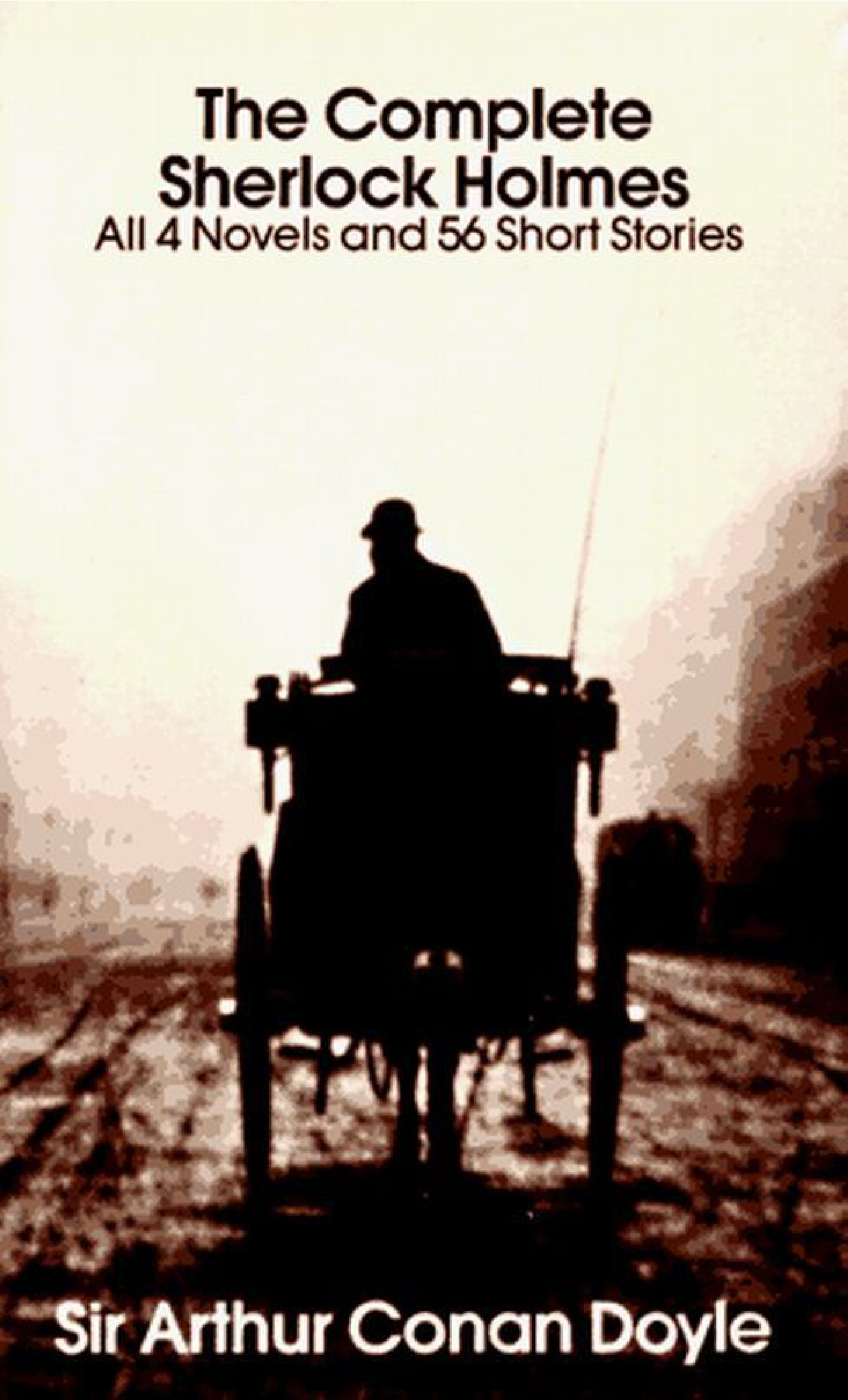
Sir Arthur Conan Doyle - Complete Sherlock Holmes (1960)
IN THE YEAR 1878 I took my degree of Doctor of Medicine of the University of London, and proceeded to Netley to go through the course prescribed for surgeons in the Army. Having completed my studies there, I was duly attached to the Fifth Northumberland Fusiliers as assistant surgeon. The regiment was stationed in India at the time, and before I could join it, the second Afghan war had broken out. On landing at Bombay, I learned that my corps had advanced through the passes, and was already deep in the enemy’s country. I followed, however, with many other officers who were in the same situation as myself, and succeeded in reaching Candahar in safety, where I found my regiment, and at once entered upon my new duties. The campaign brought honours and promotion to many, but for me it had nothing but misfortune and disaster. I was removed from my brigade and attached to the Berkshires, with whom I served at the fatal battle of Maiwand. There I was struck on the shoulder by a Jezail bullet, which shattered the bone and grazed the subclavian artery. I should have fallen into the hands of the murderous Ghazis had it not been for the devotion and courage shown by Murray, my orderly, who threw me across a pack horse, and succeeded in bringing me safely to the British lines
Free
₹ 4
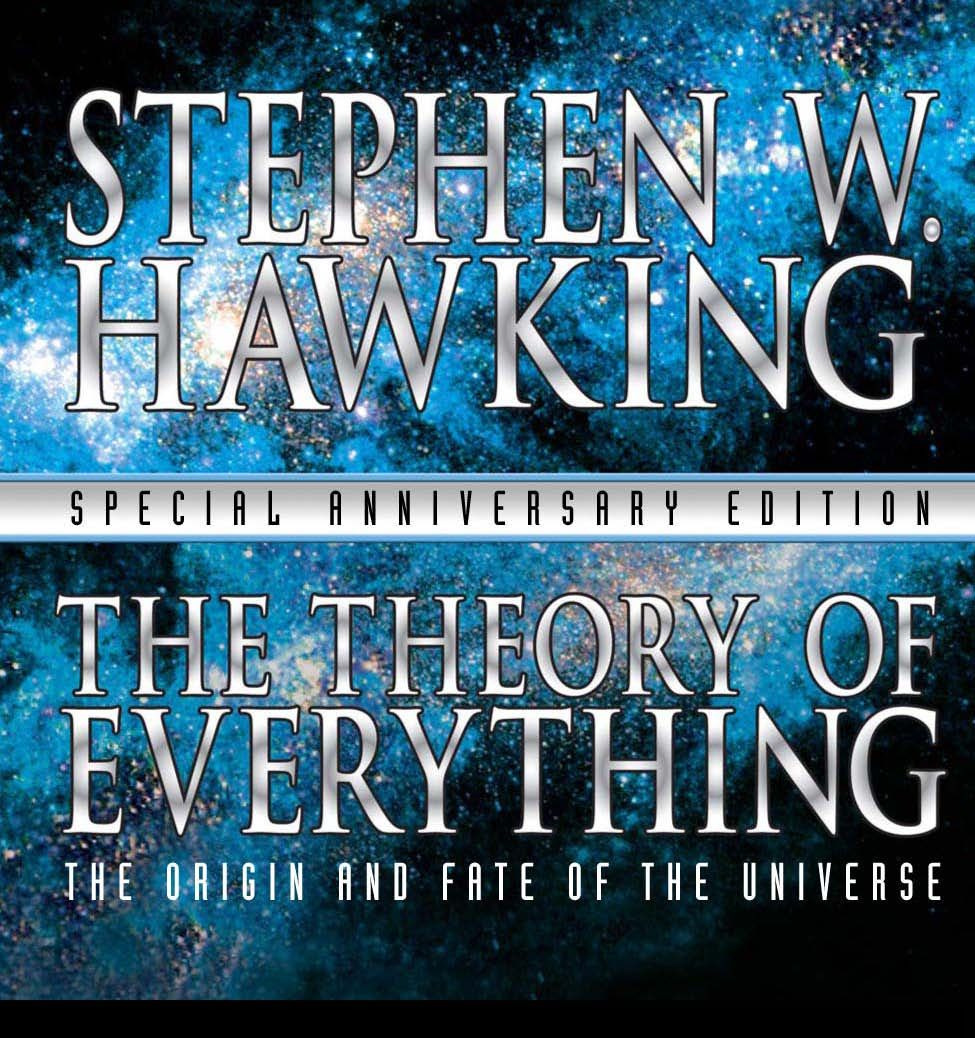
Stephen W. Hawking The Theory of Everything 2006, Phoenix Books libgen
As long ago as 340 B.C. Aristotle, in his book On the Heavens, was able to put forward two good arguments for believing that the Earth was a round ball rather than a flat plate. First, he realized that eclipses of the moon were caused by the Earth coming between the sun and the moon. The Earth’s shad ow on the moon was always round, which would be true only if the Earth was spherical. If the Earth had been a flat disk, the shadow would have been elon gated and elliptical, unless the eclipse always occurred at a time when the sun was directly above the center of the disk. Second, the Greeks knew from their travels that the Pole Star appeared lower in the sky when viewed in the south than it did in more northerly regions. From the difference in the apparent position of the Pole Star in Egypt and Greece, Aristotle even quoted an estimate that the distance around the Earth was four hundred thousand stadia. It is not known exactly what length a sta dium was, but it may have been about two hundred yards. This would make Aristotle’s estimate about twice the currently accepted figure
Free
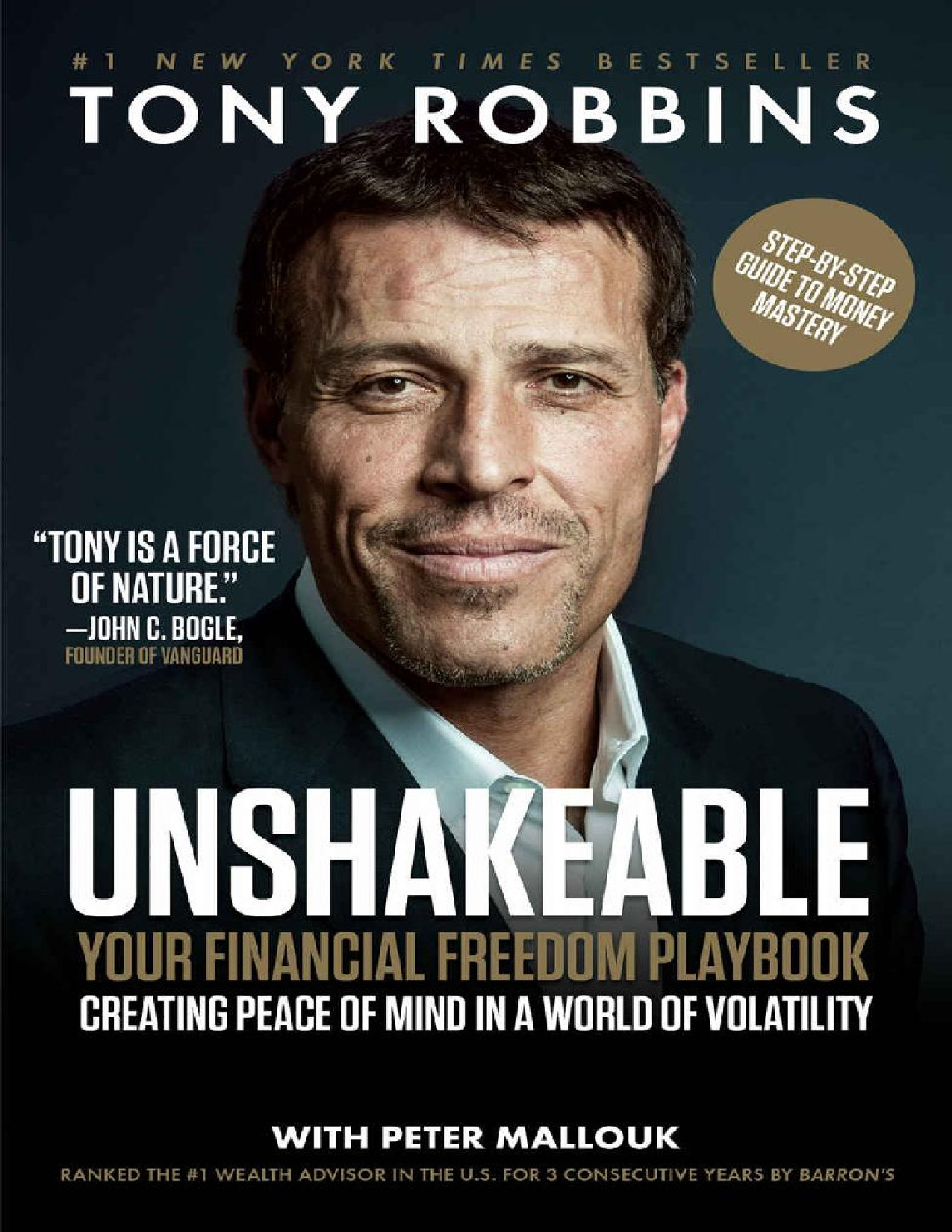
Tony Robbins Unshakeable Your Financial Freedom Playbook Simon
WHAT THE WORLD’S GREATEST FINANCIAL LEADERS ARE SAYING ABOUT TONY ROBBINS . . . “It’s rare that an outsider steals the spotlight and becomes a respected voice of impact in the financial industry. Robbins does it again with a new book to prepare us and help us profit from the inevitable crashes and corrections to come.” —Anthony Scaramucci, founder, SkyBridge Capital; cohost of Wall Street Week “Remarkably, Robbins has produced a book that will appeal to both the beginner and the most sophisticated money jockey overseeing multibillions of dollars in assets. If there were a Pulitzer Prize for investment books, this one would win, hands down.” —Steve Forbes, publisher of Forbes magazine and CEO of Forbes Inc. “Robbins is the best economic moderator that I’ve ever worked with. His mission to bring insights from the world’s greatest financial minds to the average investor is truly inspiring.” —Alan Greenspan, former Federal Reserve chairman under four sitting presidents “Tony came to my office for a 45-minute interview that ended u


Free
₹ 2
THE RISE AND FALL OF THE THIRD REICH
THE RISE AND FALL OF THE THIRD REICH∗ William L. Shirer ranks as one of the greatest of all American correspon dents. He lived and worked in Paris, Berlin, Vienna and Rome. But it was above all as correspondent in Germany for the Chicago Tribune and later the Columbia Broadcasting System that his reputation was established. He subse quently wrote The Rise and Fall of the Third Reich, which is hailed as a classic, and after the war he was awarded the Legion d’Honneur. In the post-war years he wrote in a variety of fields, and in his seventies he learned Russian, publishing a biography of Tolstoy at the age of 89. He died in 1994. His Berlin broadcasts were published posthumously by Hutchinson in 1999
Free
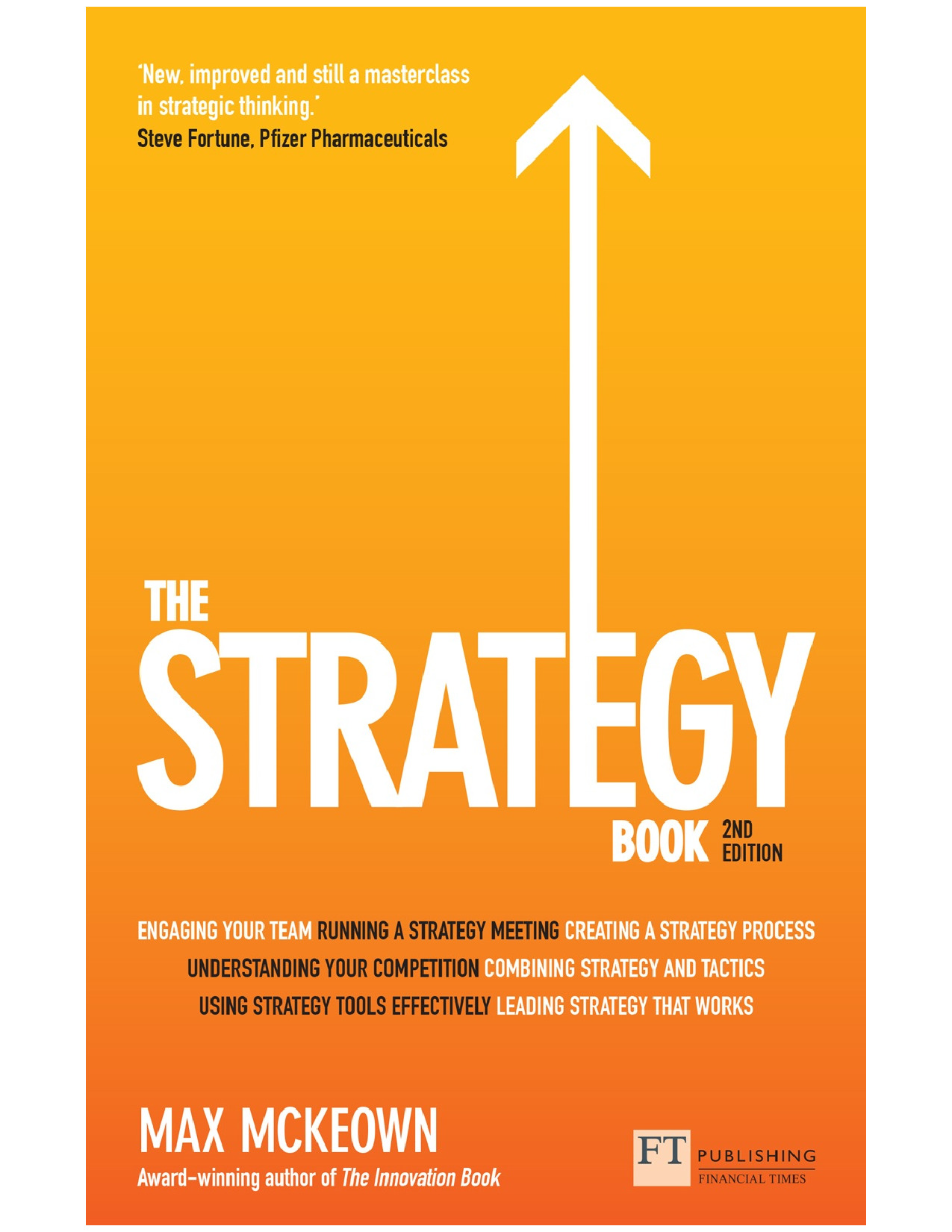
Max Mckeown The Strategy Book
Dr Max Mckeown works as a strategy and innovation coach for many of the most admired and ambitious companies in the world. The Strategy Book was the winner of the Commuter Read at the Chartered Management Institute Book of the Year 2013 and Amazon’s Best Business Books of 2012. Max is also author of the award-winning The Innovation Book as well as Adaptability: The Art of Winning in an Age of Uncertainty, and four other books. He is also a popular keynote speaker at conferences and events worldwide. Max has an MBA and PhD from Warwick Business School. He can be reached at www.maxmckeown.com and on twitter@maxmckeown First words ‘However beautiful the strategy, you should occasionally look at the results.’ Winston Churchill Strategy is about moving from where you are to where you want to be. Smart strategy is the shortest route to desirable ends with available means. Strategy is as much about deciding what to do, where to go, why, when and how as about choosing what not to do. Yes. No. What if. Why not. Planning backwards from a better future. This book is about strategy in action. It’s about making strategic principles and cutting-edge research useful. The second edition includes even more real world examples of strategy in action. You will also find more on new ideas in strategy. Sustainability. Tensions. Psychology. Behavioural strategy. And how to combine creativity and entrepreneurship. Our human world is the result of individual strategies. Our desires and actions, dreams and ideas. Strategists are able to see the past, present and future as connected. You can link your actions with the actions of those around you. And you will be able to shape events by reacting intelligently and spontaneously to them. ‘All men can see these tactics whereby I conquer, but what none can see is the strategy out of which victory is evolved.’
Free
Beyond Positive Thinking - Dr. Robert Anthony
1 - Beyond Positive Thinking - Dr. Robert Anthony ( PDFDrive ).pdf
Free
50 Success Classics_ Winning Wisdom for Work and Life From 50 Landmark Books
Introduction Wedesire success almost as much as we need to breathe. From the moment we are born we want to do more, get more, be more. While we may have a mental picture of success as striving hard toward perfection, in truth it is more natural. Success can be described as the courage to let out the potent dreams and potentiali ties already in us, simply to give them air. Most people don’t do this because it seems dangerous, it is not routine. Yet those who have gone this way do see it simply as the normal path of life. It feels more like home, a place that should be everyone’s experience. Sometimes the urge for more is drummed out of us by upbringing or culture, so you may have felt compelled to lower your expectations and settle for a less extraordinary life. If, however, you have recently resur rected your desire to succeed, this book is for you. Authentic achievement My previous book, 50 Self-Help Classics, was concerned with the search for authentic happiness and a sense of purpose. 50 Success Classics is about authentic or meaningful achievement. Only you will know whether you have achieved your aims in life. Some people spend their life climbing up a ladder, to paraphrase Joseph Campbell (see 50 Self-Help Classics), only to find it was up against the wrong wall. This is why the term authentic is used: doing something or becoming something that expresses your full personality and abilities in the most noble way. Success is not an event or a result in isolation, but an expression of the best that is within you. The world provides endless possibilities for making it more efficient, more humane, more beautiful. It is up to you to find your niche. Real achievement is not concerned with winning for the sake of it. As Timothy Gallwey puts it: “Winning is overcoming obstacles to reach a goal, but the value in winning is only as great as the value of the goal reached.
Free
85 inspiring ways to market your small business_ inspiring, self-help marketing strategies that you can apply to your own business immediately
Dedication This book is dedicated to my partner Andrew who, believing in me, has given his complete support and encouragement throughout. Thank you. You are the best. It is also dedicated to my wonderful horse 'She's Magic': riding her has inspired many of my ideas. Acknowledgements With grateful thanks to my dear friend Julia Clay for her numerous valuable suggestions and comments and dedicated help with proof-reading. Thanks also to my good friend Dan Anderson for his words of encouragement and advice. (I hope seeing this book in print will inspire you to write your book!) A special thank you to my father Roger Jarvis, my grandmother Peggy Jarvis and all of my family and friends for their love and support and continually asking how I was getting on. You all kept me going which I appreciate very much. Bibliography Getting Everything You Can Out Of All That You Have Got, Jay Abraham, Piatkus Books, 2001 Anyone Can Do It - Building the Coffee Republic From Our Kitchen Table, Sahar and Bobby Hashemi, Capstone Publishing Ltd, 2003 Quantum Leap -Robert Clay, Business Growth Workshop; see www.dspconnect.com Cardell Media Website Resources, Chris Cardell, www.cardellmedia.co.uk The following e-books may be found at www.moneymakingmarketingideas.com: (in our recommended e-books section). How to Make Money Marketing Seminars, Workshops and Training Courses, Bernadette Doyle, 2006 Info Guru Marketing, Robert Middleton 2003 The Life Coach Marketing Bible, Sean McPhea
Free
BUILDING CUSTOMER TRUST AND LOYALTY
Both selling and infl uencing suffer from the similar misconception that success requires you to aggressively or cleverly push a product or idea. This misunderstanding leads to inappropriate behaviors. For example, people can become evasive, “pushy,” and aggressive, or overly talkative and agreeable. Selling and infl uencing depends on getting behavior right, by moderating openness and assertiveness with warmth and competence. Combined with a great product or brand, this goes a long way to building customer loyalty. The idea Harley-Davidson overcame a turbulent past by building customer loyalty—one of its most enduring assets. It was one of America’s foremost motorbike manufacturers but, by the 1980s, sales fell dramatically following tough competition from affordable, high quality Japanese machines. Harley-Davidson improved quality using the production techniques of Dr. W. Edwards Deming. The next challenge was to win back, and maintain, market share (it now enjoys a customer loyalty rate of 90 percent). Knowledge of customers’ needs and appealing to customers’ emotions helped Harley-Davidson to build trust and bond with customers. Their managers meet customers regularly at rallies, where new models are demonstrated. Advertising reinforces the brand image, to promote customer loyalty. The Harley Owner’s Group (HOG) is a membership club that entrenches customer loyalty, with two-thirds of customers renewing membership. 100 GREAT BUSINESS IDEAS • 3 Signifi cantly, Harley-Davidson ensures customers receive benefi ts they value. The result is that customers trust Harley-Davidson; this trust is used to develop stronger bonds and greater profi ts in a virtuous circle. Rich Teerlink, former chair, commented, “perhaps the most signifi cant program was—and continues to be—the Harley Owner’s Group (HOG) . . . Dealers regained confi dence that Harley could and would be a dependable partner . . . [And] capturing the ideas of our people—all the people at Harley—was critical to our future success.” In practice • Deliver customers a consistent (and ideally a “branded”) experience each time they deal with your business. • Be clear about the value proposition—what you are offering customers. • Provide incentives for new customers to return and reorder. • Reward loyalty for established customers. • Be competitive—what seems like a good deal to you may not match your competitors. • Make the customer’s experience as easy and enjoyable as possible. • Reassure customers with a reliable service and product offer. • Continuously improve the process, based on customer feedback. • Deliver reliability by working with partners and investing in resources
Free
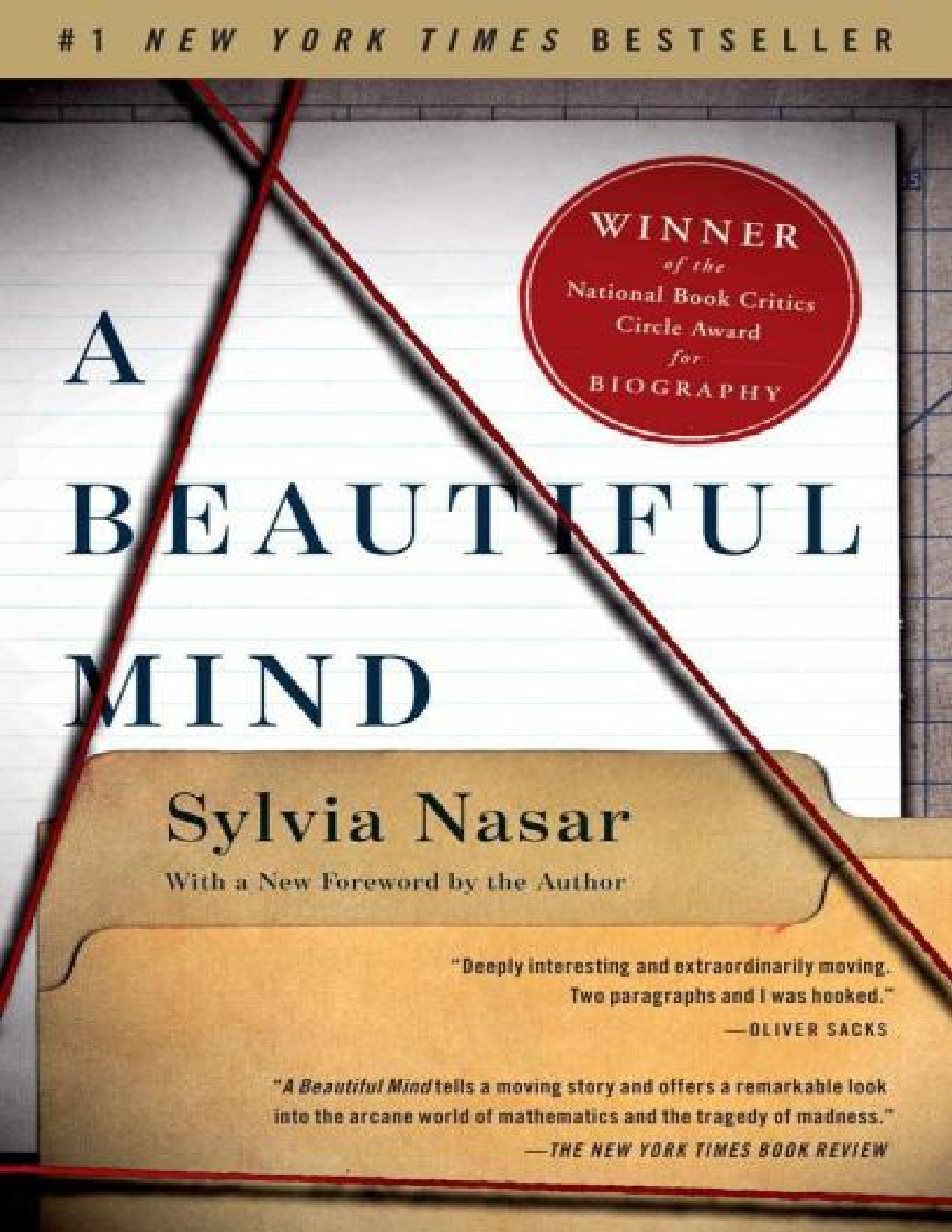
A Beautiful Mind by Sylvia Nasar
IN JUNE 2006, I went to St. Petersburg to track down the forty-year-old mathematician who had solved the Poincaré Conjecture. Reputedly a hermit with wild hair and long nails who lived in the woods on mushrooms, he was up for a Fields Medal and a $1 million cash prize but had gone into hiding, not just from the media but from the math community. Meanwhile, some folks in Beijing were claiming that they’d beaten him to the punch. It was a great story — if only we could find him. After four frustrating days in Russia, my colleague and I hadn’t found a soul who had seen or talked to the guy or his family in years. Then, when we had pretty much thrown in the towel, we stumbled on his mother’s apartment more or less by accident and, voilà, there was the “hermit,” dressed in a sports jacket and Italian loafers, evidently having lunch and watching soccer on TV. He gestured for us to sit down and explain what we wanted. “My name is Sylvia Nasar,” I began. “I’m a journalist from New York and I’m working on …” He interrupted: “You’re a writer?” I nodded. “I didn’t read the book,” he said, “but I saw the movie with Russell Crowe.” The point is that, no matter where in the world you are, you’d have to be a real hermit not to know the inspiring story of John Nash. There are lots of stories about the rise and fall of remarkable individuals. But there are very few stories, much less true stories, with a genuine third act. Nash’s story had — has — such a third act. Act III of Nash’s life story is his miraculous reawakening. It is that third act that makes Nash’s story resonate with people all over the world — most especially with those who suffer from devastating mental illnesses or love someone who does. At one point in the movie, when it looks as if things were all over for Nash, his wife, Alicia, takes John’s hand, places it over her heart, and says, “I have to believe that something extraordinary is possible.” Something extraordinary was possible. Of all the letters I’ve received from readers, my favorite came from a homeless man. It arrived in a dirty envelope with no return address, and it was scrawled on neon orange paper. It was signed “Berkeley Baby.” It would never have made it past the New York Times mailroom after the anthrax scare. The letter writer turned out to have been the night rewrite editor on the metro desk at the New York Times before he was diagnosed with paranoid schizophrenia in the mid-1970s. Since then, he had adopted the name Berkeley Baby and lived on the streets of Berkeley, California, near the university, a forlorn, sad figure not unlike the Phantom of Fine Hall. He wrote, “John Nash’s story gives me hope that one day the world will come back to me too.” The world came back to John Nash after more than thirty years, and it was the third act of his life that drew me to his story in the first place. In the early 1990s, I was an economics reporter at the New York Times. I was interviewing a Princeton professor about some trade statistics when he mentioned a rumor that a “crazy mathematician” who hung around the math building might be on the short list for a Nobel prize in economics. “You don’t mean the Nash of the Nash equilibrium?” I asked. He told me to call a couple of people in the math department to learn more. By the time I put down the phone, I realized that this was a fairy tale, Greek myth, and Shakespearean tragedy rolled into one. I didn’t write the story immediately. Lots of people wind up on short lists for the Nobel and never win, so writing about him in a newspaper would have been an invasion of privacy. In any case, someone else got the prize in 1993. The next year, however, I saw Nash’s name in the Nobel announcement. I ran over to my editor to pitch the story and actually made him cry. It was a difficult story to get. Nobody who knew any facts was willing to go on the record or even talk to me. Martha Legg, Nash’s sister, finally broke the silence about the nature of the illness that had wrecked his life. Lloyd Shapley, another pioneer of game theory, described Nash as a graduate student in the late 1940s, when he wrote his seminal papers on game theory: “He was immature, he was obnoxious, he was a brat. What redeemed him was a keen, logical, beautiful mind
Free
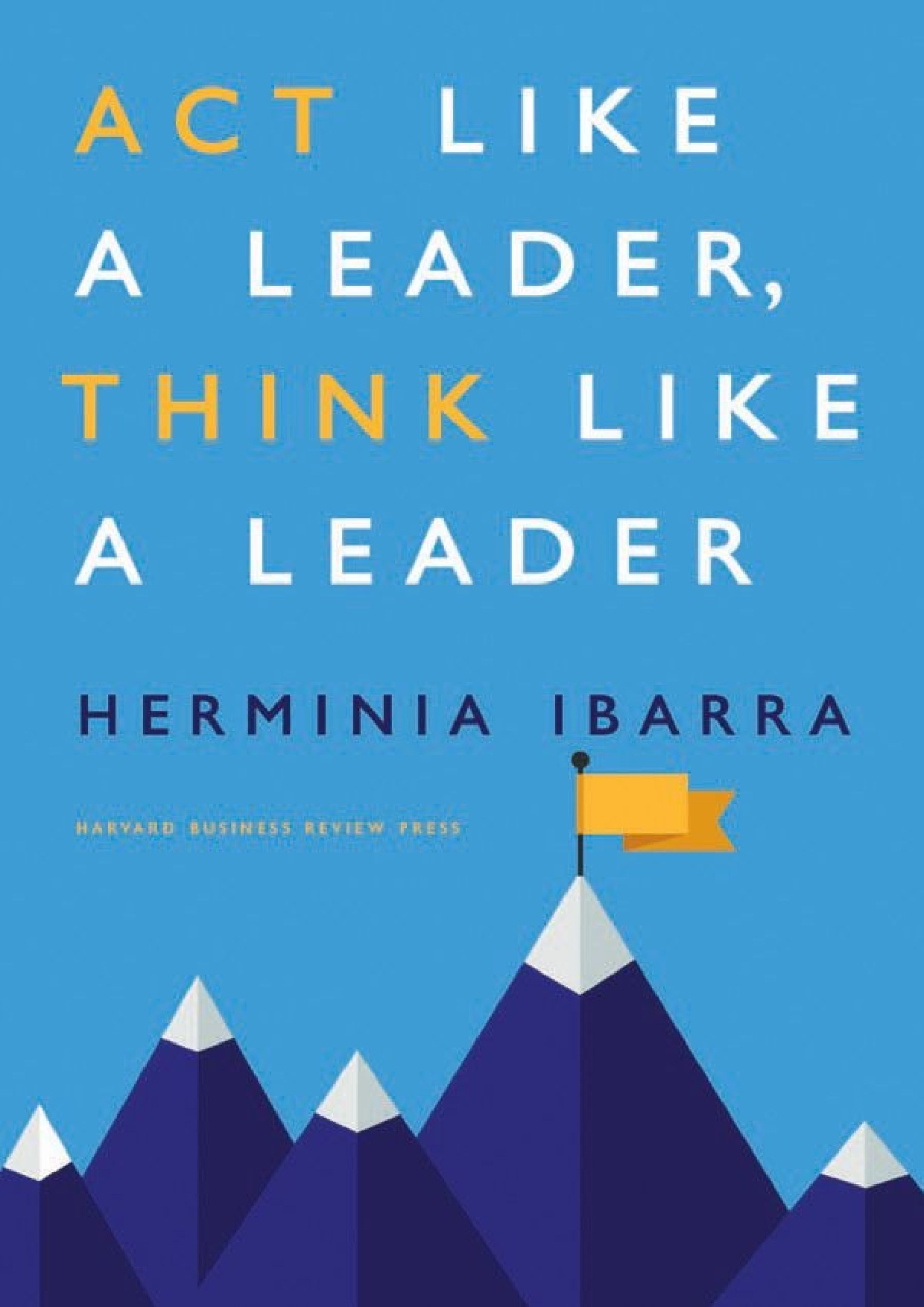
Act Like a Leader, Think Like a Leader
“Herminia Ibarra’s insightful new book is an inspirational read for everyone who has a passion for leading and developing people. In times of rapid change, her profound research and hands-on approach of ‘transforming by doing’ is broadening horizons.” —JOE KAESER, CEO, Siemens AG “In this provocative new book, Herminia Ibarra challenges conventional thinking on leadership. She takes into account the high-velocity, shape-shifting context that we all live in and offers an action-oriented, practical playbook on leadership, identity, and change. It is a must-read for the contemporary leader.” —SUSAN P. PETERS, Senior Vice President, Human Resources, GE “Herminia Ibarra has created a valuable and successful model for helping forward thinking professionals move up the corporate ladder. She has created a vivid road map for achieving career growth based on ‘learn while doing.’ I’d encourage every professional looking to get to the next level to read this book!” —MARSHALL GOLDSMITH, author, New York Times and global best seller What Got You Here Won’t Get You There “Based on Herminia Ibarra’s extensive research and experience working with executives, Act Like a Leader, Think Like a Leader provides insightful and practical advice about how to do the hardest thing of all—change ourselves. By acting, as opposed to thinking, we can all become better leaders.” —LINDA A. HILL, Wallace Brett Donham Professor of Business Administration, Harvard Business School; coauthor, Being the Boss: The 3 Imperatives for Becoming a Great Leader “In order to be a better leader, you need to ‘act first, then think.’ Read this book to find out what a most original thinker, Herminia Ibarra, has in mind.” —CHARLOTTE BEERS, former CEO, Ogilvy & Mather; former Under Secretary for Public Diplomacy and Public Affairs, US Department of State “In today’s increasingly volatile and uncertain world, leadership is more important than ever. But new skills are required. This intelligent and thought-provoking book is for those who really want to make a difference—those willing to act their way into leadership situations they might previously have thought themselves out of.” —PAUL POLMAN, CEO, Unilever “Herminia Ibarra clears the myths about leadership with her fresh, profound, yet down-to-earth book about the importance of action over introspection. She’s the perfect coach, showing aspiring leaders how to get over themselves and see the world around them. Her stories and tools make this a must-read for blossoming as a leader.” —ROSABETH MOSS KANTER, Harvard Business School Professor; best-selling author, Confidence and SuperCorp “Act Like a Leader, Think Like a Leader turns the leadership development paradigm on its head and makes a compelling argument that one becomes a better leader through ‘outsight’ as opposed to insight.
Free
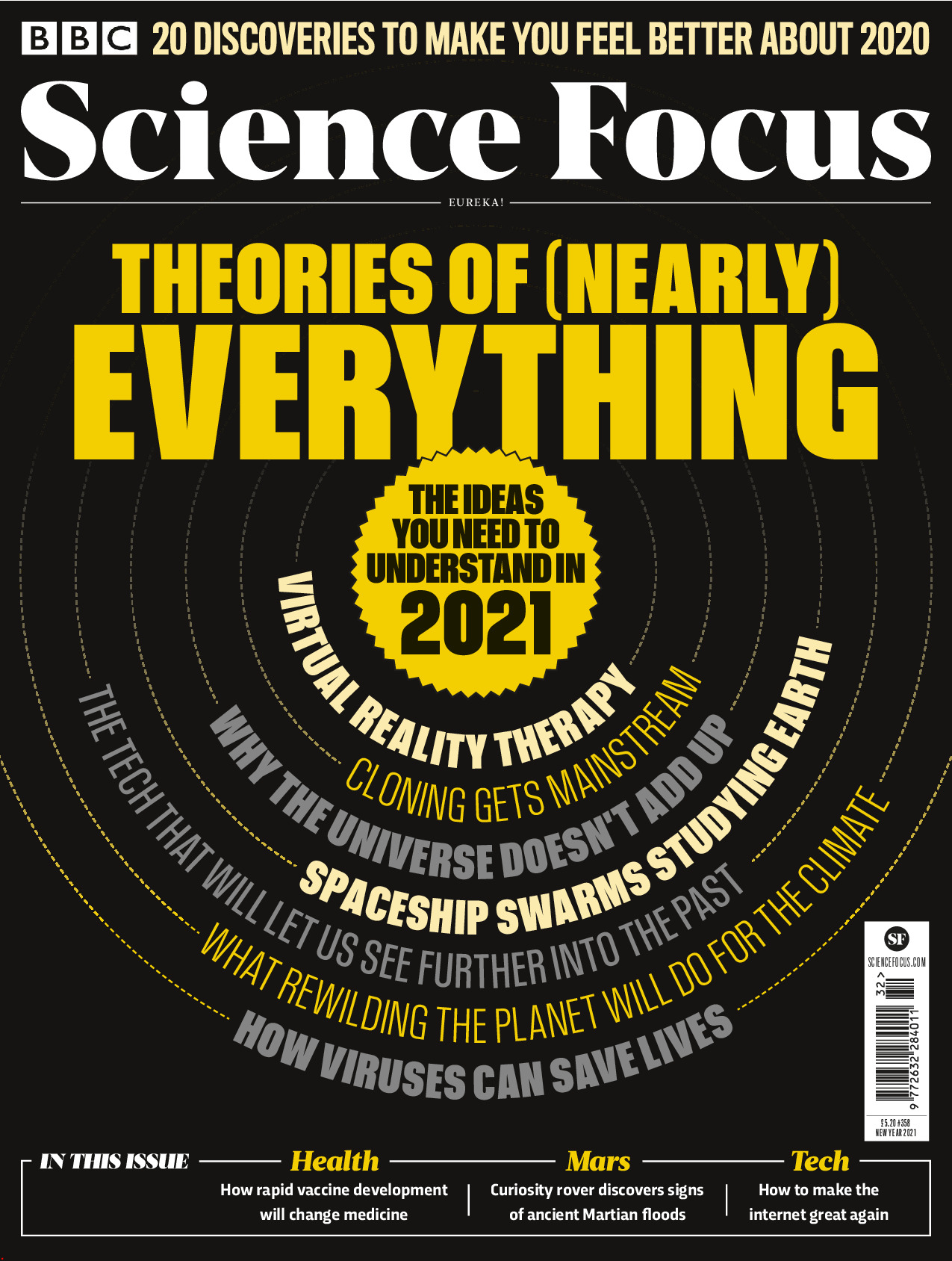
BBC Science Focus
“NEW INSIGHTS INTO OUR ANCIENT ANCESTORS HAVE COME FROM THE PROTEINS LOCKED INSIDE FOSSILISED REMAINS
Free
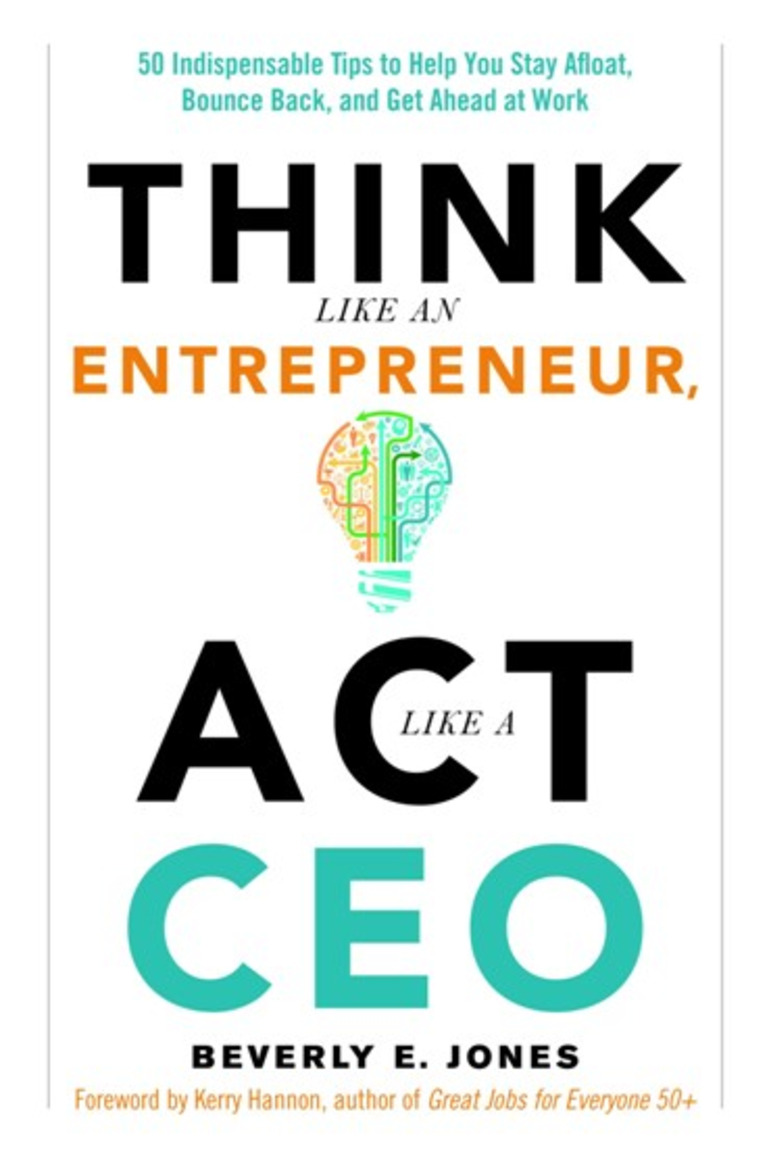
Beverly E Jones Think Like an Entrepreneur
Praise for Think Like an Entrepreneur, Act Like a CEO: “Bev is the ideal career coach—full of ideas and inspiration. She encour ages and educates people—sometimes with a gentle nudge and sometimes with a firm hand. But, either way, she gets people to where THEY want to go. She motivates them to be the best they can be at whatever career they choose. She also guides people seeking second and third careers in life. She works under the philosophy that it is NEVER too late.” — Thomas Hodson, Joe Berman Professor of Communication, Scripps College of Communication, Ohio University and General Manager of WOUB Public Media “This phenomenal woman has blessed me with her knowledge and exper tise to become a better manager and a better person. With this book she can do the same for you.” — Arlean Leland, Associate General Counsel, Civil Rights, Labor and Employment Law, U.S. Department of Agriculture “Reading a career tip chapter by Bev Jones is like having a wise counselor with a gently authoritative voice sitting next to you offering the best advice that money can buy and that you can realistically follow. A pure pleasure.” —Ira Chaleff, author of The Courageous Follower and Intelligent Disobedience “Bev is an amazing coach who reaches beyond promoting leadership and excellent management skills to help her clients understand that it’s not just about success at work. She demonstrates that if you take care of yourself and your health and your family, and you work on bringing other people up along the way, it makes you a fuller, richer, better person. With this wonderful book, Bev brings her insightful coaching to a wide community, including you.” —Sherry Little, former Acting Administrator of the Federal Transit Administration, now Partner and Co-founder, Spartan Solutions LLC
Free
Book of Myths - Acharya Prashant
Question: What is positive thinking? Acharya Prashant: I write something on this blackboard in a language that you do not understand, and the positive thinker gets up and says, ‘Surely, something wonderful about me has been written on the board’. The negative thinker gets up and says, ‘Surely, it is written that tomorrow I am going to die.’ Is it possible to determine which of these two is the bigger idiot? It is very difficult to say. The positive thinker is not concerned with the truth, neither is the negative thinker. Both are just speaking out what is already there in their minds, and this will keep both of them deluded. What we commonly call as ‘positive thinking’ has no value. What we commonly call as ‘positive thinking’ is just a projection of our own thoughts upon the situation, and that does not help. It may create a make belief, a dream-like world, but dreams do not help. Reality helps. Clear understanding of what is there, that helps. What would be better: If I do not know what is written on the board, should I think positively? Or should I just try to know, without thinking at all? What is the point of thinking about it when I do not know it? I must make all efforts to really understand, and that cannot happen if I keep sitting and thinking about it, because my thought is limited by my past, I cannot go beyond that. I will only think as much as I already know. Do you understand this? Can you think beyond your knowledge? Can you think of things that are totally unknown to you? You cannot! If I ask you to think about the Spanish language, can you think? Your thinking is limited by your knowledge, your past, your experiences, that which you have already gathered. Even what you call as positive is again determined by where you stand. The same happening will be very, very positive for one person and very negative for another person, won’t it be? So, let us say that we are going to have a India-South Korea Hockey match. On one hand there are Indian supporters and on the other hand, there are Korean supporters. India scores a goal, is it positive for the Indian supporters? L: Yes, Sir. AP: Is it positive for the Korean supporters? L: No, Sir. AP: So, what is positive and what is negative? Your own mind is positive and your own mind is negative. It is your own make belief thing. Do not be trapped in positive or negative thinking, keep both of them apart and just try to know the reality. Just try to know the reality; that is the real positivity-to know the reality! The positives of life, the real positives of life have nothing to do with thinking. They have to do with things that do not really involve thought. What are they? You are asking this question because you want to know. Right? And I have constantly been talking about knowing the reality. Knowing is one positive; if you want to call it a positive, if you want to give it a good name. Otherwise, I will just say that Knowing is real and that will suffice. But for your sake I am saying that Knowing is positive. Knowing is positive; Joy is positive; Freedom is positive; Love is positive. And all the so called positivity has been captured in all these three-four words. What is positive about life? Knowing is positive. We want to know, we always want to know. Right? That is why we are inquisitive, we are curious, we question and that is why we feel bad when someone lies to us, because you wanted to know but he did not help you know. He lied to you. So, Knowing is positive. Knowing what? Reality! Not being trapped in positive thinking, knowing the reality. Joy is positive; Love is positive; Freedom is positive. These are the positives. Anything that leads towards these is a positive. And anything that takes you away from these is a negative. I could also call it real and unreal. In fact that is a better way of talking about these. Knowing is real because you want to know the reality. Joy is real because that is what you always want to go to. Does any of you feel good in sorrow, in misery? Anybody here who feels delighted in sorrow? Anybody here who says that I have not had a good beating over the last 10 days, so I am missing it? Nobody. Right? L: What is the difference between positive thinking and hope
Free
Breaking Free Day by Day - Beth Moore
Welcome to Breaking Free. I have never written anything that meant more to me than the message of this book. And because this volume is so precious to me, I desperately desire for it to be precious to you. When I was eighteen, I surrendered to God's call to vocational ministry. Some years later, God spoke to my heart and said something like this: “I sent my Son to set the captives free. You will go forth and ring the liberty bell.” Sweet thought. Even a little poetic for a romantic like me, but it sounded awfully evangelistic for a young woman like me who was fairly certain her calling was in the area of discipleship. Oh, how could I have thought that the only people held captive in this generation were the spiritually lost? To confirm this fact, God proceeded to work on my own heart from the inside out. I had no idea I was in captivity myself until God began to set me free. That's why today I am desperate for you and for your freedom. I long for you to join the unshackled multitude that is breaking free! As we launch out on this year together, I need to challenge you. We will consider many biblical keys to liberty in the days ahead, but don't expect to find a magic potion inside. Real freedom requires real work. And a key part of this work involves God's Word. We need to hide His Word in our heart so that we might not sin against Him

Free
Building With Earth
Preface Written in response to an increasing world wide interest in building with earth, this handbook deals with earth as a building material, and provides a survey of all of its applications and construction techniques, including the relevant physical data, while explaining its specific qualities and the pos sibilities of optimising them. No theoretical treatise, however, can substitute for practical experience involving actually building with earth. The data and experiences and the specific realisations of earth construction contained in this volume may be used as guidelines for a variety of construction processes and possible applications by engi neers, architects, entrepreneurs, craftsmen and public policy-makers who find them selves attempting, either from desire or necessity, to come to terms with humanity’s oldest building material. Earth as a building material comes in a thousand different compositions, and can be variously processed. Loam, or clayey soil, as it is referred to scientifically, has different names when used in various applications, for instance rammed earth, soil blocks, mud bricks or adobe. Next page Minaret of the Al-Mihdar Mosque in Tarim, Yemen; it is 38 m high and built of handmade adobes This book documents the results of experi ments and research conducted continuously at the Forschungslabor für Experimentelles Bauen (Building Research Institute) at the University of Kassel in Germany since 1978. Moreover, the specialised techniques which the author developed and the practical experience he gathered in the course of designing earth buildings in a number of countries have also found their way into this book. This volume is loosely based on the German publication Das neue Lehmbau-Handbuch (Publisher: Ökobuch Verlag, Staufen), first published in 1994 and now in its sixth edition. Of this publication a Spanish and a Russian edition have also appeared. While this is first and foremost a technical book, the introductory chapter also provides the reader with a short survey on the history of earth architecture. In addition it describes the historical and future roles of earth as a building material, and lists all of the signifi cant characteristics that distinguish earth from common industrialised building materi als. A major recent discovery, that earth can be used to balance indoor climate, is explained in greater detail. The book’s final chapter deserves special mention insofar as it depicts a number of representative earth buildings from various regions of the world. These constructions demonstrate the impressive versatility of earth architecture and the many different uses of the building material earth.
Free
Calm the F_ck Down_ How to Control What You Can and Accept What You Can’t So You Can Stop Freaking Out and Get On With Your Life
This is a book about anxiety—from the white noise of what-ifs to the white-hot terror of a full-blown crisis. As such, you’d be forgiven for thinking I’m the world’s biggest asshole for titling it as I have, since everyone knows that the first entry on a long list of Unhelpful Things to Say to a Person Experiencing Anxiety is “Calm the fuck down.” Indeed, when I’m upset and somebody tells me to calm down, I want to murder them in swift and decisive fashion. So I see where you’d be coming from. But this is also a book about problems—we’ve all got ’em—and calming down is exactly what you need to do if you want to solve those problems. It is what it is. So if it keeps you from wanting to murder the messenger, know that in these pages I’m saying “Calm the fuck down” the same way I said “Get your shit together” in the <cough> New York Times bestseller of the same name—not to shame or criticize you, but to offer motivation and encouragement. I promise that’s all I’m going for. (And that I’m not the world’s biggest asshole; that honor belongs to whoever invented the vuvuzela.) We cool? Excellent. One more thing before we dive into all of that anxiety-reducing, problem solving goodness: I understand the difference between anxiety, the mental illness, and anxiety, the temporary state of mind. I understand it because I myself happen to possess a diagnosis of Generalized Anxiety and Panic Disorder. (Write what you know, folks!) So although a profanity-riddled self-help book is no substitute for professional medical care, if you picked up Calm the Fuck Down because you’re perennially, clinically anxious like me, in it you will find plenty of tips, tricks, and techniques to help you manage that shit, which will allow you to move on to the business of solving the problems that are feeding your anxiety in the first place. But maybe you don’t have—or don’t realize you have, or aren’t ready to admit you have—anxiety, the mental illness. Maybe you just get temporarily anxious when the situation demands it (see: the white-hot terror of a full-blown crisis). Never fear! Calm the Fuck Down will provide you with ample calamity management tools for stressful times. Plus maybe some tips, tricks, and techniques for dealing with that thing you don’t realize or aren’t ready to admit you have. Just sayin’
Free
Comedy Writing Secrets_ The Best-Selling Book on How to Think Funny, Write Funny, Act Funny, And Get Paid For It,
Comedy is a lot like professional sports. Past successes are history. You get paid for today's hits. One difference is that in baseball, a .300 hitter gets paid a million dollars and the fans are deliriously happy all season. But a .300 batting average in comedy would get professional performers to go from boos to booze in a week. With that kind of failure rate, you'd think any person who had reached the age of reason would take up plumbing. But the facts are that writing and performing humor is rising in popularity. And if you're successful, the money in comedy is so abundant that professional practitioners are like well-endowed actors in a porn movie—"You mean I get paid for doing that." The biggest change in the humor industry in the last ten years has been the need for professional writers. There are just not enough qualified writ¬ ers today to fill the increasing need. Besides the standard venues, more and more markets are begging for humor material: speeches, business newslet¬ ters, advertising, columns, talk shows, sales presentations, and everything from high-tech computer attachments to Hi, Mom greeting cards. Comedy clubs had a ten-year fireworks display. While the worst ones closed from bad management and bad acts, the remainder are solid busi¬ nesses, and the "I'll do anything to get on stage" neophytes are now secure enough to be unionized. TV sitcoms also had their vicissitudes of popularity. The great ones lasted into syndication, and the worst ones were pulled after one or two seasons. In the mean¬ time, the number of humor talk shows from Leno and Letterman to Jon Stewart and Conan O'Brien increased. And now every presidential candidate needs to make a guest appearance, not only to be toasted but also to increase his popularity by being roasted.
Free
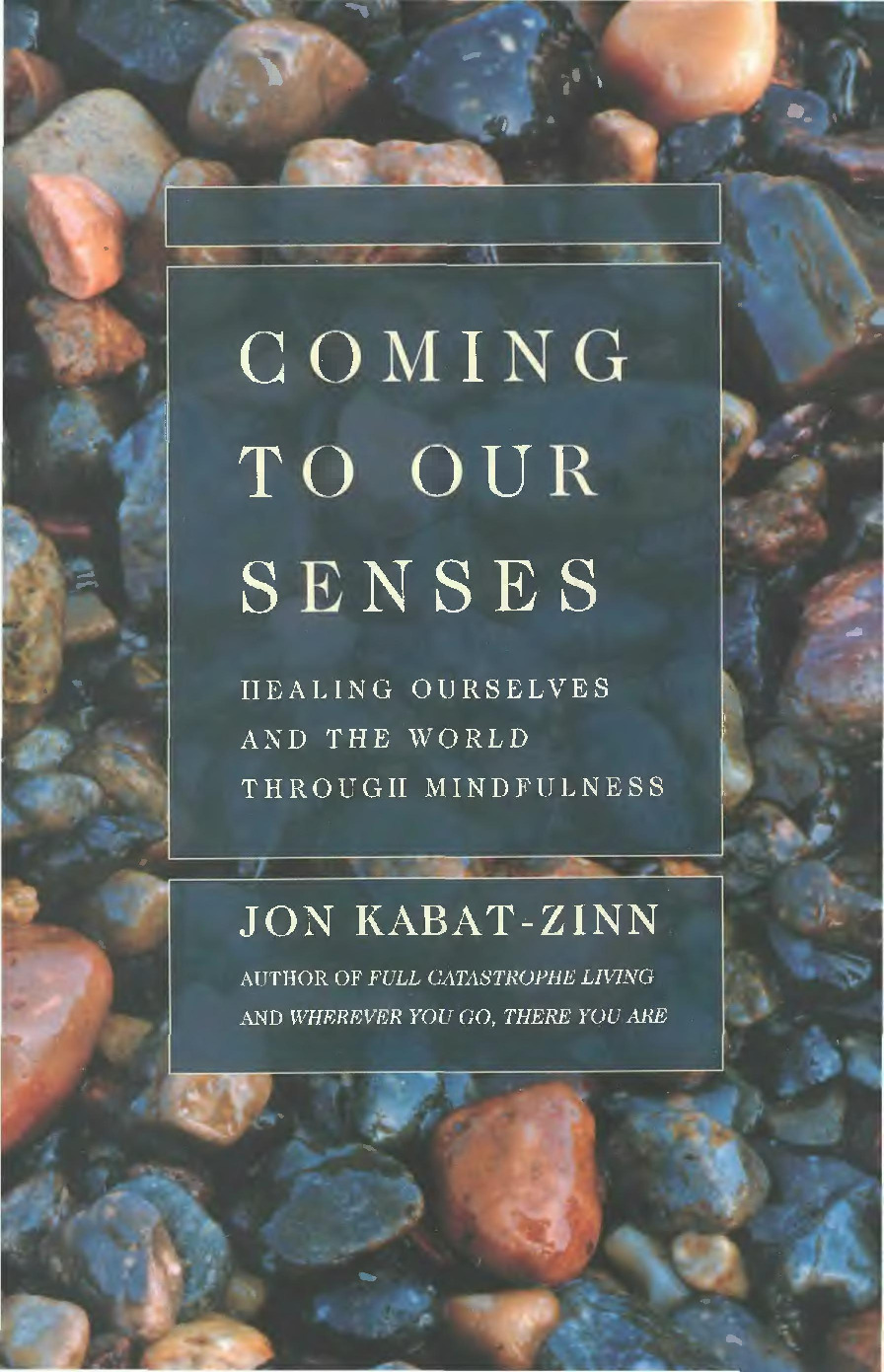
Coming to Our Senses by Jon Kabat-Zinn
I would like to express my deep gratitude to Larry Horwitz, Larry Rosenberg, and Howard Zinn for reading early drafts of the entire manuscript and giving me their valuable insights and encouragement. Deep gratitude as well to Alan Wallace, Arthur Zajonc, Doug Tanner, Richard Davidson, Will Kabat-Zinn, and Myla Kabat-Zinn for their crit ical reading of significant portions of the manuscript, and to Tom Lesser, Ray Kurzweil, Zindel Segal, Mark Williams, John Teasdale, Andries K roese, and Brownie Wheeler for giving me feedback on specific chapters that described aspects of their experience and work. I am greatly indebted to you all. I also wish to express my thanks, appreciation, and indebtedness to my editor, Will Schwalbe, who, with Emily Gould, worked tirelessly and good-naturedly with me to bring this book into its final form, to my publisher and friend, Bob Miller, and to the entire Hyperion family. While I have received support, encouragement, and advice from many, any inaccuracies or shortcomings remaining in the text are entirely my own. I would also like to express my enduring gratitude, respect, and love to my close friend, dharma brother, and teaching colleague, Saki Santorelli, the present Director of the Stress Reduction Clinic and Executive Direc tor of the Center fo r Mindfulness, whose imagination, leadership, intrinsic VIII I ACKNOWLEDGMENTS humanity, and heartfelt eloquence continue to catalyze the work of the Center, as well as to all my teaching colleagues, past and present, in the Stress Reduction Clinic and the Center for Mindfulness, who have con tributed so much of their lives and their passion to this work: Melissa Blacker, Florence Meyer, Elana Rosenbaum, Ferris Urbanowski, Pamela Erdman, Fernando de Torrijos, James Carmody, Danielle Levi Alvares, George Mumford, Diana Kamila, Peggy Roggenbuck, Debbie Beck, Zayda Vallejo, Barbara Stone, Trudy Goodman, Meg Chang, Larry Rosenberg, Kasey Carmichael, Franz Moekel, Ulli Grossman, Maddie Klein, Ann Soulet, Joseph Koppel, Karen Ryder, Anna Klegon, Larry Pelz, Jim Hughes, and to all those who contributed so critically in so many different ways to the administration of the Clinic and the Center and their research and clinical endeavo rs from the very beginning: Norma Rosiello, Kathy Brady, Brian Tucker, Anne Skillings, Tim Light, Jean Baril, Leslie Lynch, Carol Lewis, Leigh Emery, Rafaela Morales, Roberta Lewis, Jen Gigliotti, Sylvia Ciario, Betty Flodin, Diane Spinney, Carol Hester, Carol Mento, Olivia Hobletzell, Narina Hendry, Marlene Samuelson, Janet Parks, Michael Bratt, Marc Cohen, and Ellen Wingard. I would also like to express my gratitude and respect to all those every where around the world who work in or are researching mindfulness-based approaches in medicine, psychiatry, psychology, health care, education, and other facets of society, and who take care to honor the dharma in its depth and beauty in doing so. May your work continue to reach those who are most in need of it, touching, clarifying, and nurturing what is deepest and best in us all, and thus contributing, in ways little and big, to the healing and transformation that humanity itself so sorely longs for and aspires to.
Free
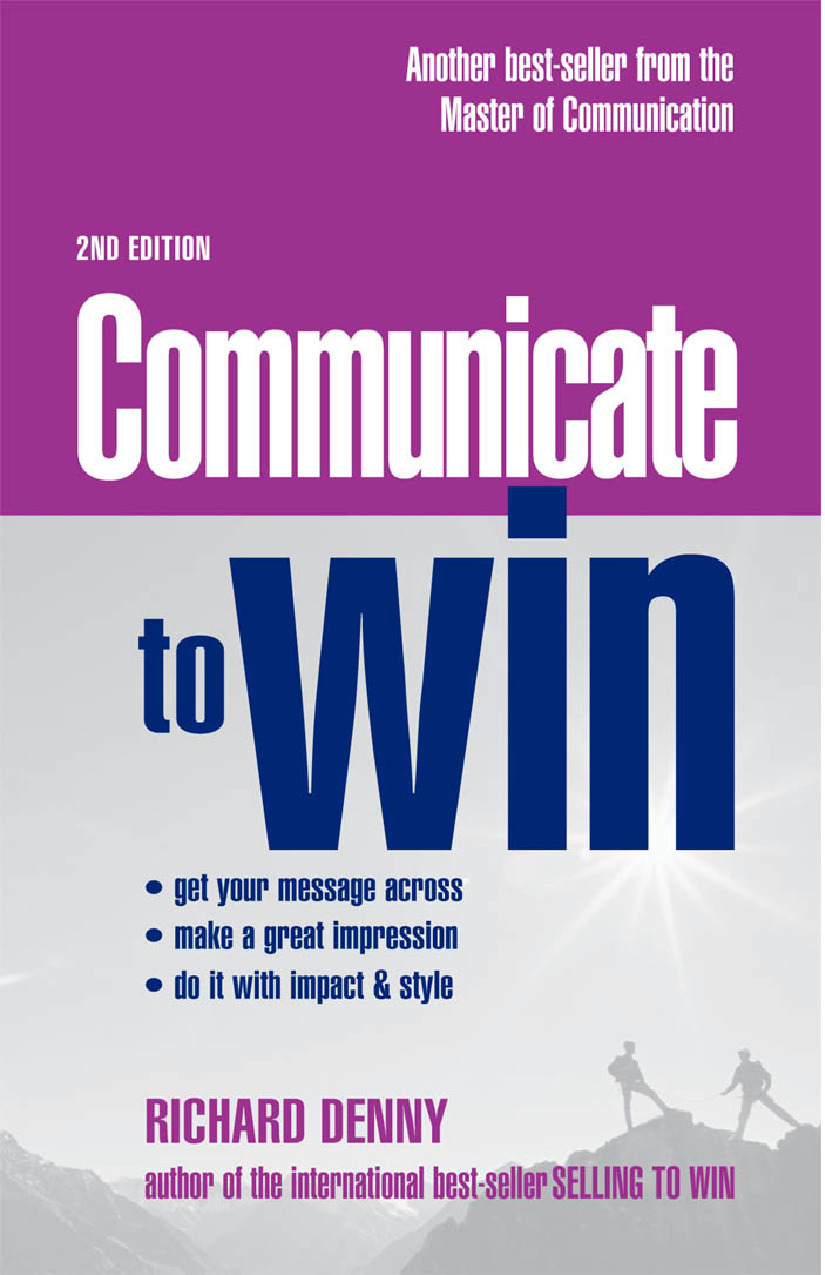
Communicate to Win
‘Communication’ is one of the most important words in the English language. Without communication, businesses would founder, governments fall. Yet lack of communication, and the inability of people to communicate effectively, cause a large amount of stress, frustration, anger, resentment, misunder standing and disappointment. How often have we heard and used such phrases as ‘If only you’d told me’, ‘Why didn’t you say so?’, ‘You didn’t make yourself clear’ and so on? Good communication skills are absolutely vital in any successful workplace. The ability to impart information and instructions clearly and concisely and so that they are easily understood can determine whether or not you get your message across to a customer or colleague, or clinch that deal. Whether you are dealing with the secretary in the next office, the work force on the shop floor or the salesman out on the road, your skill in telling people what they need to know is the key to them performing at their best. Conversely, their ability to give feed back to management can have a huge influence on the continued success and prosperity of the company. So, what is this book about, who is it for, and what will readers get out of it? It is a snapshot of the vast subject of communication, and in particular interpersonal communica tion and the various methods of communication – the spoken and the written word, the one-to-one conversation and the 2 ■ Communicate to Win gathering around the conference table. In short, Part 1 is about any situation where two or more people get together (or exchange written messages) to discuss company policy, thrash out problems, plan courses of action, take positive decisions. Part 2 is dedicated to presentation skills. Those reading this book will be committed to self-improve ment and self-help. They will aspire to greater success and through that success greater enjoyment, confidence and happi ness in their professional life. They will want to progress from the ‘I wish I could’ syndrome and join the ‘I can’ and ‘I will’ clubs. They will seek to improve the quality of their life through self-fulfilment and greater achievement in the work place. By following the principles and taking note of the practical examples set out in this book readers will be able to improve their communication skills and achieve a level of communica tion they never imagined they were capable of attaining. Those who felt that their inability to communicate adequately was holding them back will find themselves unshackled; those who perhaps thought they were good communicators already will be amazed to discover hidden reserves. Whatever your profes sion and your goals in life, the better you can communicate, the more you will achieve.

Free
Destiny Disrupted_ A History of the World Through Islamic Eyes
DESTINY DISRUPTED "If you want to put today's headlines about jihadist suicide bombings into the much larger context of history, you'd be well advised to settle in with Destiny Disrupted. It's the story of a civilization that suddenly found itself upended by strangers and now wants to put itself right. And if author Ansary stops short of calling the result a clash of civilizations, he feels free to call it two one-sided views of world history. His book is a valuable tool for opening up a view of the other side." -St. Louis Post-Dispatch "This is a marvelous book. Ansary has written an indispensable historical account of the last 1,500 years from a perspective that is all too often ignored in the West. Destiny Disrupted will be read for generations to come." -REZA AsLAN, author of No god but God and How to Win a Cosmic ~r "A must-read for anyone who wants to learn more about the history of the Islamic world. But the book is more than just a litany of past events. It is also an indispensable guide to understanding the politi cal debates and conflicts of today, from 9/11 to the wars in Iraq and Afghanistan, from the Somali pirates to the Palestinian/Israeli conflict. As Ansary writes in his conclusion, 'The conflict wracking the modern world is not, I think, best understood as a clash of civilizations ... It's better understood as the friction generated by two mismatched world histories intersecting."' -San Francisco Chronicle "Ansary has written an informative and thoroughly engaging look at the past, present, and future of Islam. With his seamless and charming prose, he challenges conventional wisdom and appeals for a fuller understanding of how Islam and the world at large have shaped each other. And that makes this book, in this uneasy, contentious post 9/11 world, a must-read." -KHALED HossEINI, author of The Kite Runner and A Thousand Splendid Suns "A lively, thorough, and accessible survey of the history of Islam (both the religion and its political dimension) that explores many of the disconnects between Islam and the West." -Shelf Awareness "There's not a page where you won't learn something startling in Destiny Disrupted. Beautifully clear and endlessly engaging, it's a romp through science, poetry, politics, and religion, in the company of a wise and charming mind, the perfect antidote to the Islamophobia that clouds Europe and North America." -RAJ PATEL, author of Stuff and Starved and visiting scholar, Center for African Studies, University of California at Berkeley "Never apologist in tone, meticulously researched and balanced, often amusing but never glib, Destiny Disrupted is ultimately a gripping drama that pulls the reader into great, seminal events of world history, a book which offers a wealth of knowledge and in sight to any reader who wants to understand the movements and events behind the modern-day hostilities wracking Western and Islamic societies." -Portland Oregonian DESTINY DISRUPTED
Free
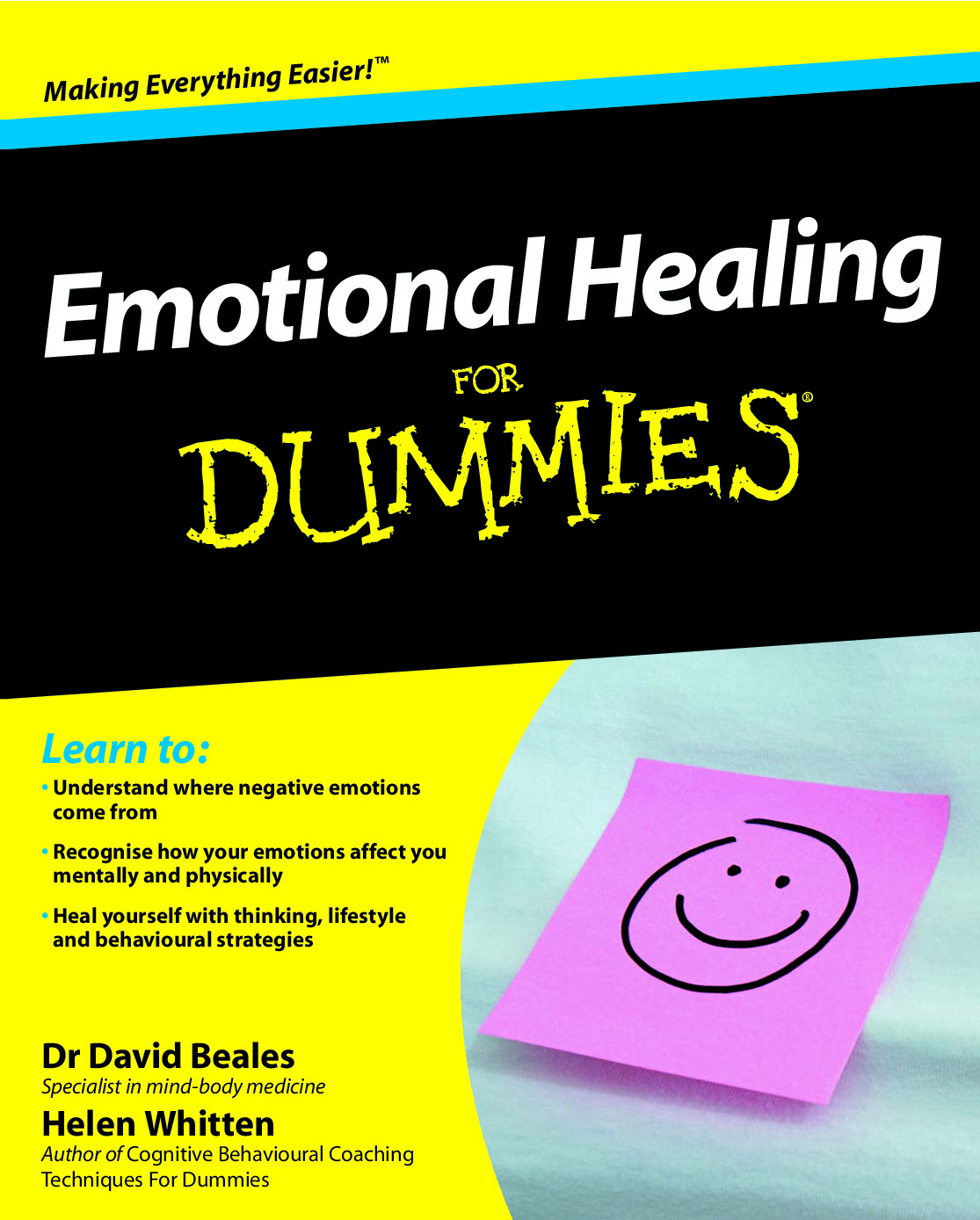
Emotional Healing Dummies
E motional healing relates to every human being: no one has a perfect life. You have probably, like everyone else, been hurt or misunderstood, been in conflict or in love, experienced acceptance or rejection, and suffered losses, including bereavement. Most of the time you’re able to dust yourself down and carry on, but at other times certain experiences result in wounds that linger on, negatively influencing your life. Unhealed emotions can result in dysfunctional relationships, depression and physical and mental illness. Unresolved issues and emotional trauma can be locked deep inside your body and mind, creating disturbed bodily responses, emotional reactivity leading to problematic thinking and behaviour. Therefore, taking time to explore your own issues is extremely worthwhile, so that you can release them and move forward. Emotional healing is required when you hold on to memories or feelings that still cause you pain. Your underlying drive as a human being is to seek pleasure and avoid pain. As you transition through many different life events this goal can become easier because you get better at identifying things that make you happy and more adept at avoiding things that cause you pain. You also develop resilience and develop ways to manage your emotions more effectively. Yet certain memories and events may still disturb you even as you face old age and death. Finding a way to make peace with past pain and grievances enables you to heal. This book can help you explore and achieve emotional healing in problematic areas of your own life. We recognise that doing so takes great courage on your part, and we salute you for the step you’re taking in picking up the book. We want to help you free yourself of past burdens, take control of your life and find ways to enjoy aspects of it that you may have had difficulty enjoying before. About This Book Our aim in writing this book is to give you the opportunity to heal yourself or work with others in their emotional healing. We have extensive experience of working with people to address mental, emotional and physical problems. We’re sharing with you the models and processes that have helped our clients – and us in our own lives. 2 Emotional Healing For Dummies We offer you a wide variety of methods to transform the way you think about and manage the events, memories and concerns of your life. We hope that these options enable you to heal and come to terms with areas of your life that have not worked out the way you wanted. Inevitably, people encounter a huge range of diverse emotional experiences, from the everyday irritations and disappointments of life to major traumas and tragedies. We can’t cover every situation in this book. We’re fully aware of, and a little in awe of, our responsibility to those of you who have the courage to face your difficulties. We very much hope that you can adapt the models and stories we share with you to suit your own specific situations and begin to find healing. Conventions Used in This Book To help you gain the most from this book and be able to pick up information and suggestions as quickly as possible, we use certain conventions: ✓ We refer to those individuals who have come to us for support as clients. Nearly all the information in this book can relate to any reader, and so we sometimes refer to a client as ‘he’ and sometimes as ‘she’. For general examples and those in which clients aren’t named, we use male gender in odd-numbered chapters and female in even-numbered chapters. ✓ The personal stories and examples come from specific experiences within our coaching and counselling practices, but they aren’t direct representations of any one client or event. ✓ Sometimes we use the term ‘feeling’ and other times we use ‘emotion’. We refer to a feeling when it is a more direct bodily experience and the word emotion when we discuss a situation where action is necessary. Foolish Assumptions We assume, though we may be wrong, that some of the following statements apply to you: ✓ You’re seeking to address and release emotional pain. ✓ You want some methods, tools and techniques to support your healing. ✓ You may be working to help others achieve emotional healing
Free
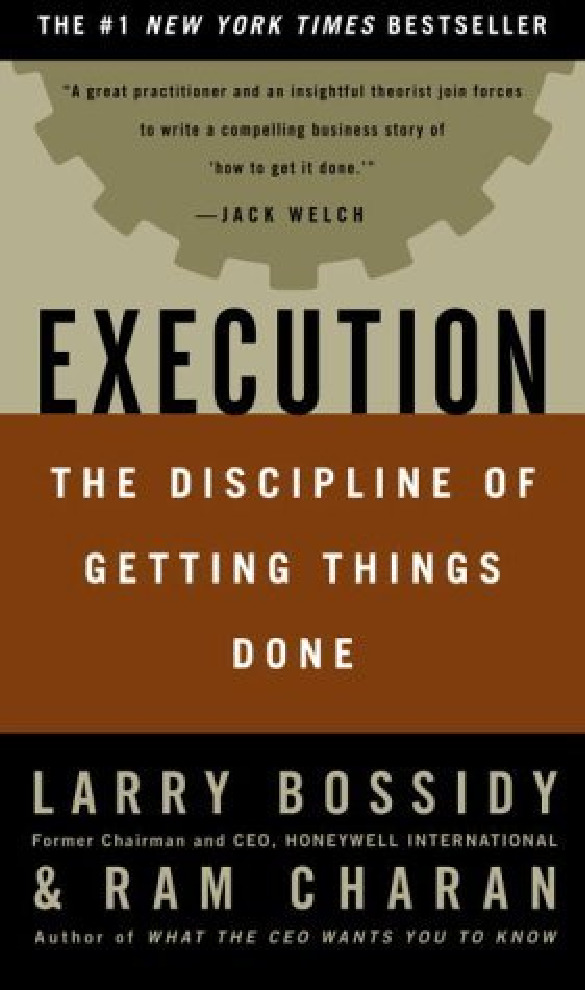
Execution_ The Discipline of Getting Things Done
LARRY*: My job at Honeywell International these days is to restore the discipline of execution to a company that had lost it. Many people regard execution as detail work that’s beneath the dignity of a business leader. That’s wrong. To the contrary, it’s a leader’s most important job. This particular journey began in 1991 when, after a thirty-four-year career at General Electric, I was named AlliedSignal’s CEO. I was accustomed to an organization that got things done, where people met their commit ments. I took execution for granted. So it was a shock when I got to AlliedSignal. Sure, I knew it would be in rough shape, but I wasn’t prepared for the malaise I found. The company had lots of hardworking, bright peo *Throughout this book, coauthors Larry Bossidy and Ram Charan will provide insights written in the first person. Larry talks primarily from his experience as a senior executive at General Electric, AlliedSignal, and Honeywell International. Ram speaks from his wide-ranging thirty-five years of experience as an adviser to business leaders and boards of directors around the world. 1 INTRODUCTION ple, but they weren’t effective, and they didn’t place a premium on getting things done. Viewed on the surface, AlliedSignal had the same basic core processes as GE or most other companies: it had one for people, one for strategy, and one for budgeting or operations. But unlike the processes at GE, those at AlliedSignal weren’t yielding results. When you manage these processes in depth, you get robust outputs. You get answers to critical questions: Are our products positioned optimally in the marketplace? Can we identify how we’re going to turn the plan into specific results for growth and productivity? Are we staffed with the right kinds of peo ple to execute the plan? If not, what are we going to do about it? How do we make sure the operating plan has sufficiently specific programs to deliver the outcomes to which we’ve committed? At AlliedSignal, we weren’t even asking those ques tions. The processes were empty rituals, almost abstrac tions. People did a lot of work on them, but very little of it was useful. The business unit strategic plans, for exam ple, were six-inch-thick books full of data about products, but the data had little to do with strategy. The operating plan was strictly a numbers exercise, with little attention paid to action plans for growth, markets, productivity, or quality. People were holding the same jobs too long, and many plants were run by accountants instead of produc tion people. AlliedSignal had no productivity culture. It measured cost-per-man-hour in its plants but had no companywide measure for real productivity growth. It lacked learning or education. Individual businesses were allowed to have their own identities instead of being joined under the AlliedSignal name. I was told, “We’ve got a chemical cul ture, an automotive culture, and an aerospace culture, and 2 INTRODUCTION they don’t like each other.” “We’ve got one stock that investors buy,” I replied. “We need one brand.” Most fundamentally, the three core processes were dis connected from the everyday realities of the business, and from each other. Leading these processes is the real job of running a business. The leader has to believe in them and be actively involved in them. But the former CEO hadn’t been deeply involved with them. He saw his job as buy ing and selling businesses. Our new team conducted the processes with rigor and intensity. By the time I retired —after the merger with Honeywell in 1999—we had tripled our operating mar gins to almost 15 percent, raised our return on equity from just over 10 percent to 28 percent, and delivered an almost ninefold return for shareholders. How did we do it? We created a discipline of execution. Putting an execution environment in place is hard, but losing it is easy. Less than two years later, the picture had changed again. The company didn’t deliver the results investors expected, and the stock price was down. After the proposed merger with GE fell through, Honeywell’s board asked me to spend a year getting the company back on track. Certainly the distraction and uncertainty of the merger effort had taken a toll. Good people had left or were leav ing. But the discipline of execution had unraveled. The intensity of the core processes had waned. Honeywell wasn’t getting things done. Before I left the company, for example, we had devel oped a turbogenerator product that I thought was a very promising entry into the market for standby power. It would be perfect for small businesses such as 7-Eleven stores. On returning, I found the product had been built incorrectly—it was too small for the market and would
Free
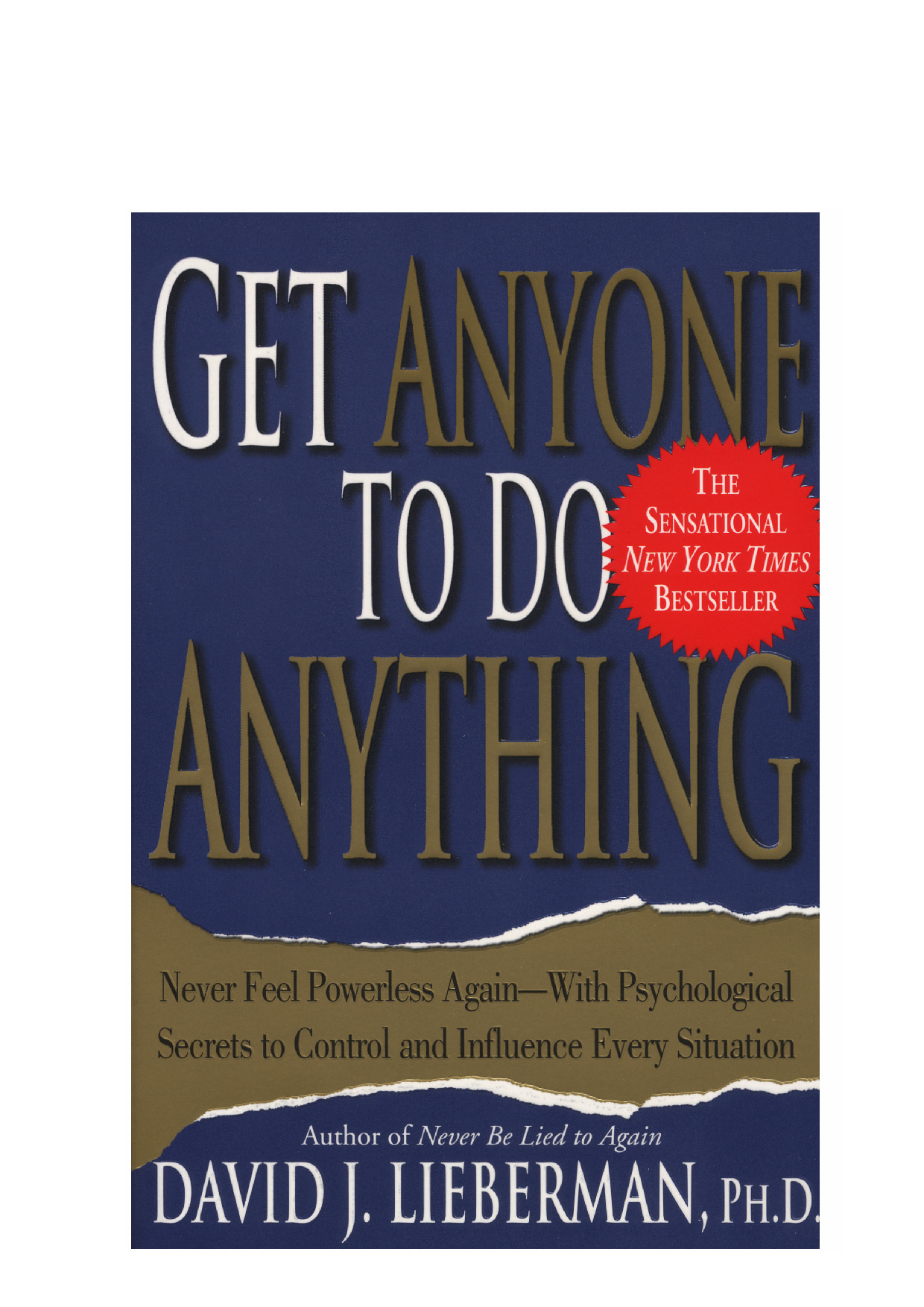
Get Anyone to Do Anything_ Never Feel Powerless Again--With Psychological Secrets to Control and Influence Every Situation
Get Anyone to Do Anything_ Never Feel Powerless Again--With Psychological Secrets to Control and Influence Every Situation
Free
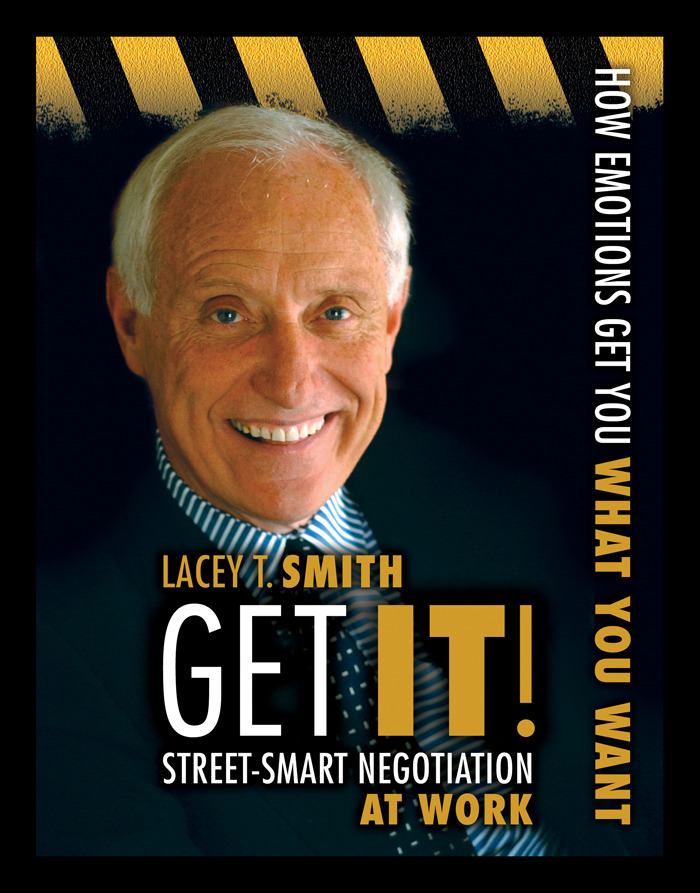
Get It! Street-Smart Negotiation at Work_ How Emotions Get You What You Want
If you are like me, you’ve spent much of your life trying to get others to do what you want them to do. At the same time,you’ve been subjected to the efforts of others to get you to do what they want you to do. All this pulling and hauling can be fun. But it can be frustrating too. After all, why should it be so hard, sometimes, to get people to see it your way? Why is it that life seems so contentious? I wrote this book to make it easier for you (and me) to understand what persuasion and negotiation are all about and to help you cut down on the contention in your life. I wrote it because as I made my way- whether in the streets, the courtrooms, the boardrooms, or the halls of gov ernment—I developed a set of working rules for negotiation, hypotheses that I routinely tested. And these hypotheses, these suppositions, have con tinually changed until I have arrived where I am at the end of writing this book. I kept what worked and I discarded what didn’t. At this point, to express it briefly, I believe that successful negotiations turn, not so much on numbers and analysis, but on the hopes and fears of the people involved. Negotiations are mostly about emotions and only somewhat about reason. My experience—along with some very good teachers—has brought me to this conclusion. It would be hard to overstate the influence Harvard Law School had on myviewsabout negotiation. Roger Fisher taught there when I was a stu dent, and when he and Bill Ury wrote their blockbuster best-selling book, Getting to Yes, I went back to Cambridge to learn more about negotiation xiii xiv GET IT! STREET SMART NEGOTIATION AT WORK from them. I also learned a lot about negotiation living with my five law school roommates there on Concord Avenue. They always designated me the chief negotiator with our landlord, a first-generation Italian American. He and I drank a lot of Chianti at the bargaining table. Max Bazerman at Northwestern’s Kellogg School was another of my teachers. His book Negotiating Rationally also had a strong influence on myviews about successful negotiations, especially the section about com monmistakes. These teachers, along with some others, taught me principles of nego tiation. But I was a skeptical student. I tested what they taught against what I experienced. As an attorney, I negotiated for the city of Louisville’s cable franchise agreement. I was a special counsel for the Commonwealth of Kentucky in negotiating with the Nixon administration regarding health care regulations. As a state senator and chairman of the education committee, I negoti ated to bring the University of Louisville, which had been a private insti tution, into public higher education on an equal financial footing with the other state schools. As an entrepreneur in the health care, food service, dry cleaning, and coal businesses I negotiated with lenders, government agen cies, health care network officials, employees, and customers. In these varied settings, public and private, I tested the hypotheses about negotiation I had been taught. This book is a culmination of these teachings, shaped by my experience. For you, it is an easy book to grasp. Part One shows you how emotions determine who gets it. Part Two demonstrates how you should prepare in your negotiations to get it. Part Three introduces you to three emotion-packed skills to help you get it: empathy, rapport, and baking a bigger pie (so you get a bigger piece). The last chapter recaps five lessons from the street, of the sixty-five in the book, that you’ll want to remember. As you read the stories in this book, please know that they all hap pened. I didn’t make them up. I did, however, make up some of the names of the people involved to protect their privacy; but otherwise you can count on my experiences as the real ones from which I draw my conclu sions about how you can get it. Enjoy the book, and I hope to see you sometime out there in the streets, negotiating
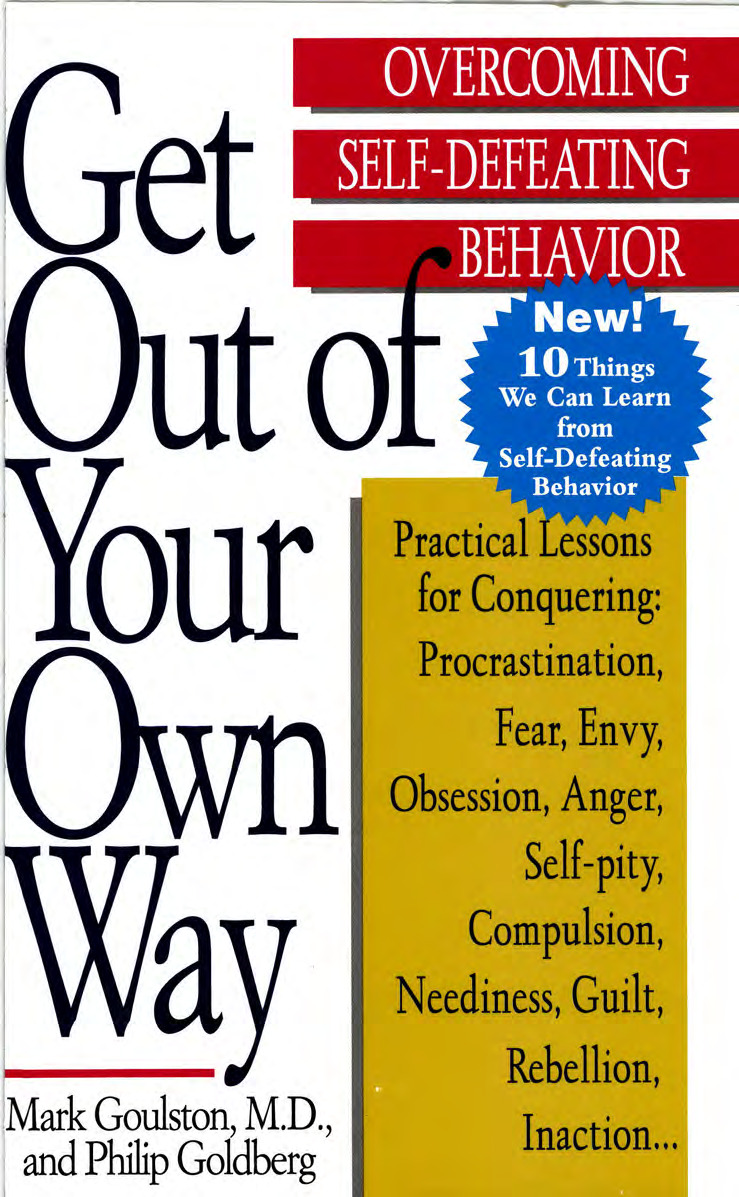
Free
Get Out of Your Own Way_ Overcoming Self-Defeating Behavior
Since this book was first published I have been extremely gratified by the response I've received from readers. I have also learned a great deal from those readers-and from the reaction to my "Top Ten" lists of things we can learn from the self-defeating behavior of public figures, from OJ. Simpson to President Clinton, which I've writ ten for various publications. Thanla to the insightfrrl readers who have applied the advice in this book to their fives, f have come 19 lgalizs ttrat there are universal les sons to be learned from undersanding the nature of self defeating behavior, Therefore, to help you get even more out of this book, here are the Top Ten kssons I've Learned From Readers. l. Work on it nozl. One of the greatest tragedies you can experience is to come to the end of your life 4nd rgalizg that it has not been everything you'd hoped it would be. Even more tra$c is to realize that your failure to fulfill your hopes and dreams was due in large part to your inability to get out of your own way. It's never too late. The time to overcome your self-defeating behaviors is now. Othemise, you run the risk of suffering deep regtet over opportunities missed, satisfaction lost, and love not given or received. txil lO Thin$ You Can Leam from Self-Defeating Behavior 2. Jump from tlw fryins pan onto the cutntzr, not inn tfu fire. ln your haste to change a self-defeating behavior, make sure you don't iust substinrte a differezt self defeating behavior. The new one might even be more damaging than the original. Remember, if you shootfrom your hip you can end up shooting yourself in the foot. Acting rashly in an effort to find a new coping mecha nism can provide momentary relief only to complicate your life, damage your credibility, and end up making you hate yourself for acting foolishly. Instead of waiting until a similar sinration arises and acting impulsively, fig ure out in advance what course of action would provide a lasting solution, not iust a temporary substinrtion. 3. Aaoifonce is rc solution. In an attempt to change a self defeating pattern within a relationship, some people decide to avoid trouble by keeping their feelings to them selves. Stayrng angry and living with the pain seems to be a better choice than having ano*rer argument. The problem is, if you do not deal with hurt and disappoint ment quickly enough those feelings harden into resent ment, anger, and hate. They fester inside and evennrally turn into physical symptoms and/or emotional powder kegs. In the long run, it's much less self-defeating to acknowl edge the problem early on and deal wittr it effectively with compassion, respect, and empathy. 4. Tlere is rcthing morefutilc than trying a change anotlur person.In an attempt to take the easy way out, some peo ple try to change others rather than work on their own self-defeating behavior. "H"y, I wouldn't lose my temper if she stopped criticizing me!" "I wouldn't have to criti cize him if he wasn't such a slob!" rtr7hen it's so difficult to change yourself, how on earttr do you imagine ttrat i
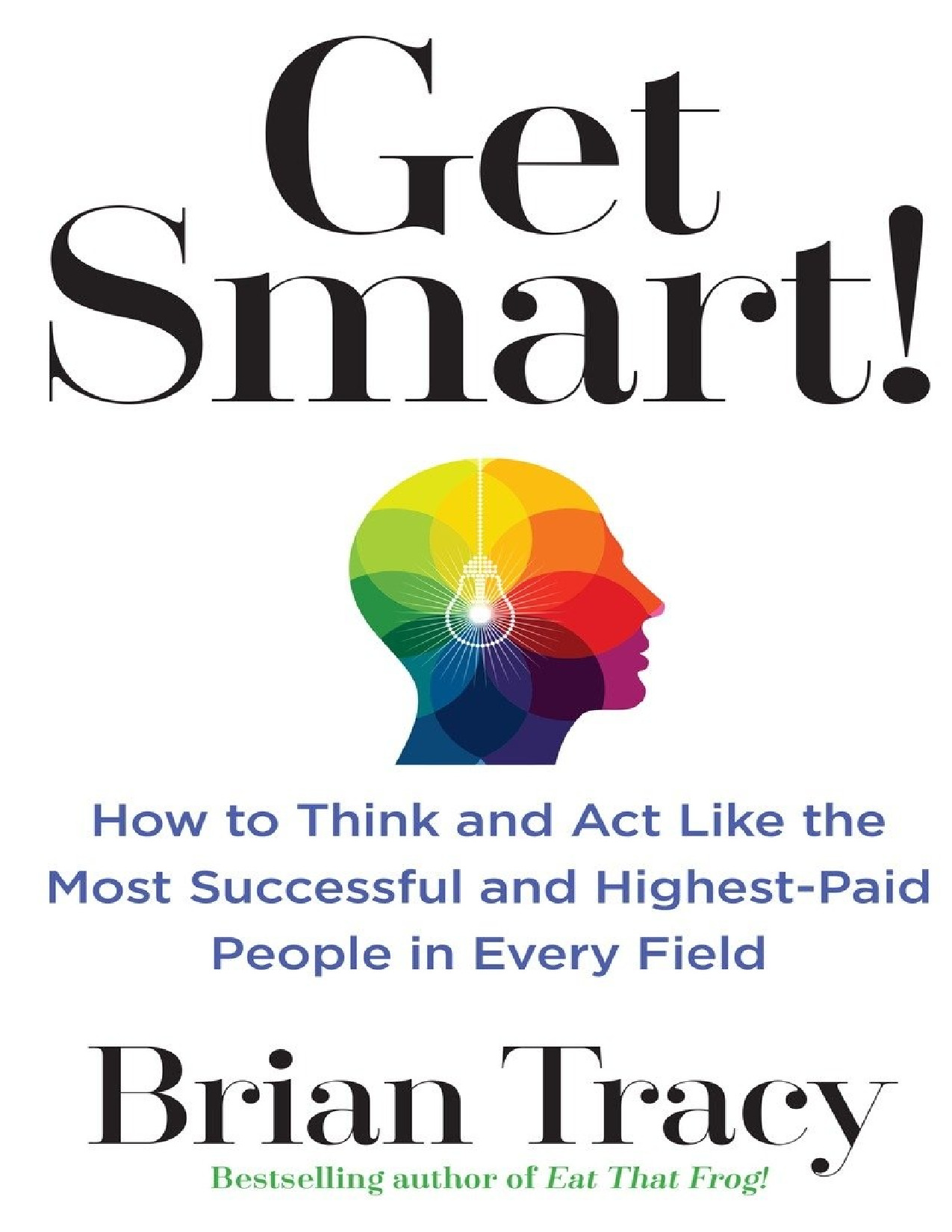
Free
How to Think and Act Like the Most Successful and Highest-Paid People in Every Field
10 Percent of Potential When I was twenty-one, I was impressed when I heard that the average person uses only 10 percent of his or her mental ability. I later learned that the true number is closer to 2 percent. Most people have enormous reserves of mental capacity that they fail to use, that they are apparently saving up for some good reason. Imagine that you had inherited a bank account containing $1 million and growing regularly with interest. But you only ever accessed twenty thousand dollars of this amount because you lacked the necessary code to acquire the rest of your money. The remainder of this wealth was yours, but you couldn’t get at it, because you did not know the correct account number that would release these funds to you. This is the situation of most people. They have enormous stores of mental ability that they habitually fail to use. In the pages ahead, you will learn a series of simple, practical, proven ways to tap into more and more of your natural thinking talents and abilities. You do not need to become more than you are or someone different. You only need to become all that you are already and to unleash more of your existing mental powers. Learn the Combinations Life is like a combination lock, only with more numbers. All combination locks work in the same way. You turn to the first number, back past that number to the second number, and forward to the third number. If you have the right numbers, the lock opens, whether it is a bicycle lock or a great vault in a major bank. Imagine that you knew all the numbers but one to unlock the success code in whatever you wanted to do. Lacking one key number, you could spin the dial forever and never get into the riches contained inside your mental vault. But with one extra number, in the correct order, the vault would open, and you could achieve extraordinary things with your life. This book contains some of the best combinations ever discovered in terms of thinking tools that enable you to make quantum leaps in your life. In many cases, what holds you back is simply a matter of perspective, your particular way of looking at things. Your Explanatory Style Dr. Martin Seligman of the University of Pennsylvania calls the way you explain or interpret things to yourself your “explanatory style.” This can be as simple as the difference between optimism and pessimism, the glass seen as half-full or as half-empty. The optimist looks for the good and what can be gained from every situation, while the pessimist looks for the problem or downside in each situation. But as Josh Billings, the western humorist, once said, “It ain’t what a man knows what hurts him; it’s what he knows that ain’t true.” Ignorance is not bliss. The failure to use the appropriate thinking tools and styles in a particular area or situation can be disastrous—and often leads to overwhelming failure. Look for the Good Very often, when you change your perspective, you see things differently, make different decisions, and get different results. Napoleon Hill says in his success classic Think and Grow Rich that “within every problem or difficulty there lies the seed of an equal or greater benefit or advantage.” After interviewing more than five hundred of the wealthiest self-made multimillionaires in America, he found they all had certain qualities in common. One of these common denominators was that the wealthy people in his research had developed the habit of always seeking the valuable lesson in every setback or difficulty. And they always found it. Most of their fortunes had come about as the result of applying the lessons they had learned through failure and hardship to developing breakthrough products and services that eventually made them rich. But without the temporary failures and the lessons they contained, they would still be working for wages. Here is a simple way to transform your thinking to that of the most positive and successful people in our society. Think about the biggest problem that you have in your life today. Now imagine that this problem has been sent to you as a gift, to teach you something. Ask yourself, “What is the lesson or lessons that I can learn from this situation that can help me to be happier and more successful in the future?” Perhaps your biggest problem today is not a problem at all. Perhaps it is an opportunity. As Henry Ford said, “Failure is merely an opportunity to more intelligently begin again.
Free
Getting (More of) What You Want_ How the Secrets of Economics and Psychology Can Help You Negotiate Anything, in Business and in Life
In early 1996, when we were both teaching at the Kellogg Graduate School of Management at Northwestern University, one of our students approached Thomas for help in responding to a business opportunity.1 A physician had offered the student, a product manager for a large pharmaceutical company, the opportunity to purchase a patent the company had been using for the last ten years in the production of one of its most profitable medical test kits. In the past, the physician had received annual royalties based on successfully produced kits. And each royalty cycle, the physician and the company disagreed over the exact number of successful kits that had been produced. Ostensibly tired of these annual disputes, the physician was offering to sell the patent to the corporation for the remainder of its seven-year life. His asking price was $3,500,000. Before responding to the physician’s offer, our student wanted Thomas to check his analysis of the most his corporation should be willing to pay based on their estimate of the expected value of the royalty payments for the next seven years. The analysis was quite involved, and revealed that the maximum amount the corporation could pay for the patent was $4,100,000. At that price, there was no difference to the company between owning the patent and continuing to lease it from the doctor. Margaret walked in as the student was summarizing his analysis: he could accept the physician’s offer and realize an immediate profit of $600,000 ($4,100,000 − $3,500,000). Or, if he were to negotiate, he could likely secure an even better deal by not accepting the doctor’s first offer: “If I could get him to agree to $3,000,000 or so, I would realize a $1,000,000 benefit for my company,” said the product manager. “This will make me look so good—my next promotion is virtually assured.” “Just a second,” said Margaret, who had been reviewing the details of the offer. “You’re not ready to negotiate.” The student was surprised—and was even more so when Thomas commented: “She’s right.” Our student was way ahead of himself. In his mind, he was already enjoying the $1,000,000 benefit of this prospective deal. Because he was so taken with the potential benefit and what that could mean for his future with the company, he had come up with a number and then leaped to an obvious, but woefully incomplete, answer. In the student’s analysis, the deal looked like a sure win of at least $600,000 for the company—but from the doctor’s perspective, the offer made no sense. Given the facts, he simply was asking for too little. “A deal should make sense to both sides—and this one doesn’t,” said Margaret, continuing, “and why, after ten years of leasing the patent to you, has he now decided he should sell?” Maybe, we suggested, the numbers alone didn’t tell the full story. Thomas stepped up to the white board where he and the student had done their calculations. Except this time, they looked at the deal from the doctor’s perspective. That analysis showed that the expected present value of the payments to the physician for the next seven years under the current arrangement was approximately $5,000,000. “Why is he willing to make an opening bid of $3,500,000, when the ‘status quo’ is worth approximately $5,000,000 to him?” asked Margaret. Seeing where we were going, our student made a last-ditch effort to save his promotion: “Maybe the doctor can’t do present values, or—” “Or maybe he knows something you don’t know,” said Margaret. Our student had fallen into a classic negotiation trap. He had focused on the analysis from his own perspective, ignoring the doctor’s side. Caught up in the prospect of closing the deal, he became convinced by his initial, favorable computations and failed to do any due diligence. Three psychological factors contributed to his behavior: the power of a familiar story, the confusion of accuracy and precision, and the inherent attraction of reaching an agreement. First, the company and the physician had a decade-long relationship, and our student was only too familiar with the patent and the difficulties that had arisen from the contract. It was easy for him to believe that the doctor had decided to sell the patent simply as a matter of convenience. Second, our student had computed a value for the patent (to several decimal points) that made sense to him and promised a quick deal and a great return
Free
Getting Things Done The Art of Stress-Free Productivity
“The Season’s Best Reads for Work-Life Advice . . . my favorite on organizing your life: Getting Things Done . . . offers help building the new mental skills needed in an age of multitasking and overload.” —Sue Shellenbarger, The Wall Street Journal “I recently attended David’s seminar on getting organized, and after seeing him in action I have hope . . . David Allen’s seminar was an eye-opener.” —Stewart Alsop, Fortune “Allen drops down from high-level philosophizing to the fine details of time management. Take a minute to check this one out.” —Mark Henricks, Entrepreneur “David Allen’s productivity principles are rooted in big ideas . . . but they’re also eminently practical.” —Keith H. Hammonds, Fast Company “David Allen brings new clarity to the power of purpose, the essential nature of relaxation, and deceptively simple guidelines for getting things done. He employs extensive experience, personal stories, and his own recipe for simplicity, speed, and fun.” —Frances Hesselbein, chairman, board of governors, The Drucker Foundation “Anyone who reads this book can apply this knowledge and these skills in their lives for immediate results.” —Stephen P. Magee, chaired professor of business and economics, University of Texas at Austin “A true skeptic of most management fixes, I have to say David’s program is a winner!” —Joline Godfrey, CEO, Independent Means, Inc. and author of Our Wildest Dreams “Getting Things Done describes an incredibly practical process that can help busy people regain control of their lives. It can help you be more successful. Even more important, it can help you have a happier life!” —Marshall Goldsmith, coeditor, The Leader of the Future and Coaching for Leadership “WARNING: Reading Getting Things Done can be hazardous to your old habits of procrastination. David Allen’s approach is refreshingly simple and intuitive. He provides the systems, tools, and tips to achieve profound results.” —Carola Endicott, director, Quality Resources, New England Medical Cente

Free
Girl, Wash Your Face_ Stop Believing the Lies About Who You Are so You Can Become Who You Were Meant to Be
This is the big opening letter to my book, the part where I tell you all the things I’m hoping for as you read it. This is the moment where I outline my intentions and—if you’re already game to read on—this is where I fire you up more about what to anticipate. This is also the important letter for someone standing in the bookstore right now trying to decide if she should buy this book or, like, The Life-Changing Magic of Tidying Up—and the words she’s reading now will decide for her. I mean, that feels like a lot of pressure for one little letter, but here we go. This book is about a bunch of hurtful lies and one important truth. The truth? You, and only you, are ultimately responsible for who you become and how happy you are. That’s the takeaway. Don’t get me wrong. I’m going to tell a hundred stories that are funny or weird or embarrassing or sad or crazy, but each of them is reaching for this same pithy, Pinterest-worthy truth: your life is up to you. But that truth will never be believable if you don’t first understand the lies that get in the way of it. Understanding that you choose your own happiness, that you have control of your own life, is so important. It’s one of those things we grasp with both hands and put up on the bulletin board as a reminder . . . but it’s not the only thing you need to understand. You also need to identify—and systematically destroy—every lie you’ve told yourself your whole life. Why? Because it’s impossible to go somewhere new, to become something new, without first acknowledging where you are. The self-awareness that comes from truly digging into what you’ve come to believe about who you are is invaluable. Have you ever believed that you aren’t good enough? That you’re not thin enough? That you’re unlovable? That you’re a bad mom? Have you ever believed that you deserve to be treated badly? That you’ll never amount to anything? All lies. All lies perpetuated by society, the media, our family of origin, or frankly —and this is my Pentecostal showing—by the Devil himself. These lies are dangerous and devastating to our sense of worth and our ability to function. The most sinister thing about them is that we rarely hear them at all. We rarely hear the lies we’ve created about ourselves because they’ve been playing so loudly in our ears for so long that they’ve become white noise. The hateful narrative bombards us every day, yet we don’t even realize it’s there. Recognizing the lies we’ve come to accept about ourselves is the key to growing into a better version of ourselves. If we can identify the core of our struggles while simultaneously understanding that we are truly in control of conquering them, then we can utterly change our trajectory. That’s why I do what I do. That’s why I run a website and talk about how to make a centerpiece, or parent with kindness, or strengthen a marriage. It’s why I researched thirty different ways to clean out your front-load washer before I taught my tribe how to do it. It’s why I know the perfect ratio of balsamic and citrus to make your pot roast taste amazing. Sure, I cover a whole host of topics using my online platform, but ultimately they boil down to one thing: these are the elements of my life, and I want to do them well. The posts demonstrate how I am growing and learning, and I want them to grow and encourage other women too. I suppose if I’d been into homeschooling or knitting or photography or macramé, I would have used those things to try and better myself and boost up my friends. But I’m not into those things. I’m into lifestyle stuff, so I focus on creating content that falls under the banner of lifestyle media. Early on in this career, though, I realized that a lot of women look at lifestyle imagery as what they should aspire to be. Many of those images are impossible—another lie foisted upon us—so I set out to be honest from the beginning. I vowed to be authentic and sincere, and for every gloriously styled cupcake picture we produced, I shared a photo of myself with facial paralysis. If I went somewhere fancy like the Oscars, I balanced that with a post about my struggle with weight loss and pictures of me forty pounds heavier. I’ve talked about it all: struggles in my marriage, postpartum depression, and feeling jealous, scared, angry, ugly, unworthy, unloved. I have tried to be totally real about who I am and where I’m coming from. Seriously, the most famous thing I’ve ever done was to post a picture of the stretch marks on my saggy tummy on the internet. And yet . . . And yet I still get the notes. Women from all over the world still email and ask me how I manage to keep it all together while they struggle. I can feel the pain in those emails. I can hear the shame in the words they use to describe their own hardships, and it makes my heart hurt. So I write them back. I tell every single one how beautiful and strong she is. I call them warrior, courageous, fighter. I tell them not to give up. It’s what feels appropriate to say to a total stranger. But it’s not all I want to say. It’s not what I would say if it were my sister who was hurting, or my best friend. It’s not what I wish I could say to my younger self. Because to those closest to me, I am supportive and encouraging . . . but I absolutely refuse to watch you wallow. The truth is that you are strong and courageous and a fighter . . . but if I’m telling you that, it’s because I want you to see those characteristics in yourself. I want to grab you by the shoulders and shake you until your teeth rattle. I want to get in your face until you have the courage to look me in the eyes and see the answer for yourself. I want to shout at the top of my lungs until you know this one great truth: you are in control of your own life. You get one and only one chance to live, and life is passing you by. Stop beating yourself up, and dang it, stop letting others do it too. Stop accepting less than you deserve. Stop buying things you can’t afford to impress people you don’t even really like. Stop eating your feelings instead of working through them. Stop buying your kids’ love with food, or toys, or friendship because it’s easier than parenting. Stop abusing your body and your mind. Stop! Just get off the never-ending track. Your life is supposed to be a journey from one unique place to another; it’s not supposed to be a merry-go-round that brings you back to the same spot over and over again. Your life doesn’t have to look like mine. Heck, your life doesn’t have to look like anyone else’s at all, but it should at least be a creation of your own making. Is it going to be hard? Absolutely! But taking the easy way out is ho
Free
How Successful People Think_ Change Your Thinking, Change Your Life
Good thinkers are always in demand. A person who knows how may always have a job, but the person who knows why will always be his boss. Good thinkers solve problems, they never lack ideas that can build an organization, and they always have hope for a better future. Good thinkers rarely find themselves at the mercy of ruthless people who would take advantage of them or try to deceive them, people like Nazi dictator Adolf Hitler, who once boasted, “What luck for rulers that men do not think.” Those who develop the process of good thinking can rule themselves—even while under an oppressive ruler or in other difficult circumstances. In short, good thinkers are successful. I’ve studied successful people for forty years, and though the diversity you find among them is astounding, I’ve found that they are all alike in one way: how they think! That is the one thing that separates successful people from unsuccessful ones. And here’s the good news. How successful people think can be learned. If you change your thinking, you can change your life! WHY YOU SHOULD CHANGE YOUR THINKING It’s hard to overstate the value of changing your thinking. Good thinking can do many things for you: generate revenue, solve problems, and create opportunities. It can take you to a whole new level—personally and professionally. It really can change your life. Consider some things you need to know about changing your thinking: 1. Changed Thinking Is Not Automatic Sadly, a change in thinking doesn’t happen on its own. Good ideas rarely go out and find someone. If you want to find a good idea, you must search for it. If you want to become a better thinker, you need to work at it—and once you begin to become a better thinker, the good ideas keep coming. In fact, the amount of good thinking you can do at any time depends primarily on the amount of good thinking you are already doing. 2. Changed Thinking Is Difficult When you hear someone say, “Now this is just off the top of my head,” expect dandruff. The only people who believe thinking is easy are those who don’t habitually engage in it. Nobel Prize-winning physicist Albert Einstein, one of the best thinkers who ever lived, asserted, “Thinking is hard work; that’s why so few do it.” Because thinking is so difficult, you want to use anything you can to help you improve the process
Free
How to Change Your Mind_ What the New Science of Psychedelics Teaches Us About Consciousness
A New Door MIDWAY THROUGH the twentieth century, two unusual new molecules, organic compounds with a striking family resemblance, exploded upon the West. In time, they would change the course of social, political, and cultural history, as well as the personal histories of the millions of people who would eventually introduce them to their brains. As it happened, the arrival of these disruptive chemistries coincided with another world historical explosion—that of the atomic bomb. There were people who compared the two events and made much of the cosmic synchronicity. Extraordinary new energies had been loosed upon the world; things would never be quite the same. The first of these molecules was an accidental invention of science. Lysergic acid diethylamide, commonly known as LSD, was first synthesized by Albert Hofmann in 1938, shortly before physicists split an atom of uranium for the first time. Hofmann, who worked for the Swiss pharmaceutical firm Sandoz, had been looking for a drug to stimulate circulation, not a psychoactive compound. It wasn’t until five years later when he accidentally ingested a minuscule quantity of the new chemical that he realized he had created something powerful, at once terrifying and wondrous. The second molecule had been around for thousands of years, though no one in the developed world was aware of it. Produced not by a chemist but by an inconspicuous little brown mushroom, this molecule, which would come to be known as psilocybin, had been used by the indigenous peoples of Mexico and Central America for hundreds of years as a sacrament. Called teonanácatl by the Aztecs, or “flesh of the gods,” the mushroom was brutally suppressed by the Roman Catholic Church after the Spanish conquest and driven underground. In 1955, twelve years after Albert Hofmann’s discovery of LSD, a Manhattan banker and amateur mycologist named R. Gordon Wasson sampled the magic mushroom in the town of Huautla de Jiménez in the southern Mexican state of Oaxaca. Two years later, he published a fifteen-page account of the “mushrooms that cause strange visions” in Life magazine, marking the moment when news of a new form of consciousness first reached the general public. (In 1957, knowledge of LSD was mostly confined to the community of researchers and mental health professionals.) People would not realize the magnitude of what had happened for several more years, but history in the West had shifted. The impact of these two molecules is hard to overestimate. The advent of LSD can be linked to the revolution in brain science that begins in the 1950s, when scientists discovered the role of neurotransmitters in the brain. That quantities of LSD measured in micrograms could produce symptoms resembling psychosis inspired brain scientists to search for the neurochemical basis of mental disorders previously believed to be psychological in origin. At the same time, psychedelics found their way into psychotherapy, where they were used to treat a variety of disorders, including alcoholism, anxiety, and depression. For most of the 1950s and early 1960s, many in the psychiatric establishment regarded LSD and psilocybin as miracle drugs. The arrival of these two compounds is also linked to the rise of the counterculture during the 1960s and, perhaps especially, to its particular tone and style. For the first time in history, the young had a rite of passage all their own: the “acid trip.” Instead of folding the young into the adult world, as rites of passage have always done, this one landed them in a country of the mind few adults had any idea even existed. The effect on society was, to put it mildly, disruptive. Yet by the end of the 1960s, the social and political sh
Free
How To Improve Memory - The Ultimate Mind Power Manual - The Best Brain Exercises to Improve Your Memory and Master Your Mind Power
As we drove by Starbucks one day, we couldn’t help but chuckle. Starbucks Café reminded us of two stories that we’ve tucked safely in our memory: one story is about a young fellow who is a ghost writer and likes to bring along his lap top to the café where he could type away and gulp down mugs of his favorite cup of coffee – Americano, he called it. “You can’t blame me, it’s soooooo good”, he’d say, and we felt compelled one day to warn him not to leave his lap top unattended when he went up to the counter to order his Americano, and to be careful about not spilling his Americano into his lap top. A ghostwriter could not afford to lose pages of written work. It would be difficult to reconstruct what he’s written. Even with a photographic memory, he could not re-create the original. He’d have to start all over again. The other story is that of a book written by a Dr. Dharma Singh Khalsa which he appropriately titled Brain Longevity. He trained in Creighton University School of Medicine, Harvard Medical School and the University of California in San Francisco. He is a diplomate of the American Board of Anesthesiology and member and secretary of the American Academy of Anti Aging Medicine. In Brain Longevity, Dr. Khalsa talked about patients in their 40s and 50s who would come to his office in a state of anxiety convinced that they were sure candidates for Alzheimer’s. When he asked them why they believed that, they’d say that they’re constantly forgetting things, not able to digest a brief as easily as when they were younger, alarmed that they couldn’t remember names, and regularly misplacing car keys. What worried them more, however, was the decline in their mental alertness. One of his patients admitted, quite embarrassed, that his daughter’s soccer team asked him to stop being their referee because he was forgetting who last touched the ball when it went bouncing off. He was calling out scores that didn’t make sense and his daughter, who was feeling the pressure from her team mates, had to ask him to give up his position as referee. The frequent complaint was their “fuzzy brains.” Neurologists have a name for it. It’s called “age-associated memory impairment”, a condition that is most common among people aged fifty and older. As Dr. Khalsa said, it is normal to lose brain capacity at 50 just as it is normal to experience diminishing eyesight at age 40.[1] It is a generation of frightened baby boomers, Dr. Khalsa says. All of a sudden they’re losing their “endocrinological spark as their youth hormones dry up and sexual urges are flattening out. They’re gaining weight, losing muscle and hair, and needing more and stronger coffee just to slog through the day. The boomers’ loss was Starbucks’ gain.”[2] Grin and bear it, if we should, but an increasing number of scientists including Dr. Khalsa - believe that it is possible to defy the mental aging process. People in their 40s, 50s and 60s can have not only a perfect memory but also brain power. The brain is a dynamic organ. Individuals who get older can retain their youthful minds so that their learning ability, creativity and emotional vigor remain intact. They are able to sustain the mental dexterity and sharpness they need as they reach their 70s and 80s. Charles M. Schultz, the famous Peanuts creator once said that “life is like a ten-speed bicycle. Most of us have gears we never use.” We’ll disagree with this dithyramb a little. It’s not so much life having all these gears, but the mind. The mind possesses faculties that some people have not bothered about. We’ve heard of cases where individuals with exceptionally high IQs consistently fail in life. We tend to dismiss them as “intellectually lazy” beings who never harnessed the full power of their minds. Or else we’ve heard of the oft-repeated complaint, “he’s got all sorts of PhDs up his sleeve, but he’s completely bereft of common sense.” The mind is a mysterious abyss. What kind of mental make-up drives someone to open fire in a school cafeteria and shoot aimlessly at human beings with minds that one day would rule the earth? What happens to the creativity of a university freshman who decides to major in Quantum Physics even if his first love is music? How does
Free
HOW TO GET WHAT YOU WANT Without Having to Ask
It’s easy to look at the world and think that the people who always seem to get what they want are just lucky. Actually luck has only a small part to play. Of course some people have a better start than others, but we all know people from comfortable, even cushy backgrounds who are miserable, and others who started out with nothing and have created a successful and happy life. So what’s the difference between those for whom things always seem to work out and those for whom it’s always a struggle? Well, if you observe other people (as I do) you can see that some people know how to get what they want, and others don’t. My wife, who is nothing if not focused,1 comes from a decent background, but it’s a long way from where she is now. Sometimes people tell her how lucky she is to have the lifestyle she has, with a job that fits perfectly around the kids, to which she replies (politely but firmly), “Lucky? Luck had nothing to do with it. I planned it this way.” It’s true. She always knew she wanted to live in an old house in the country with cats and dogs and children and a job she could fit around them all. And I’ll tell you something else. Before we ever 1 Bit of a euphemism there, but I think I’ll get away with that word.
Free
How to Persuade People Who Don’t Want to Be Persuaded Get What You Want Every Time Joel Bauer
'd like to thank my wife, Cherie, who knew l had potential when it was well hidden; my amazing children, Chanelle, Briana, and Sterling, who every day teach m e what life is re ally about; my mother, Carol Bauer, and my father, Stephen Shoyer; my adoring grandfathers, Albert and Duf-fy; and my clos est friends, Bi11 Bakoyni, Larry Becker, David Borys, Gary Lamers, Eric Maurin, Dale Penn, Jason Randal, David Stahl, and Jon Stetson. W ithout their ongoing support, the journey toward get ting what l've always wanted would have been lonely. l'd like to thank my life teachers, Jack Chanin, Paul Diamond, Joe DeLjon, Gary Hunter, Hidy Ochiai, Ron Praver, Benny Ray, and Gregg W ebb; the Kenin Coin & Stamp Shop M agic Department when l was eleven; the staff of Carnival Cruise Lnes when l was thirteen; and my publicist, Phil Lobel, who has worked briliantly with the media to get the word out about me. l'd also like to thank my co-author, M ark Levy, who is a writ ing god. W orking with M ark is the only way my techniques and philosophy could have ever been transferred so expertly to the page. He clim bed inside my world, and became a friend as well. Lfe has dealt me a great hand, and the cards will remain in play until my last breath. J . B . ACKNOW LEDGMENTS 'd like to thank my wife, Stella, whose love and support has kept me going; my mom, Rhoda; my brother, Paul; my sister, Joyce; and, a11 my other amazing relatives, like Gi1, lrwin, and Joan. l thank my friends whose wisdom helped Joel and me write this book: Dick 'The Guru' Axelrod, Renee Babiewich, Larry Becker (for introducing me to Joel), Steve 'There's a peculi arity in my shoe' Cohen, Patti Danos, Kevin Daum (for a two hour conversation that made it a1 clear), Christopher Dilts and his hair, Jack Foster, Bob 'The Happy Skeptic' Friedhoffer, M ichael 'Leonardo' Gelb, Nathan Gold, David 'Ferris Buehler' Goldsmith, M ichelle Herman, Paul Harris, Robert 'Short Sen tences' Jacobs, M ac 'Vegas, babyl' L ng, Paul Lemberg, Steve 'How did it walk?' Sanderson, Rich Schefren, Adam Snukal, Ken Swezey (who was excited by our book concept before anyone else, and whose enthusiasm gave the 'Pitchh/lind' rocket a lift into orbit), and Karl Weber. Also, thanks to our literary agent, Muriel Nellis, and her assistant, Jane Roberts, to everyone at W iley, with a big shout out to M att 'The Nurturer' Holt and Tamara 'The Transylvanian' H ummel, and to Claire Huismann and the killer staff at lmpressions Book and Journal Services. Also also, l'd like to thank my pets. W hen you're writing eleven hours a day with no humans in sight, a bark, a meow, or a tweet can be awfuly comforting. Bless you Kuma, Jofu ('Fuzio'), Xger, and Betsy. Finally,l would like to thank the man himself, Joel Bauer. Joel is a masterful businessperson, performer, and friend. lf you ever get the chance to see him in action, take it!
Free
I Could Do Anything If I Only Knew What It Was_ How to Discover What You Really Want and How to Get It
T HANKS TO the many people who gave hours to the reading and critiquing of this manuscript—there are too many to mention by name, but you know who you are and you’ll find your influence in these pages. Four readers must be given special thanks: Susan Brauser, a great reader, and Julie Schonfeld, a fine writer (and Julie’s dad who told her what the good life is—you’ll find him quoted in the Introduction). Judith Riven went over the manuscript line by line and was a great help. The fourth reader is my wonderful mom, Nettie Sher, who was fascinated by these pages and when she finished, looked at me and said, “You should have been twins.” Kris Dahl and Leslie Schnur are my guardian angels—the agent and the editor from heaven. I thank them for a great experience. May they live long and be well. Most of all, I want to thank my clients who have always had the courage to confront their own lives and change them into lives they love. They have inspired me year after year, and by letting me work with them they have given me a life that I love. —B. Sher With thanks to Jane and Elaine, and to Maura Walker, and in memory of Stella Smith. —B. Smit
Free
I_m Rich Beyond My Wildest Dreams--I Am. I Am. I Am._ How to Get Everything You Want in Life
We thank God and all those who do His bidding for giving us the opportunity to know this information and to write this book. We also thank our family and friends for their support and encouragement. In addition, we would like to thank a few people specifically. Thank you Margaret for keeping us clear and straight. Thank you George for a keen eye and a good look. Thank you Alex and Heather for your enthusiasm and confidence. Thank you Mr. G. for the basic skills. Thank you General for the guidance and strong backbone. Thank you Dave and Barbara for your love, support and insight. Thank you Doug for the timely ad vice. Thank you Kathy for your patience and perseverance, and thank you Denise for asking. Thank you Jill for more than we can easily say. In particular, we thank you Marilyn for helping us find our path, for inspiring our first book, for encouraging us . . . for all that you do. Most of all, we thank those two wonderful people who are the better part of ourselves. Diane and Chris, nothing can ade quately express our appreciation for who you are and what you do. Thank you. Thank you. Thank you. For everything
Free
Impulse_ Why We Do What We Do Without Knowing Why We Do It
Many people have assisted me in writing this book, and I am especially grateful to those members of the Impulse Research Group for their support and invaluable contribution. My special thanks to Dr John Storey for his medical insights and valuable comments on early drafts of the text. I would like to thank my colleagues at Mindlab International, Joe Hilling MSc, Director of Data Analysis, and Duncan Smith, managing director, for their assistance. Also my thanks to neuroscientist Charlie Rose for his work on the references and critique of the text. Steven Matthews has, as always, been diligent in reading and commenting on the text. I extend my warmest thanks to Dr Margaret Yufera-Leitch of the University of Calgary, one of the world’s foremost experts on obesity, whose contribution to the chapter on impulsive eating was significant and important. I am most grateful to Coastguard station chief Don Ellis for his insights into the minds of suicides, knowl edge gained by often dangerous experience in recovering the bodies of those who were successful and talking others to safety. My thanks also go to Dr Sean Kelly for his valuable assistance. Finally, I am most grateful to Nigel Wilcockson and Sophie Lazar, my editors at Random House, for their invaluable and essential contributions to the shaping of the book. Where necessary, names and personal details in the case histories cited have been changed for reasons of confidentiality and to protect privacy. xii impulse Copyright acknowledgements I would like to thank Dr Hannah Faye Chua for permission to use two images from ‘How we See it: Culturally Different Eye Movement Patterns Over Visual Scenes’ from the article by Boland, Chua, and Nisbett (2005). In Rayner, K., Shen, D., Bai, X., Yan, G. (Eds.) Cognitive and Cultural Influences on Eye Movements. Tianjin, China: People’s Press/Psychology Press, pages 363–378. Also I am most grateful to Dr Richard Russell, Assistant Professor of Psychology at Gettysburg College, for kindly allowing me to use two photographs from his excellent paper ‘A sex difference in facial contrast and its exaggeration by cosmetics’, which appeared in the 2009 issue of Perception. Thanks to Meg Bury of the explOratorium in San Francisco for permission to use a photograph of the Ames Room which forms part of their permanent exhibition. To Dr Russell Swerdlow, co-author of the 2003 Archives of Neurology paper: ‘Right orbitofrontal tumor with pedophilia symptom and constructional apraxia sign’, for his kindly assistance. My thanks go to artist Terry Ayling for creating the line and tone illustrations and to Norman Clark for constructing a model of the Ames Room used in my research. The images on page 81 are reproduced by kind permission of: Figure 1: The Thinker, 1880-81 (bronze), Rodin, Auguste (1840-1917) / Burrell Collection, Glasgow, Scotland / © Culture and Sport Glasgow (Museums) / The Bridgeman Art Library. Figure 2: Discobolus, copy of a Greek original (plaster) (b/w photo), Myron (fl.c.450 BC) (after) / Museo Nazionale Romano, Rome, Italy / Alinari / The Bridgeman Art Library. The images of female and male models on page 116 are reproduced courtesy of Bigstockphoto. com
Free
Intermittent Fasting
Congratulations, you’ve come to the right place if you want to lose weight and body fat, get more fit, and improve your health! Fasting has been used throughout history to promote weight loss and increase longevity. Intermittent fasting, currently one of the world’s most popular health and fitness trends, is a newer style of fasting that has gained considerable recognition in recent years, because many people find these regimens easier to follow than tra ditional, highly restrictive, calorie-counting diets. It’s an uncomplicated concept, which makes it simple to follow without the deprivation associated with other diets. Translation: Intermittent fasting equals freedom! Intermittent fasting is not a diet in the conventional sense, but rather an eating pattern — a timed approach to eating. That’s why intermittent fasting has generated such a positive buzz — anecdotes of its effectiveness have proliferated around the globe. With intermittent fasting having become the go-to lifestyle, as a lifestyle research doctor, I needed to understand the science. So, I read the data and discovered a mountain of rock solid scientific evidence showing that intermittent fasting, when combined with a healthy diet and lifestyle, is a remarkably effective approach for losing body fat, especially stubborn belly fat; maintaining or even gaining muscle; and treating or preventing many diseases and conditions that plague Americans. What makes this health trend so popular? It’s not really a diet, per se, but a new style of eating and living that after you get the hang of, it can allow you to attain your health and wellness goals and still embrace life and eat the delicious, healthy foods you love. You’ll find out that it’s not so much about what foods you should eat but more so, when you eat. As they say, “timing is everything.” About This Book Intermittent Fasting For Dummies gives you all the tools you need to follow an inter mittent fasting plan. Discover why simply changing the timing of your meals to allow for periodic breaks in eating can make such a positive difference in your body. With all the conflicting information about intermittent fasting out there, you may be wondering what’s real and what’s fake advice. 1 Introduction This handy guide puts all the important information together in plain English, laying out easy-to-follow guidelines for the different methods as well as describ ing what intermittent fasting can do for you — help you lose the fat for good, get healthier, fight disease, and hopefully increase your longevity. Remember, you are in charge, and you decide what will work for you. By helping you eat fewer meals, intermittent fasting can lead to an automatic reduction in calorie intake. Additionally, it will positively change your hormone levels and flip the switch on your metabolism to facilitate all kinds of healthy bodily processes. Specifically this book discusses the five most popular methods of intermittent fasting. Each type is effective, but may not be the right fit for everyone. You’ll find out how to practice the different varieties of intermittent fasting as well as deter mine which method works best for your specific lifestyle. This book is different from other books available about intermittent fasting because it’s researched and written by a trusted expert in nutrition, health, and f itness — a registered dietitian and nutritionist — me! You can have confidence that the plans in this book are safe and based on sound science
Free
It_s Not Where You Start, It_s Where You Finish!_ The Success Secrets of a Top Member of the Mary Kay Independent Sales Force
The large meeting hall in the Kansas City Convention Center was packed as the woman leaned over to take a leather jacket from a man. As she put the jacket around her, you could see that it was not just a leather jacket, it was a leather jacket that was made in the image of an American flag. American troops had just gone into Iraq and as the audience saw the jacket the chatter subsided and all eyes were on the wearer of the jacket as she began to speak. She told of her humble beginnings in Ireland and of the struggles in her past. She told of coming to America with little more than the $20 bill in her pocket. Then she told the moving story of how that Irish girl of humble begin nings had overcome adversity and accomplished excep tional success in her new home, “the land of the free.” It was an awe-inspiring speech, but the evening was not over. She asked anyone in the audience who had husbands, sons, or relatives serving in the military to stand up. One by one, hundreds stood up as an indication that they had
Free
Jeffrey Archer Kane and Abel Corone Books 1981
She only stopped screaming when she died. It was then that he started to scream. The young boy who was hunting rabbits in the forest was not sure whether it had been the woman's last cry or the child's first that alerted him. He turned suddenly, sensing the possible danger, his eyes searching for an animal that was so obviously in pain. He had never known any animal to scream in quite that way before. He edged towards the noise cautiously; the scream had now turned to a whine but it still did not sound like any animal he knew. He hoped it would be small enough to kill; at least that would make a change from rabbit for dinner. The young boy moved stealthily towards the river, where the strange noise came from, running from tree to tree, feeling the protection of the bark against his shoulder blades, something to touch. Never stay in the open, his father had taught him. When he reached the edge of the forest, he had a clear line of vision all the way down the valley to the river, and even then it took him some time to realise that the strange cry ernanated from no ordinary animal. He continued to creel) towards the whining, but he was out in the open on his own now. Then suddenly he saw the woman, with her dress above her waist, her bare legs splayed wide apart. He had never seen a woman like that before. He ran quickly to her side and stared down at her belly, quite frightened to touch. There, lying between the woman's legs
Free
₹ 2
Just Mercy A story of Justice and Redemption
I wasn’t prepared to meet a condemned man. In 1983, I was a twenty-three-year-old student at Harvard Law School working in Georgia on an internship, eager and inexperienced and worried that I was in over my head. I had never seen the inside of a maximum-security prison —and had certainly never been to death row. When I learned that I would be visiting this prisoner alone, with no lawyer accompanying me, I tried not to let my panic show. Georgia’s death row is in a prison outside of Jackson, a remote town in a rural part of the state. I drove there by myself, heading south on I-75 from Atlanta, my heart pounding harder the closer I got. I didn’t really know anything about capital punishment and hadn’t even taken a class in criminal procedure yet. I didn’t have a basic grasp of the complex appeals process that shaped death penalty litigation, a process that would in time become as familiar to me as the back of my hand. When I signed up for this internship, I hadn’t given much thought to the fact that I would actually be meeting condemned prisoners. To be honest, I didn’t even know if I wanted to be a lawyer. As the miles ticked by on those rural roads, the more convinced I became that this man was going to be very disappointed to see me. I studied philosophy in college and didn’t realize until my senior year that no one would pay me to philosophize when I graduated. My frantic search for a “post-graduation plan” led me to law school mostly because other graduate programs required you to know something about your field of study to enroll; law schools, it seemed, didn’t require you to know anything. At Harvard, I could study law while pursuing a graduate degree in public policy at the Kennedy School of Government, which appealed to me. I was uncertain about what I wanted to do with my life, but I knew it would have something to do with the lives of the poor, America’s history of racial inequality, and the struggle to be equitable and fair with one another. It would have something to do with the things I’d already seen in life so far and wondered about, but I couldn’t really put it together in a way that made a career path clear. Not long after I started classes at Harvard I began to worry I’d made the wrong choice. Coming from a small college in Pennsylvania, I felt very fortunate to have been admitted, but by the end of my first year I’d grown disillusioned. At the time, Harvard Law School was a pretty intimidating place, especially for a twenty-one-year-old. Many of the professors used the Socratic method—direct, repetitive, and adversarial questioning—which had the incidental effect of humiliating unprepared students. The courses seemed esoteric and disconnected from the race and poverty issues that had motivated me to consider the law in the first place. Many of the students already had advanced degrees or had worked as paralegals with prestigious law firms. I had none of those credentials. I felt vastly less experienced and worldly than my fellow students. When law firms showed up on campus and began interviewing students a month after classes started, my classmates put on expensive suits and signed up so that they could receive “fly-outs” to New York, Los Angeles, San Francisco, or Washington, D.C. It was a complete mystery to me what exactly we were all busily preparing ourselves to do. I had never even met a lawyer before starting law school. I spent the summer after my first year in law school working with a juvenile justice project in Philadelphia and taking advanced calculus courses at night to prepare for my next year at the Kennedy School. After I started the public policy program in September, I still felt disconnected. The curriculum was extremely quantitative, focused on figuring out how to maximize benefits and minimize costs, without much concern for what those benefits achieved and the costs created. While intellectually stimulating, decision theory, econometrics, and similar courses left me feeling adrift. But then, suddenly, everything came into focus. I discovered that the law school offered an unusual one-month intensive course on race and poverty litigation taught by Betsy Bartholet, a law professor who had worked as an attorney with the NAACP Legal Defense Fund. Unlike most courses, this one took students off campus, requiring them to spend the month with an organization doing social justice work. I eagerly signed up, and so in December 1983 I found myself on a plane to Atlanta, Georgia, where I was scheduled to spend a few weeks working with the Southern Prisoners Defense Committee (SPDC). I hadn’t been able to afford a direct flight to Atlanta, so I had to change planes in Charlotte, North Carolina, and that’s where I met Steve Bright, the director of the SPDC, who was flying back to Atlanta after the holidays. Steve was in his mid-thirties and had a passion and certainty that seemed the direct opposite of my ambivalence. He’d grown up on a farm in Kentucky and ended up in Washington, D.C., after finishing law school. He was a brilliant trial lawyer at the Public Defender Service for the District of Columbia and had just been recruited to take over the SPDC, whose mission was to assist condemned people on death row in Georgia. He showed none of the disconnect between what he did and what he believed that I’d seen in so many of my law professors. When we met he warmly wrapped me in a full body hug, and then we started talking. We didn’t stop till we’d reached Atlanta. “Bryan,” he said at some point during our short flight, “capital punishment means ‘them without the capital get the punishment.’ We can’t help people on death row without help from people like you.” I was taken aback by his immediate belief that I had something to offer. He broke down the issues with the death penalty simply but persuasively, and I hung on every word, completely engaged by his dedication and charisma
Free
Kim George Coaching Into Greatness
Each person represents a world in us, a world possibly not born until they arrive, and it is only by this meeting that a new world is born. A NAIS NIN To Sid Smith, working with you has made such a difference in my expe rience of creating this book. You have my complete admiration and appreciation! To my agent, Paul Bassis, your support and guidance have meant the world to me. To my editor, David Bernstein, thank you for helping me bring the concept of AQ to the world. Your amazing ability to create a vision for this work and to really see me for who I am is very special. To all the amazing abundant minds featured in this book: Susan Annunzio, Yasmin Davidds, Korrahn Droku, Keith Ferrazzi, Mike Garrison, Julia Butterfl y Hill, Mike Macedonio, Dr. Ivan Misner, Richard Reardon, Eric Rice, and Joe Vitale. The world is a better place because of who you all are, and I am a better person for knowing you. To Lance Secretan—you are an inspiration, a true leader, and a visionary. I am honored to call you my friend. To my dear friend Stephen Fairley—without your persistent (and sometimes annoying!) question, “Kim, when are you going to write a book?” this dream would not be a reality. Thanks for kicking my butt when I needed it most! To Elizabeth Tull, you have been my cheerleader, my friend, and my sounding board. You have so much to give the world. To Garry Schleifer, Jennifer Quade, and Carol Zimmerman, thank you for your confi dence, unwavering support, and your many contributions. I am honored to have you be the AQ Pioneers! To Brandi, Jule, and Pawn, thank you
Free
Learned optimism how to change your mind and your life
Preface to the Vintage Edition When I first began to work on learned optimism, I thought I was working on pessimism. Like almost all researchers with a background in clinical psychology, I was accustomed to focusing on what was wrong with individuals and then on how to fix it. Looking closely at what was already right and how to make it even better did not enter my mind. The turning point was a meeting in 1988 with Richard Pine, the per son who was destined to become my literary agent, intellectual advisor, and friend. I described my work on pessimism and Richard said, "Your work is not about pessimism; it's about optimism." No one had said this to me before. As I left his office, somewhat shaken, he called out, "I pray you'll write a book about this. They make religions out of this stuff!" I did. No religions sprouted up, but the book has sold steadily for fifteen years. And something did happen: Positive Psychology. In 1996, I was elected president of the American Psychological Association by what they tell me was the largest vote in history, thanks in part to the popularity of this book and the field of research that it spawned. The president of the American Psychological Association is sup posed to have an initiative, a theme of office, and as I looked over the modem history of psychology, I saw that Richard had given me my theme. Psychology now seemed half-baked to me. The half that was fully-baked was devoted to suffering, victims, mental illness, and trauma. Psychology had worked steadily and with considerable suc cess for fifty years on the pathologies that disable the good life, which make life not worth living. By my count fourteen of the major mental illnesses are now treatable by psychotherapy or by medications, with two of them (panic disorder and blood and injury phobia) virtually curable. But clinical psychologists also began to find something dis concerting emerging from therapy: even on that rare occasion when therapy goes superbly and unusually well, and you help the client rid herself of depression, anxiety, and anger, happiness is not guaranteed. Emptiness is not an uncommon result. How can this be? Curing the negatives does not produce the positives. In jargon, the correlation between sadness and happiness is not anything close to III iv Preface to the Vintage Edition - 1.00; it is more like -0-40. Strangely one can both be happy and sad (although not in the same instant). Women, in fact, being more emo tionally labile, are both happier and sadder than men. The skills of becoming happy tum out to be almost entirely different from the skills of not being sad, not being anxious, or not being angry. Psychology had told us a great deal about pathology, about suffering, about victims, and how to acquire the skills to combat sadness and anxiety. But dis covering the skills of becoming happier had been relegated to amuse ment parks, Hollywood, and beer commercials. Science had played no role. When you lie in bed at night and contemplate your life and the lives of the people you love, you are usually thinking about how to go from +2 to +6, not how to go from -5 to -2. But at its best, psychology had only told us how to relieve misery, not how to find what is best in life and live it accordingly. This was the unbaked half that would become Positive Psychology. Learned Optimism is the foundation of my thinking about Positive Psychology, and it is the first of the triptych that leads there. In 1996, I published The Optimistic Child, which applies the knowledge and the skills you will read about in this volume to teenagers and school children. In 2002, I published the third book of the series: Authentic Happiness. This book sets forward a larger theory about the positive side of life: "happiness" is a scientifically unwieldy notion, but there are three different forms of it you can pursue. For the "Pleasant Life," you aim to have as much positive emotion as possible and learn the skills to amplify positive emotion. For the "Engaged Life," you iden tify your highest strengths and talents and recraft your life to use them as much as you can in work, love, friendship, parenting, and leisure. For the "Meaningful Life," you use your highest strengths and talents to belong to and serve something you believe is larger than the self. Learned Optimism can set you on the path to any or all three forms of happiness. The skills you will read about here can increase the dura tion and intensity of your positive emotions. These skills can enable you to use your highest strengths and talents more effectively. Finally, optimism is invaluable for the meaningful life. With a firm belief in a positive future you can throw yourself into the service of that which is larger than you are.

Free
₹ 2
Learning to “Think Like a Lawyer”
This is a study whose genesis dates back to the day I first took my seat in a Con tracts classroom as a first-year law student, and that came to fruition as I for the first time taught Contracts to first-year law students. Having participated in both ends of the process has added depth to my understanding of the law school experience. As a first-year student, I took notes in my Contracts class in two col umns; the first kept track of the concepts my professor was endeavoring to im press on us, and the second was a running anthropologist’s commentary on the studies that someone should do to investigate the social and linguistic processes at work in contract law—and in legal reasoning generally. This work is an initial ef fort to investigate the distinctive shape of a core U.S. legal worldview, empirically grounded in the study of the language through which law students are trained to this new approach. During the first year of law school, students are reputed to undergo a trans formation in thought patterns—a transformation often referred to as “learning to think like a lawyer.” Professors and students accomplish this purported transfor mation, and professors assess it, through classroom exchanges and examinations, through spoken and written language. What message does the language of the law school classroom convey? What does it mean to “think” like a lawyer? Is the same message conveyed in different kinds of schools, and when it is imparted by profes sors of color or by white women professors, and when it is received by students of different races, genders, and backgrounds? This study addresses these questions, using fine-grained empirical research in eight different law schools
Free
₹ 1
Let Your Life Speak_ Listening for the Voice of Vocation
With the exception of Chapter I, every chapter in this book originally appeared as an essay in some other publication during the past decade. I have rewritten all the essays, most of them substantially. My aim has been to create a real booknot just a collection of articles about vocation, but a coherent exploration of a subject that engages many of us for the better part of our lives. I mention the provenance of these pieces partly because I believe in truth in labeling and partly because the people who invited me to write the original essays, with all the trust that implies, are valued partners in my own vocation. Chapter II, "Now I Become Myself," was originally given as the G. D. Davidson Lecture at Warren Wilson College in Swannanoa, North Carolina, and published by the college as a pamphlet.' The unusual charge that accompanies the lectureship helped frame this book: reflect on your life story through the concept of vocation-"including lessons learned from disappointments and failures as well as successes"-and do so in a way that might speak to younger as well as older adults. I am grateful to my friend Doug Orr, president of the college, for extending the invitation; to Don and Ann Davidson for endowing a lectureship that invites this sort of reflection; and to the entire Warren Wilson community for receiving my words with such deep hospitality. Chapter III, "When Way Closes," was originally written for Weavings, a quarterly journal of spirituality, at the request of its editor, John Mogabgab.2 John, my good friend for many years, is one of the best companions a person could have along the way, and Weavings-the journal he has raised up from its infancy-is widely regarded as one of the finest periodicals of its kind. Chapter IV, "All the Way Down," was originally written for a special issue of Weavings on the theme of the "wounded healer" in memory of Henri Nouwen.' Henri was a treasured friend and mentor to both John Mogabgab and me, and this chapter is testimony to the transcendent power of friendship. It explores my experience with depression, a subject I could not have dealt with so openly except for the support of friends still living and the spirit of a friend now gone
Free
₹ 2
Living Rich by Spending Smart_ How to Get More of What You Really Want
Introduction: The Spending Smart Philosophy Controlling Spending Is the Key to Building Wealth Spending Smart is the only way to get out of debt and build wealth. That's a bold, but true, statement. It's like calories are the key to a weight-loss diet. It doesn't matter what the new diet fad is. A diet to lose weight only works if you burn more calories than you consume. Everything else is just window dressing and hype. In fact, controlling spending is far more important than the amount of your debt, which investments you choose, or even how much you earn. For people in debt, it wouldn't matter a bit if somebody graciously paid off all their credit cards or if they got a huge bonus at work to pay off the balances. Before long, they'd run up the card balance and be right back in serious debt because they didn't fix the fundamental problem, spending too much money. Americans today don't have a problem with debt. They have a problem with out of-control spending. Debt is simply the result. The truth is, you can't outearn dumb spending. Just ask all the multimillionaire Hollywood celebrities, sports stars, and lottery winners who ended up broke. Most people become wealthy and stay wealthy because they care as much about money going out as money coming in. Spending Smart provides both the philosophy and the details to help you care about your spending too. If you already care, it will speed your trip to financial freedom and wealth. The Truth About Getting Rich The basic premise of wealth must be understood. It doesn't matter whether you earn $20,000 a year or $200,000. The only thing that makes you wealthier is regularly spending less money than you make. That was proven in The Millionaire Next Door, a tremendous best-selling book that shattered myths about who America's millionaires really are. In fact, millionaires are not highly educated people who inherit a lot of money and spend it on obscene luxuries and pampered lifestyles. Instead, they are hard-working people who, among other common attributes, care about what things cost and about getting good value for their money. In short, America's real millionaires—not those who just look the part—care about their spending. And you should too. I like to think The Millionaire Next Door proved the philosophy, and this book provides the details. Spending Smart is not about freeing up a few bucks here and there, but literally thousands of dollars, which compounded over a lifetime is the difference between struggling and being rich. If getting rich isn't your goal, you still need to spend money smarter because money gives you options. You have options to quit a job and pursue a lifelong dream, options to give money to charitable causes that inspire you, and, in general, options to pursue what makes you happy. Spending money smarter will help your relationships and maybe even your sex life. Without the desperation and fear that comes with money problems, all the relationships in your life can be more enjoyable. You need to control spending to build wealth. It's the only way—outside an inheritance, lottery win, or some other windfall—you'll ever accumulate enough money to make it work for you. That means getting money to start making its own money. For most people working normal jobs, there are not enough hours in a day to build wealth simply from working for a wage or salary. Instead, you should spend less and invest your money, whether in stocks, mutual funds, investment properties, your own business, whatever. All that matters is your money is making money while you sleep
Free
Maxwell 2 in 1 Winning With People
E very day, in some way, you are a part of a team. The question is not, Will you participate in something that involves others? The question is, Will your involvement with others be successful? You can find the answer to that question in this book. Everyone knows that teamwork is a good thing; in fact, it’s essential! But how does it really work? What makes a winning team? Why do some teams go straight to the top, seeing their vision become reality, while others seem to go nowhere? These questions don’t have simple answers. If they did, sports would have more back-to-back world champions, and the list of Fortune 500 companies would never change year after year. One of the challenges of learning about teamwork is that even people who’ve taken a team to the highest level in their field sometimes have a hard time identifying what separates a great team from a collection of individuals who can’t seem to get it together. Some will say the key to winning is a strong work ethic. But haven’t you known plenty of hardworking individuals who never worked together to reach their potential? Others believe that great teams are the result of chemistry. But they often say, “I can’t explain how you create it, but I definitely know it when I see it.” How can you get your hands around that and learn from it to build your team? As a communicator who spends countless hours speaking to live audiences every year, I am always looking for straightforward ways to teach people complex truths. That’s what a communicator does—he takes something complicated and makes it simple. In 1998, I wrote The 21 Irrefutable Laws of Leadership. My desire was to share what I had learned from three decades of leading people. The response was overwhelming. The book landed on bestseller lists of the New York Times Business Books, the Wall Street Journal, Business Week, and the Christian Booksellers Association (CBA) marketplace. For that I am truly grateful. But more important
Free
₹ 2
Money Won’t Make You Rich_ God’s Principles for True Wealth, Prosperity, and Success
Congratulations, dear friend, for even picking up this book. Get ready, because your life is about to be drastically transformed! T his book might become one of the major adventures of your life. Money Wont Make You Rich is one man’s journey of pov erty, struggles, studies, money, wealth, and wealth creation prin ciples. This book will surely not leave you where it found you. You’re about to be mightily enriched and empowered! I came from true abject poverty in Africa. I didn’t even have a pair of shoes to wear until I was twelve years of age. Our family might have lived on less than a dollar a day, and I never even had or saw a toy of any kind as a child! Instead, my body still carries the scars of injuries and wounds that I acquired while trying to make a living in the jungles of Africa. Miraculously, less than forty years later, not only did I make my first million in United States dollars, but also I was amazingly able to do this without being involved in any active business. Be cause I am a full-time pastor and itinerary speaker, I opted for passive earning, which came by adhering to certain laws and prin ciples of wealth creation. More incredible is the fact that I was able to make my first mil lion dollars in a short span of only nine months! In two years I was able to prove the efficiency of these wealth creation principles and reproduced more than two hundred peo ple who now have a capital base of more than a million U.S. dol lars each—even though they basically had nothing when I met them. Most of them were those generally referred to as “down and-outers”—including former drug addicts, petty traders, ban dits, and worse. In the process of taking this journey of wealth creation, both for others and myself, I have come to some critical conclusions I wish to share with you in this book: 1. 2. 3. 4. 5. 6. 7. Becoming a millionaire is not a big deal; it is easy! Everyone who sincerely wants to can become a millionaire. Money won’t make you rich! Our world can overcome world poverty—if we have the heart to do so. Money is only worth making if it is going to be used as an instrument to set others free. God created money for the same reason as all oth er things—to serve His purposes. Ignorance is the biggest challenge of our age; it is our biggest killer! WHAT DOES IT MEAN TO BE RICH? It is my hope and prayer that this book will spark a movement that will end the gruesome statistics of poverty and lack in our world today. • Can you believe that 80 percent of people in the world today live on less than ten dollars a day? • Three billion people live on two dollars a day, while one billion live on less than a dollar a day! • Fifty thousand p
Free
₹ 1
Motivate to Win How to Motivate Yourself and Other
Money Won’t Make You Rich_ God’s Principles for True Wealth, Prosperity, and Success
Free
No-Drama Discipline_ The Whole-Brain Way to Calm the Chaos and Nurture Your Child_s Developing Mind
A cereal bowl gets thrown across the kitchen, splattering milk and Cheerios all over the wall. The dog runs in from the backyard and has inexplicably been painted blue. One of your kids threatens a younger sibling. You get a call from the principal’s o ce for the third time this month. What do you do? Before you answer, we want to ask you to completely forget about everything you know about discipline. Forget what you think the word means, and forget what you’ve heard about how parents should respond when kids do something they’re not supposed to. Instead, ask yourself a question: Are you open to at least thinking about a di erent approach to discipline? One that helps you achieve your immediate goals of getting your kids to do the right thing in the moment, as well as your longer-range goals of helping them become good people who are happy, successful, kind, responsible, and even self-disciplined? If so, this book is for you
Free
Persuasion Tactics_ Covert Psychology Strategies to Influence, Persuade, & Get Your Way (Without Manipulation)
When I was in third grade, a fitness craze swept the nation. In hindsight, it must have been related to the appointment of Arnold Schwarzenegger to the President’s Council on Fitness, and the country was overly excited to have the Terminator in a position of actual authority. Of course, this was before the Terminator became the Governator of California, but I digress. The reason I remember this so vividly was because my third grade teacher wholeheartedly embraced the fitness craze and had our entire class run a mile (1.6 kilometers) every day for a period of three months. Corralling 30 hyper, obnoxious, and unofficially ADHD-diagnosed eight-year olds was a tall order, especially for a purpose that we had no concept of. Fitness to us as children was as abstract as a home mortgage, and we cared just as much about it. Leading a class of children to a hot track on days where it was up to 90 degrees Fahrenheit (32 degrees Celsius) could take some serious pleading, and in fact I do remember some pleading on her behalf for the first few days. Kids, not unlike adults, rarely react well to direct and forced persuasion. We’ll go along grumbling and dragging our feet if we’re commanded to do something, but sweetening the goal with other incentives is how society actually functions. In other words, finding motivation was key, lest my class unintentionally reenact Lord of the Flies
Free
Portfolios of the Poor_ How the World_s Poor
Public awareness of global inequality has been heightened by out raged citizens’ groups, journalists, politicians, international organi zations, and pop stars. Newspapers report regularly on trends in worldwide poverty rates and on global campaigns aimed at halving those rates. A daily income of less than two dollars per person has become a widely recognized benchmark for defi ning the world’s poor. Th e World Bank counted 2.5 billion people in this category in 2005—two-fi ft hs of humanity. Among these 2.7 billion, the poorest 1.1 billion were scraping by on less than one dollar a day. For those of us who don’t have to do it, it is hard to imagine what it is like to live on so small an income. We don’t even try to imagine. We suppose that with incomes at these impossibly low levels, the poor can do little for themselves beyond hand-to-mouth survival. T h eir chances of moving out of poverty must depend, we assume, either on international charity or on their eventual incorporation into the globalized economy. Th e hottest public debates in world poverty, therefore, are those about aid fl ows and debt forgiveness, and about the virtues and vices of globalization.1 Discussion of what the poor might do for themselves is less oft en heard. If it’s hard to
Free
₹ 1
power up your mind learn fasterwork smarter bill lucas
T HIS BOOK COULD NOT HAVE BEEN WRITTEN WITHOUT THE LOVING support of my wife, Henrietta, who read every page of the manu script and helped me to say what I meant, nor without the many practical insights I have gained from my son, Thomas. I am particularly grateful for all those who have allowed me to interview them in depth: Sir Bob Reid, friend and one of the most experienced business leaders I know; Joyce Taylor, Managing Director of Discovery Networks Europe; Lord Marshall, Chairman of British Airways; Neil Chambers, Director of London’s Natural History Museum; Will Hutton, Chief Executive of the Industrial Society, author, and ex-Fleet Street Editor; Hilary Cropper, Chief Executive of the FI Group plc; Chris Mellor, Group Managing Director of Anglian Water; Zoe Van Zwanenberg, Chief Executive of the Scottish Leadership Foundation; Jayne-Anne Gadhia, Managing Director of Virgin One Account; Sir Michael Bichard, Permanent Secretary at the Department for Education and Employment; and Professor Amin Rajan, author, strategist, and Chief Executive of Create. A number of people kindly read the manuscript and offered me excellent advice: Dr Peter Honey, Managing Director of Peter Honey Learning; John Grant, Co-Founder of St Luke’s and now Owner Manager of The John Grant; Maryjo Scrivani and Michael Joseph, Co-Directors of Partners in Learning; Mike Leibling, Director of Trainset and formerly of Saatchi & Saatchi; Mark Watson, Managing Director of Purple Works; and Professor Bob Fryer, Assistant Vice-Chancellor of Southampton University and the chief architect of Britain’s strategy for lifelong learning. Toby Greany and Michelle Wake at the Campaign for Learning; Akber Pandor, Head of Learning at KPMG; and Nicholas Brealey and Sue Coll, my excellent publishers, have been particularly helpful with the structure and title of the book and with many useful ideas.
Free
₹ 2
Procrastination_ Why You Do It, What to Do About It Now (25th Anniversary Edition, Fully Revised and Updated)
A Note to Our Readers People who write books are supposed to be very knowledgeable about their subjects. We know procrastination from the inside out: between us, we have been through many all-nighters, spent long years struggling with our doctoral dissertations, paid late tax penal ties, and made up elaborate scenarios to excuse our delays (a story about a death in the family is our most extreme example). In addition to two lifetimes of personal experience, we have had many years of professional experience working with procrastinators. We began in 1979 when we were on the staff of the Counseling Cen ter at the University of California at Berkeley where, to the best of our knowledge, we created the first group treatment program for stu dent procrastinators. In our Procrastination Groups, we saw patterns and themes emerge again and again. While each individual’s struggle was unique, there were many striking similarities among them. We learned, for example, that our plan to start the week off by holding the group on Monday mornings from nine to eleven was completely unrealistic—no one even showed up until ten o’clock! When we offered Procrastination Workshops to the general public, we were once again reminded of the nature of the beast. We almost canceled our first workshop one week before the scheduled date be cause too few people had registered. In the end, we had to move to a larger room when two-thirds of the group signed up at the last minute. For thirty years now, we have worked with individuals in our pri vate practices of psychotherapy and psychoanalysis, exploring issue

Free
₹ 2
Read Me - I Am Magical Open Me and I Will Reveal 12 Secrets to Love, Happiness & Personal Power. As You Leaf Through Me See How Remarkable You Feel
What I am about We are what we think. All that we are arises with our thoughts. With our thoughts, we make the world.1 If you've enjoyed other books on reality creation, you'll love this. Even if you've disliked other books on reality creation, you'll still love it. What you hold in your hands is the documented scientific research behind reality creation, including a workbook. You are the magician of your life. It is your show and, by mastering your thoughts, you create everything in it. This book dissolves the fog surrounding the reality creation phenomenon and provides you with a set of tools to make it work for you. This book is a guided tour of the intricate mechanism of your thoughts, teaching you how to master it in such a way that you attract into your life the love, joy, wealth, health, youth, peace, beauty, wisdom and power you desire. The message at the heart of Read Me – I Am Magical is that everything you wish for in your life already exists – in your mind, and that there is a universal law that can transform this into reality in your day to day life. Just like gravity, this law applies to everything and everyone. But what is still not clear to most people is how to put it into practice. By the time you finish reading this book, however, you will possess all the skills and knowledge you will need to master this magical law and change your life forever. The information and techniques found in this book are not taught in any school, or in any middle or higher education facility, although the author believes they should be among the very first things we learn. Now they are in your hands, you have the power to make remarkable use of them. You now have all it takes to make the magic work. Man's mind, once stretched by a new idea, never regains its original dimensions.2 Neither will yours

Free
₹ 2
Red notice_ a true story of high finance, murder, and one man_s fight for justice
I’m a numbers guy, so I’ll start with some important ones: 260; 1; and 4,500,000,000. Here’s what they mean: every other weekend I traveled from Moscow, the city where I lived, to London, the city I called home. I had made the trip 260 times over the last ten years. The “1” purpose of this trip was to visit my son, David, then eight, who lived with my ex-wife in Hampstead. When we divorced, I made a commitment to visit him every other weekend no matter what. I had never broken it. There were 4,500,000,000 reasons to return to Moscow so regularly. This was the total dollar value of assets under management by my firm, Hermitage Capital. I was the founder and CEO, and over the previous decade I had made many people a lot of money. In 2000, the Hermitage Fund had been ranked as the best performing emerging-markets fund in the world. We had generated returns of 1,500 percent for investors who had been with us since we launched the fund in 1996. The success of my business was far beyond my most optimistic aspirations. Post-Soviet Russia had seen some of the most spectacular investment opportunities in the history of financial markets, and working there had been as adventurous—and occasionally, dangerous—as it was profitable. It was never boring. I had made the trip from London to Moscow so many times I knew it backward and forward: how long it took to get through security at Heathrow; how long it took to board the Aeroflot plane; how long it took to take off and fly east into the darkening country that, by mid-November, was moving fast into another cold winter. The flight time was 270 minutes. This was enough to skim the Financial Times, the Sunday Telegraph, Forbes, and the Wall Street Journal, along with any important emails and documents

Free
₹ 2
RESISTING HAPPINESS
Session One SOMETHING IS MISSING Reading: Chapters 1–6 Opening Prayer: Loving Father, Open our hearts and minds and allow us to see the beauty of our faith. Show us what is possible and fill us with the grace, strength, and wisdom to live all the good things we explore here together. Send your Spirit upon us so that we can discover your dream for us to become the-best-version-of-ourselves, and have the courage to defend and celebrate this true self in every moment of our days. We ask you to bless in a special way the hungry, the lonely, the sick, and the discouraged. Remind us of our duty toward them and inspire us to be filled with a profound gratitude. We ask all this through your Son, Jesus. Amen. Watch Video(s) Watch Day 1: Resistance Other recommended video options include: Day 3: Making Sense of Everything Day 6: Something Is Missing (Visit DynamicCatholic.com/Videos to see which videos are available at your group’s meeting time.) 8 Discussion Questions 1. What is one way that you have encountered resistance? 2. Are you as happy as you could be? In chapter two of Resisting Happiness, the author asks us to give ourselves a happiness score between 1 and 10 over the past three months. What score would you give yourself? 3. Lent is a great time to take a step back and look at our lives. In what area of your life do you need to place God at the center? 4. Have you ever wanted something good for someone more than they wanted it for themselves? 5. What hard battle are you fighting? 6. In chapter five, the author says we are called to put ourselves in the middle of the mess of the world and work to make a difference, however small. What does that mean to you in light of the Lenten call to prayer, fasting, and almsgiving? 7. Has restlessness ever pushed you to become a-better-version-of-yourself?

Free
Selling to Win -(2009)
When I was initially approached to write a book on selling, although honoured I was extremely dubious. My own business library contains hundreds of business books and I have to confess I have only read a handful from cover to cover, but I have also benefited in numerous ways from the information gathered from my library, though my style has been to dip in, speed-read and pick out the guidance I was seeking. I therefore decided on the back of that invitation to write a book that people would really want to read from cover to cover, and be able to dip in and dip out of, a book that would make a major contribution to an individual’s success and a book that would last for years. Well, Selling to Win is now in its third edition, with numerous reprints translated into over 20 languages and, according to the media, is the definitive work on this important subject. Over the years, I have received thousands of letters and e-mails with amazing success stories from readers who have been guided by Selling to Win– they did it, and the book was their mentor. Selling to Win has achieved the vision that I initially had

Free
₹ 5
Selling to Win (2013)
Richard Denny is something of a legend in the sales world. He is a man who knows his subject and communicates it with enthusiasm. As one of the millionaire’s mentors at the Entrepreneurs’ Business Academy, his sales skills and business wisdom are helping a new generation of start-ups and business owners to make a success of their businesses. Richard under stands that selling is a skill that must be learned, like any other – though it can take practice to do it well. This bestselling book, Selling to Win, is full of the wisdom of someone who has walked the talk and succeeded, so it’s my pleasure to contribute a fore word to this new edition. I have met many people who have a great passion for their business but who seem to think they can make it work without actively selling the service or product. This kind of attitude is a recipe for disaster and explains why a large number of starts ups will never reach year two of trading. As CEO of private equity firm Hamilton Bradshaw, I am approached daily by entrepreneurs who are seeking investment for their latest business venture. Before I invest I want to be certain that not only are these people motivated to succeed, but they also have the sales skills necessary to succeed. All too often business start-ups make the mistake of thinking that having a plan and just ‘being there’ will be enough. It won’t. All business owners and entrepreneurs need to be salespeople at heart. No matter how excellent your product or service, customers have to be won – and won over. Even in the world of internet selling, personal style and reputation are all important. To succeed in business requires a combination of positive attitude, drive and unquestioning belief in what you are doing.

Free
Set Your Voice Free How to Get the Singing or Speaking Voice You Want
WELCOME TO the new, expanded edition of Set Your Voice Free. The world has changed massively since this book first appeared in 1999, and shifts in technology, the music industry, and our understanding of the true power of the voice have opened amazing new possibilities for people who know how to control the way they sound. Today, any of us can potentially reach millions of people almost instantly, and start the process of getting our audience to trust us, believe us, like us, and connect with us. Based on what people hear as soon as we begin to sing or speak, they decide whether they want to listen to our music, hand us money, be moved by our message, or fall in love with us and what we have to offer. Your new SoundCloud track, your Kickstarter campaign, your TED Talk, your audition, your big break—all that opportunity hinges on the power of your voice. Scientists tell us that we have one second to make the vocal impression that determines the way we’re received, and in the time since this book first appeared, I’ve developed new techniques to help you ensure that your voice carries the precise sounds that will make people want to stay with you, rather than immediately tuning you out. By using the classic exercises and the new material in this book, you’ll be able to showcase the best of yourself—your talents, your passion, your originality, your authenticity. The techniques at the heart of the book are the ones I’ve been refining for decades in my work with artists such as John Mayer and Gwen Stefani, as well as with actors such as Reese Witherspoon and Jeff Bridges, who didn’t consider themselves to be singers before they worked with me, and these techniques will give your voice the power and resonance you’ve always wanted

Free
₹ 2
Start Where You Are_ A Guide to Compassionate Living
This book is about awakening the heart. If you have ever wondered how to awaken your gen uine compassionate heart, this book will serve as a guide. In our era, when so many people are seeking help to relate to their own feelings of woundedness and at the same time wanting to help relieve the suffer ing they see around them, the ancient teachings presented here are especially encouraging and to the point. When we find that we are closing down to ourselves and to others, here is instruction on how to open. When we find that we are holding back, here is instruction on how to give. That which is un wanted and rejected in ourselves and in others can be seen and felt with honesty and compassion. This is teaching on how to be there for others without withdrawing. I first encountered these teachings in The Great Path of Awakening by the nineteenth-century Tibetan teacher Jamgön Kongtrül the Great. Called the lo jong teachings, they include a very supportive medi tation practice called tonglen and the practice of working with the seven points of mind training
Free
₹ 2
Strategic Thinking for Leaders, The Systems Thinking Approach
THE CENTRE FOR STRATEGIC MANAGEMENT Our Year 2007 Vision • We are a leading-edge global alliance of diverse master consultants and trainers, who are recognized and sought after for our unique Systems Thinking ApproachTM to Strategic Management…our only business. • We are free to pursue our individual and collective passions for our work with clients, while collaborating to create value and wealth for our clients and each other. • This new orientation to life makes a significant difference in our own lives, the lives of senior executives and their organizations, and the communities and societies in which we live and work. Our Mission…Through the Year 2007 • We enhance the strategic management and leadership capabilities of senior executives, their teams, and their organizations in the private, public, and not-for-profit sectors. • We customize The Systems Thinking ApproachTM with each client to facilitate the development and practical implementation of a tailored Strategic Management System. • We enable clients to create and sustain a customer-focused high performance organization, which becomes their true competitive advantage within our world of continual change. Our Core Values We at the Centre conduct our lives, our business, and our decision-making as colleagues through the following Core Values: • Integrity and transparency—in all of our relationships • Service to others—by sharing our talents to make a difference • Professionalism and teamwork— as master level professionals • Flexibility and Loose—Right Relationships—of inter and independence • Respect and Trust—and value the uniqueness of others • Caring & Abundance—by providing support for others • Systems Thinking—as a holistic and elegantly simplistic approach to life • Balance and Harmony— in body, mind, and spirit Our Competitive Advantage • Superior Results: You get the elegant simplicity of our Systems Thinking ApproachTM to help achieve and sustain superior business results. • Knowledge Transfer: You get our knowledge, skills, and methodology transferred to your people for continuous growth and improvement. • Greater Value: You get the expertise and reach of large, well-known consulting and training firms without their overhead costs.

Free
₹ 2
Succeed for Yourself Unlock Your Potential for Su 2009
HOW THIS BOOK CAN HELP YOU This book progresses in a logical order, but is nevertheless designed so that you can dip into the text and pull out bits that appeal to you personally. I make no apology for the fact that many of the ideas and concepts in this book are not new. They are the great prin ciple of success. In my thirst for a greater understanding of human achievement, I have learnt much through reading and listening to others wiser and more successful than me. I have personally used the ideas and concepts from, and have been fortunate to teach, the Succeed for Yourself system, and share it with countless other people who have also achieved great wealth and success. The many stories and analogies throughout the book are used to drive home ideas, systems and messages that lead to success. This book is for everyone: for those who want to be a millionaire or billionaire, to be a sporting champion, to have and hold power, to be a great parent, to be an admired and respected person and for those who want the ultimate human desire – to be happy. As you progress through the book, I examine the incredible power of the mind and the importance of investing in ourselves. I look at managing time, personal planning, self management and setting goals. I provide methods for assess ing strengths and weaknesses, methods for building self-image, and confidence techniques for visualizing success. Each chapter is clearly set out and contains ‘pocket reminders’ at the end to reinforce the techniques throughout the book. I have tried and tested these principles and I can emphatically state that they work – the rest is up to you.
Free
Succeeding with Use Cases Working Smart to
If the Unified Software Development Process (USDP) were a coloring book, I’m afraid I’d be characterized as one of those kids who just can’t color with in the lines. I’ve been using use-case-like “things” for quite some time, although they may have been called something else: workflows, scenarios when Object Modeling Technique (OMT) came out, and then eventually use cases. But the funny thing is, more often than not I wasn’t using them like the USDP described them being used. Rather, I was combining them first with this technique, and then that one. It’s not that I was trying to be a rebel; use cases just seemed to fit in nicely with other techniques to solve a problem. Eventually, as the USDP matured, I began to notice that others were starting to mention QFD in conjunction with use cases and discuss operational profiles of use cases. Scott Ambler added project portfolio management to his Enterprise Unified Process, an extension to USDP; and preconditions and postconditions actually became an official part of use cases. It finally occurred to me: other people were coloring outside the lines too! The motivation for this: problems that were best solved with tech niques that were not a part of USDP proper; problems for which other dis ciplines already had solutions. It was this realization that led to this book: that my experiences with disci plines, such as QFD, Software Reliability Engineering, Model-based Specification (preconditions, postconditions, and invariants), Requirements xiii xiv PREFACE Configuration Management, and Project Portfolio Management combined with use cases might benefit others in the use case development community. This book presents what I hope you will agree is a whole new set of per spectives on use case-driven development. Innovation, solutions to prob lems, and ways of working smarter often arise when ideas from multiple areas are combined. As use cases continue to mature, future improvements in use case-driven development are likely to arise from just such cross-pol lination of use cases with other disciplines of software engineering. This book looks at four areas that focus on quality engineering. 1. Quality Function Deployment (QFD) 2. Software Reliability Engineering 3. Model-Based Specification (Preconditions, Postconditions, and Invariants) 4. Requirements Configuration Management/Project Portfolio Management From each discipline, the book pulls practical, 20/80, “high bang for the buck” ideas that help you and your organization work smart to deliver qual ity products in use case-driven development
Free
₹ 2
Successful Selling Skills (Creating Success 2009
Selling has been universally in demand from the beginning of anthropological time and is often claimed to be one of the two oldest professions. I question whether the current classification of sales people as ‘professionals’ sits comfortably with other classifications of professional such as lawyers, accountants, doctors, vets and so on. Nevertheless, whether we like it or not, nothing happens anywhere in the world until a sale takes place and the seller brings in the money that everybody can eventu ally live off. The world wide web has changed dramatically the way most businesses do business, whether it is business to business (B2B) or business to customer (B2C). This has led to a considerable decrease in the number of people employed just to sell, whilst at the same time there has been a massive increase in the number of people with a secondary responsibility to sell, either to bring in new business or to maximise the potential from existing customers or clients. 2 ■ Successful selling skills In the United Kingdom and elsewhere, sales people have been devalued for far too long. Managers have convinced themselves that sales people are difficult to handle, demand new cars, fiddle their expense accounts and are a very expensive commodity. The buying public have rarely appreciated the value of sales people, and can regard them as pushy and insin cere, persuading people to buy things that they really do not want. So sales people try not to admit that selling is what they do. They give themselves spurious titles like ‘executives’, ‘consultants’ and ‘advisers’. Sadly, this reputation has been partly earned, and the mistrust in many cases has been deserved through bad practice. In the retail sector, the customer frustration has been caused by employers not investing in training their sales assistants. As we all know, it is a great pleasure and an enjoyable experience to be sold to well. The majority of us like buying, and it is a great joy when the sales person helps to give us a good experience, something which is really not difficult to do. Probably the best definition of modern sales people is that they are ‘solution specialists’. This is a rather glamorous title, but nevertheless it describes the real activity of successful selling, which is problem solving. I don’t want to devalue the concept of a sales person being a solution specialist, but we are contin ually hearing of lofty titles for fairly mundane work. The latest addition for my book of titles is ‘underwater hand technician’ which is apparently someone who washes dishes. The purpose of this book is to provide a common-sense, busi nesslike approach to selling and winning business that will give the reader the confidence and the skills to sell successfully and professionally. So let’s get started. 1 Can you sell? Can you sell or, more importantly, do you want to sell? Very few people, when they were at school or university, chose selling as their future career. My research has shown that most sales people got the job by opportunity or necessity. In the last few years there has been a massive change of emphasis, with non-sales people actively taking ownership of winning new clients and developing those relationships into new business opportunities. As a result people who previously would never, not even in their wildest imaginations, have thought that part of their profession would be selling, are in fact doing just that. Through necessity and to keep themselves employed, people have been forced into learning the skills of selling. So can you sell? Of course you can, but only if you really want to. It is probably worth noting, as a motivation and a stimulus, that as you become successful at winning new business you will also increase your income, and for most people this is a good enough reason
Free
₹ 5
Survive Like a Spy_ Real CIA Operatives Reveal How They Stay Safe in a Dangerous World and How You Can Too
INTRODUCTION Welcome to the Real World of CIA Operatives In the world where I’m about to take you, everything might appear completely ordinary . . . at first. At a fine French restaurant in a big city, two academic types are sharing an elaborate meal and an expensive bottle of wine. They’re both wearing nice suits and appear polished and sophisticated. They might be chatting about their research or celebrating a promotion. On a sweltering hot day in a city in southern Asia, an American tourist casually poses in front of a fountain while his taxi driver snaps a couple of quick pictures. The tourist gets back into the taxi and waits patiently in the heat for the traffic to thin out just like everyone else. There’s nothing particularly out of the ordinary about the two scenarios I’ve just outlined—a couple of professors sharing a meal, and a tourist posing for a picture. Chances are, if you were passing by you wouldn’t have noticed anything strange about either of these situations. But in the real world of spies, things aren’t always what they seem. If you were trained in the art of espionage tradecraft you might have picked up on a few curious details. For example, it’s a bit odd that the tourist got out of the taxi to pose for a picture in the middle of a traffic jam—especially since there was nothing at all remarkable about that fountain. What’s actually more interesting is the building behind the fountain. If you looked more closely, you would see that it is under the protection of heavily armed guards. There’s something different about those two academics too. If you had been sitting in the park just a few blocks from the restaurant, you may have noticed one of them strolling through on his way to dinner. If you were paying attention, you might have seen him slow down just slightly as he passed by a particular bench. It’s unlikely you would have caught it because he’s been well trained, but he quickly scanned the side of the bench looking for a small tack. It wasn’t there, he quickly scanned the side of the bench looking for a small tack. It wasn’t there, so that meant the meeting with his case officer was still on and he proceeded to the restaurant. In my previous book, Spy Secrets That Can Save Your Life, I showed how the simple tactics I learned as a CIA officer could help regular Americans lead safer and more secure lives. This time I’m going to take you much deeper into the world of espionage. I’m blessed to have an excellent team of former CIA officers (there is nobody else I’d want by my side during an operation), and these incredibly brave men and women have worked dangerous missions all over the world and we owe them a huge debt of gratitude. The stories you are about to hear are as thrilling as anything you’d read in a spy novel, but that’s not all. You’re also going to see how CIA operatives use their skills and finely honed instincts to survive everything from clandestine operations in hostile foreign countries to bombings in brutal war zones. These highly trained individuals have put everything on the line to ensure America’s safety. They have recruited spies, extracted secrets from our enemies, and evaded capture from foreign police. And now you’re going to learn how these same tactics that have been used in the field by real intelligence officers can help keep you and your family safe. You’re going to learn some exciting and potentially life-saving skills, including: How to survive a kidnapping. How to increase your chances of surviving an IED (improvised explosive device) attack. How cover stops and hunker-down sites can keep a potential terrorist (or criminal) from following you home. What tasking means, and how to get someone to accept it. The number one way to deal with a threatening individual. How to run an SDR (surveillance detection route) like a pro—to ensure the safety of you and your family. How to improvise a weapon using ordinary, inexpensive items you may already have at home. The critical items you need to take with you while traveling in the age of terrorism. How to create covert communications signals to protect your family.
Free
₹ 2
The art of invisibility _ the world’s most famous hacker teaches you how to be safe in the age of Big Brother and big data
Almost two years to the day after Edward Joseph Snowden, a contractor for Booz Allen Hamilton, first disclosed his cache of secret material taken from the National Security Agency (NSA), HBO comedian John Oliver went to Times Square in New York City to survey people at random for a segment of his show on privacy and surveillance. His questions were clear. Who is Edward Snowden? What did he do?1 In the interview clips Oliver aired, no one seemed to know. Even when people said they recalled the name, they couldn’t say exactly what Snowden had done (or why). After becoming a contractor for the NSA, Edward Snowden copied thousands of top secret and classified documents that he subsequently gave to reporters so they could make them public around the world. Oliver could have ended his show’s segment about surveillance on a depressing note—after years of media coverage, no one in America really seemed to care about domestic spying by the government—but the comedian chose another tack. He flew to Russia, where Snowden now lives in exile, for a one-on-one interview.2 The first question Oliver put to Snowden in Moscow was: What did you hope to accomplish? Snowden answered that he wanted to show the world what the NSA was doing—collecting data on almost everyone. When Oliver showed him the interviews from Times Square, in which one person after another professed not to know who Snowden was, his response was, “Well, you can’t have everyone well informed.” Why aren’t we more informed when it comes to the privacy issues that Snowden and others have raised? Why don’t we seem to care that a government agency is wiretapping our phone calls, our e-mails, and even our text messages? Probably because the NSA, by and large, doesn’t directly affect the lives of most of us—at least not in a tangible way, as an intrusion that we can feel. But as Oliver also discovered in Times Square that day, Americans do care about privacy when it hits home. In addition to asking questions about Snowden
Free
₹ 2
The art of manipulation how to get what you want out of people in business, in your personal life, and in your love life
Five Percent of the People Manipulate the Other Ninety ... five Percent WHAT DO THESE MANIPULATORS KNOW THAT THE REST OF US DON'T? HAVE YOU WONDERED why some people nearly always get what they want from other people, while you can only manage to do so every now and then? I certainly have, and that question had badgered me for years. Why can one person close the big business deal where ninety-five percent of the people who tried have failed? Why can some men charm and manipu late women into almost anything, when others couldn't get the time of day from them? Why do cer I 2 THE ART OF MANIPULATION tain women seem to get anything they want from men? Surely it comes down to the fact that these people are shrewd in the art of manipulating and han dling people. But how do they do it? What are their techniques? As an answer, this book reports the tactics these manipulators use to get what they want in business situations as well as in their personal lives-much of it in their own words. And it's all tried-and-true street wisdom, not the kind of thing you customarily read in books. As a result, you'll find it natural to put these tactics to work getting what you want from people. They're more comfortable in action, anyway, than they are lying dormant on the written page. The sole criterion: Does it work? Any method I report here can be judged by only one criterion: Does it work well enough to get me what I want? These tactics need not be moral, inspir ing, or philosophically sound. They just have to work. Otherwise the manipulators who tutored me in the art of "people-handling" would have long ago dis carded them. What remains is the distilled street wis dom of people who either prospered or starved according to their ability to persuade others against their will. I believe their straight-from-the-jungle techniques will work better for you than the ivory tower, armchair theorizing done by most books on the subject.
Free
The Art Of Thinking In Systems_ Improve Your Logic, Think More Critically, And Use Proven Systems To Solve Your Problems - Strategic Planning For Everyday Life
Would you like to think more complexly? Understand why certain things happen to you sometimes seemingly by chance, sometime seemingly by law? Or to become more productive finding shortcuts where no one else is looking? What about improving your relationships understanding why certain arguments truly arise? What would you think if I told you that you can achieve these things by working smarter, not harder? I’ve yet to meet a person who wouldn’t say “Sign me up!” I, too, want all of those things for my life. I’m here to show you how it just might be possible with a shift in your thinking. A paradigm shift in the way you think about the world to systems thinking. Everything in the world around us is part of a system. A system is a combination of both physical and abstract things, and how those things interact in relation to one another. Systems thinking is being able to examine and analyze ourselves and the things around us with the express purpose of being able to improve upon them. It requires us to be more observant and aware of the things that impact us, in both big and small ways, and then be willing to take the necessary steps to change the obstacles in our path. Your whole life is a system. It is made up of a lot of parts that interact with one another. First, you have physical components like your body and the things around you that you can touch: your house, car, clothes, cell phone, books, etc. Then we add in the abstract pieces to the puzzle: your beliefs, convictions, ideas, and values — everything that defines your core sense of self and makes you who you are on the inside. Finally, we incorporate the things in your life which you do not have complete control over, like your relationships, your health, and your finances. All of these things work together to make up the system of your life.
Free
₹ 1
The Art of Work A Proven Path to Discovering What You Were Meant to Do
Reader Reviews “The Art of Work is a practical, yet inspiring prescription for how to identify and nurture your true passions in life, allowing you to turn a calling into your own beautiful contribution to the world. It’s full of stories of regular people who have come alive by following their vocations and overcoming the greatest obstacle: fear. Jeff’s writing has forever changed my outlook on chasing my dreams.” —JENNIFER “I have some simple criteria for enjoying and defining a book as good: I don’t want it to end. I could and will re-read the book. It touches my heart, and I know it will touch the hearts of others. The Art of Work met all those criteria.” —BRYAN “If you’re feeling stuck in life, read this book. In it, Jeff gently prods you to rethink the idea of a ‘calling’ while encouraging you to recognize that you already have one. Then he gives you practical steps to start identifying what that calling is, which might just help to unstick you.” —BRANDI “The Art of Work is chock full of inspiration that will motivate you to live your best life. Jeff’s encouragement to ‘just take the next step’ is a roadmap that will have you going from overwhelmed to accomplished. Looking to live life on your terms? Permission granted!” —KIM
Free
₹ 5
The Buddha Is Still Teaching_ Contemporary Buddhist Wisdom
BY JACK KORNFIELD You hold in your hands a modern treasure, the equivalent of new Buddhist sutras. These are the words of awakening from contemporary masters. The teachings of the Buddha are called the Lion’s Roar, words of fearlessness and unshakable freedom. On the night of his enlightenment, the Buddha awakened to the vast and timeless peace of nirvana. He proclaimed that the ropes of clinging and sorrow were snapped, the clouds of confusion and fear dissipated, the powers of aggression and doubt were defeated. He was silently and joyfully free. For forty-five years afterward, he wandered the dusty roads of India proclaiming this freedom and teaching the path of wisdom and compassion to all who had ears to hear. These teachings were eventually written down as sutras, careful records of the teachings of Buddha. These traditional texts include his instructions, his dialogues with students, and accounts of his words pointing the way to liberation. The earliest sutras date from more than twenty-five hundred years ago, while others are teachings from the Buddha Mind written down by enlightened disciples in subsequent centuries. The words of the Buddha have great power. The ancient stories tell of many who became enlightened simply by hearing him speak. Ananda, the Buddha’s attendant, has depicted these teaching scenes for us, describing how the monks and nuns were seated at the cool wood of Tapoda or in Jivaka’s mango grove, or how a thousand followers were gathered at Vultures Peak. As they listened to the Buddha, their hearts were freed from entanglement in the changing conditions of the world. Their understanding shifted from a limited sense of self, caught in the illusion of separateness and clinging, to the peace of nirvana, open and free. They tasted the joyful freedom experienced when clinging, hatred, and ignorance drop away. Each time he taught, the Buddha pointed the way to this timeless freedom. In the same way, the freedom taught by the Buddha is brought to life by the teachers of awakening in modern times. When Zen Master Suzuki Roshi first gave teachings on beginner’s mind, the hearts of many of the students listening were opened to a freedom beyond past and future. When the Dalai Lama took the teaching seat surrounded by thousands of followers in New York’s Madison Square Garden, he pointed the way to the same liberation and compassion as the Buddha. When Sharon Salzberg and Pema Chödrön speak to crowds of students on loving-kindness and compassion, the human suffering of all who listen, their conflicts and judgment, are all held in a vast spaciousness of freedom that is our true nature. These are the words you will find in this book. What makes these modern teachings authentic is the understanding that the true Buddha is not limited to the body or mind of a particular man who lived long ago. The Buddha himself explained this. In the ancient sutras, there is a story of a devoted young monk who was so enraptured that he spent weeks sitting at the feet of the Buddha, simply gazing reverently at him as he taught. Finally the Buddha chastised him, saying, “You do not even see me. To see the Buddha, you must see the Dharma, the truth. One who sees the Dharma sees me.” In these pages, you will find the Dharma. Dharma means both truth and the path to discover the truth. The Dharma is kept alive by all who follow the path. In the forest monasteries of Asia, just before the dawn, the monks and nuns gather in the Buddha Hall to meditate and to chant “ehipasiko, opanaiko, paccattang veditabbho vinuhittii.” The Dharma of liberation is “immediate, open-handed, timeless, visible to the wise, to be experienced here and now by each person in their own heart.” In every generation, this invitation is repeated in an unbroken lineage of voices, a call to live with the great freedom of a Buddha and to discover for yourself the path of virtue, compassion, and wisdom. These teachings are an invitation to the deathless, to timeless freedom amid the changing seasons of the world
Free
The Business Writer_s Handbook, Ninth Edition
Like previous editions, the ninth edition of The Business Writer’s Hand book is a comprehensive, easy-access guide to all aspects of business writing in the classroom and on the job. It places writing in a real world context with quick reference to hundreds of business writing top ics and scores of model documents and visuals. Meeting the needs of today’s business writers, the ninth edition includes expanded coverage of audience and context and reflects the impact that e-mail and technol ogy have had on workplace communication. This comprehensive refer ence tool is accompanied by a robust Web site that works together with the text to offer expanded resources online. Helpful Features The ESL Tips boxes throughout the book offer special advice for multi lingual writers. In addition, the Contents by Topic on the inside front cover includes a list of entries—ESL Trouble Spots—that may be of particular interest to nonnative speakers of English. Digital Tips and Web Links boxes throughout the book direct read ers to specific, related resources on the companion Web site. Digital Tips in the book suggest ways to use technology to simplify complex writing tasks such as incorporating track changes and creating styles and templates. Expanded Digital Tips on the Web site offer step-by-step instructions for completing each task. Web Links in the book point stu dents to related resources on the companion Web site such as model documents, tutorials, and links to hundreds of useful related Web sites. Ethics Notes throughout the text highlight the ethical concerns in today’s business world and offer advice for dealing with these concerns. A thorough discussion of copyright and plagiarism clarifies what pla giarism is in the digital age and highlights the ethical aspects of using and documenting sources appropriately.
Free
The Coaching Habit_Say Less, Ask More & Change the Way You Lead Forever
Praise for The Coaching Habit Michael Bungay Stanier distills the essentials of coaching to seven core questions. And if you master his simple yet profound technique, you’ll get a two-fer. You’ll provide more effective support to your employees and co-workers. And you may find that you become the ultimate coach for yourself. DANIEL H. PINK, author of To Sell Is Human and Drive Coaching is an art, and it’s far easier said than done. It takes courage to ask a question rather than offer up advice, provide an answer or unleash a solution. Giving another person the opportunity to find their own way, make their own mistakes and create their own wisdom is both brave and vulnerable. It can also mean unlearning our “fix it” habits. In this practical and inspiring book, Michael shares seven transformative questions that can make a difference in how we lead and support. And he guides us through the tricky part: how to take this new information and turn it into habits and a daily practice. BRENÉ BROWN, author of Rising Strong and Daring Greatly What can you do to become a better leader? Michael asks and answers this question by offering aspiring leaders seven thoughtful questions that will change their leadership habits. This book is full of practical, useful and interesting questions, ideas and tools that will guide any leader trying to be better. DAVE ULRICH, co-author of The Why of Work and The Leadership Code Michael’s intelligence, wit, articulateness and dedication to the craft of coaching shine forth in this brilliant how-to manual for anyone called to assist others. Even after four decades of my own experience in this arena, The Coaching Habit has provided me with great takeaways. DAVID ALLEN, author of Getting Things Done Amid a sea of coaching books that drone on with the same old, over-used conceptual frameworks, there is a gem of hope. The Coaching Habit is a treasure trove of practical wisdom that takes a timeless pursuit—to turn every manager into a coach—and breaks it down into a simple set of everyday habits. If you are ready to take your leadership to the next level, you need this book. JESSICA AMORTEGUI, Senior Director Learning & Development, Logitech There are many coaching books out there that end up on the bookshelf half read. Michael Bungay Stanier’s The Coaching Habit engages you from start to finish. A simple read that is bold and direct, relatable and real, this book will change the way you communicate with colleagues at work and family at home. If you want to read one book on coaching that will resonate with you quickly and that is not overwhelming, choose this one. JOHANNE MCNALLY MYERS, VP Human Resources, Tim H
Free
₹ 2
The Emotional Life of Your Brain How Its Unique Patterns Affect the Way You Think, Feel, and Live—and How You Can Change Them
T his book describes a personal and professional journey to understand why and how people differ in their emotional responses to what life throws at them, motivated by my desire to help people lead healthier, more fulfilling lives. The “professional” thread in this tapestry describes the development of the hybrid discipline called affective neuroscience, the study of the brain mechanisms that underlie our emotions and the search for ways to enhance people’s sense of well-being and promote positive qualities of mind. The “personal” thread is my own story. Spurred by the conviction that, as Hamlet said to Horatio, “there are more things in heaven and earth than are dreamt of” in the standard account of the mind provided by mainstream psychology and neuroscience, I have ventured outside the boundaries enclosing these disciplines, sometimes getting struck down, but in the end, I hope, achieving at least some of what I set out to do: to show through rigorous research that emotions, far from being the neurological fluff that mainstream science once believed them to be, are central to the functions of the brain and to the life of the mind. My thirty years of research in affective neuroscience has produced hundreds of findings, from the brain mechanisms that underlie empathy and the differences between the autistic brain and the normally developing brain to how the brain’s seat of rationality can plunge us into the roiling emotional depths of depression. I hope that these results have contributed to our understanding of what it means to be human, of what it means to have an emotional life. But as these findings accumulated, I found myself stepping back from the day-to-day life of my laboratory at the University of Wisconsin, Madison, which has grown over the years to something resembling a small company: As I write this in the spring of 2011, I have eleven graduate students, ten postdoctoral fellows, four computer programmers, twenty-one additional research and administrative staff members, and some twenty million dollars in research grants from the National Institutes of Health and other funders. Since May 2010, I have also served as director of the university’s Center for Investigating Healthy Minds, a research complex dedicated to learning how the qualities of mind that humankind has valued since before the dawn of civilization—compassion, well-being, charity, altruism, kindness, love, and other noble aspects of the human condition—arise in the brain and how they can be nurtured. One of the great virtues of the center is that we do not confine our work to research alone. We very much want to get the results of that research out into the world, where it can make a real difference in the lives of real people. To that end, we have developed a preschool and elementary school curriculum designed to cultivate kindness and mindfulness, and we are evaluating the impact of this training on academic achievement as well as on attention, empathy, and cooperation. Another project investigates whether training in breathing and meditation can help veterans returning from Afghanistan and Iraq cope with stress and anxiety.
Free
The intelligent negotiator_what to say, what to do, how to get what you want every time
I t is impossible to prepare a book on negotiating without relying upon the theories and concepts articulated by experts from diverse fields of study, including communication, psychology, sociology, law, and business. Those scholars have enhanced my understanding of the negotiation process. I also thank the hundreds of students who have taken my Legal Negotiating course and the thousands of lawyers and businesspeople who have participated in my Effective Legal Negotiation and Settlement programs, providing me with new insights and interesting bargaining stories. I am especially indebted to Beth Lieberman, who took my original manuscript and patiently and professionally turned it into a finished work. Her extraordinary editorial assistance significantly enhanced the final product. Thanks to Ruth Younger for her extraordinary copyediting talents. My project editor, Michelle McCormack, further enhanced the final work. I must also thank David Richardson of Prima Publishing for giving me the opportunity to bring my ideas and teachings to a broader readership, and for his deft guidance throughout the publishing process. My sincere gratitude goes to my agents, Janet Rosen and Sheree Bykofsky, who had confidence in the book I sought to produce. I must finally thank Katey, my loving spouse and negotiating partner for the past thirty-five years. She, more than anyone, has taught me more about the mutual benefits to be achieved through effective negotiating
Free
The Nature Fix Why Nature Makes us Happier, Healthier and More Creative
I was hiking in Arches National Park when the Mappiness app in my phone pinged me. Some people would be annoyed, but not I. Finally, I was somewhere outside and beautiful and could tell the app how happy, relaxed and alert I was. Very, very and very. I told it so by tapping on the screen. Then I victoriously took a photo of the smooth, salmon-colored cliffs in front of me. Small topographies of lichen poked through a crack. A few perfect white clouds pottered across a French blue sky. Let Big Brother, toiling away in some windowless university lab, eat that for lunch. After many months and 234 interactions with this app, I almost always got pinged when I was indoors and working, which didn’t seem very helpful to either the Mappiness project or to my own. (And it didn’t seem fair, because I was outside fairly often, wasn’t I?) Mappiness is in the midst of a multiyear big-data grab, asking tens of thousands of volunteers to record their moods and activities twice a day at random times. Then it matches those responses to an exact GPS location from which it extracts information on the weather, amount of daylight and other environmental characteristics. The aim is simple: What makes people happy? Does place matter, or not so much? Big Brother—or Big Scientist, really—is George MacKerron, a young and congenial economist at the University of Sussex. As he explained it to me, much of the happiness data out there involves relationships, activities and economic behaviors, and much of it is familiar: people are happiest when they are well enmeshed in community and friendships, have their basic survival needs met, and keep their minds stimulated and engaged, often in the service of some sort of cause larger than themselves. But MacKerron wondered about the people who already have these things going for them, or, for that matter, about the people who don’t; are there other factors that could make meaningful differences in the march of their days? To find out, he launched Mappiness in 2010 and within a year had gathered 20,000 participants and over a million data points (by the time I joined a few years later, he was up to 3 million). Here’s what the data shows: People are least happy at work or while sick in bed, and most happy when they’re with friends or lovers. Their moods often reflect the weather (most live in the UK, so that’s not surprising). But one of the biggest variables, the surprising one, is not who you’re with or what you’re doing (at least for this iPhone-using crowd, which tends to be young, employed and educated). It’s where you are. As one of MacKerron’s papers concludes: “On average, study participants are significantly and substantially happier outdoors in all green or natural habitat types than they are in urban environments.” (And, in case you’re wondering, the data didn’t just reflect a vacation effect, since he factored that in.) The difference in joy respondents felt in urban versus natural settings (especially coastal environments) was greater than the difference they experienced from being alone versus being with friends, and about the same as doing favored activities like singing and sports versus not doing those things. Yet, remarkably, the respondents, like me, were rarely caught outside. Ninety-three percent of the time, they were either indoors or in vehicles. And even the app’s definition of “outside” could mean standing at an intersection or collecting the mail. My own personal data was pretty pathetic. The app caught me exercising or relaxing outside only 17 times, or 7 percent of the pings over the course of a year. Most often I was working, followed by number two, doing childcare, followed by commuting, doing housework and eating (well, at least something was fun). In the midst of a flirtation with meditating, I was caught doing that exactly twice. What Mappiness reveals—our epidemic dislocation from the outdoors—is an indictment not only of the structures and habits of modern society, but of our self-understanding. As the writer Annie Dillard once said, how we spend our days is how we spend our lives. Why don’t we do more of what makes our brains happy? Are we just too knackered by life’s demands, too far away from greenery or too tempted by indoor delights, especially the ones that plug in? Partly, but not entirely. In a revealing set of studies at Trent University in Ontario, psychologist Elizabeth Nisbet sent 150 students either outside to walk on a nearby path along a canal, or underground to walk through the well-used tunnels connecting buildings on campus.

Free
₹ 1
The Psychology of Persuasion_ How To Persuade Others To Your Way Of Thinking
There were a dozen or so Twin Cities motivational specialists in the room waiting to meet Dr. Denis Waitley, world-re nowned psychologist and speaker. I was pleased to have been asked to join the breakfast meeting with Dr. Waitley. He was prepared to deliver one of his superb talks that evening. We all sat quietly and listened to Dr. Waitley brief us on his new training system for businesses that would be implement ed nationwide. Personally, I was impressed and felt strongly about "The Winner's Edge" program for corporate America. Mter Dr. Waitley's briefing, as he sipped an orange juice with his lovely wife who accompanied him, one of the individ uals in the room began to downgrade the program in a way that embarrassed the rest of us. Dr. Waitley only smiled and appreciated the gentleman's remarks. As the meeting drew to a close, the same gentleman stood up. Dr. Waitley stood up as well and said, 'John, I want to thank you for coming today and giving me your feedback. You're a winner, John." John smiled, turned, and walked away saying good-bye. At least three people walked out of the room that morning feeling better about themselves than when they walked in: 1. John, whose self-esteem was boosted. 11 12 THE PSYCHOLOGY OF PERSUASION 2. Dr. Waitley, who could be comforted that he showed compassion to a frustrated businessman. 3. Me, who understood another dimension of the term WIN/WIN. WIN/WIN is not simply a pie-in-the-sky notion. It is a way of life-everyday life. Dr. Waitley had little materially to win by his nurturing attitude toward John. He would never see him again. Dr. Waitley simply was himself, always wanting the other person to win, even when there is nothing material for him to win. The "win" for him is the personal satisfaction that comes from acting fairly. This is what the WIN /WIN philoso phy of life is all about. It is a belief and a high value. One of my goals it to help people operate in a WIN/WIN way of thinking. Today, many people deal with their clients and families in ways that either one or both loses. The subject of this book is persuasion. Persuasion can be good or bad depending upon who wields the power! This book will describe the psychology of persuasion. We will consider how persuasion works and, indeed, how to become persuasive. We will consider research from therapists, psychologists, salespeople, motivational specialists, and more. The purpose of this book is to teach you a skill that can be used in your personal life as well as business life. The ability to communicate persuasively is a critical one to the success of any individual. One of my hopes for you is that you will learn the skills of the Master Persuader and use them to live a more exciting, powerful, and loving life. It is my deepest desire that after you read this book, you will find the relationships you search for and build your own American dream. As we examine the persuasion process, you will discover more than just how to get people to do what you want them to do. You will discover how to build relationships and listen to others' needs so you can help people in ways you never imagined possible.

Free
The Reason Driven Life What Am I Here on Earth For
REMEMBRANCE OF FAITHS PAST Rick Warren's super, bestselling book The PurposeDriven Life is apparently meeting a great spiritual hunger among Americans these days. People, it would seem, want purpose. He does not extol the notion of living according to some chosen purpose. He has a very particular one in mind. For Pastor Warren, the purpose of all human lives is to be a fundamentalist Christian. That, he says, is why God created you. Really, now? Pardon me for wondering if the many fans of The PurposeDriven Life are like the Israelites rebuked by the prophet: "Why do you spend money for what is not bread, and your wages for what does not satisfy?" (Isaiah 55:2, NASB). From 1965, when I prayed to receive Jesus Christ as my personal savior, till 1977, while a student at GordonConwell Theological Seminary, I did my best to live the Christian life. After that I abandoned evangelical, or "bornagain," Christianity and explored liberal Protestant theology. For a great deal of that time I was pretty much an agnostic. It was years later, during my pastorate of a liberal Baptist church, that I realized I had rejected theism altogether. Since then I have lived what I would now call "the reason-driven life," one still under construction and filled with experiment. While a bornagain Christian, I was a soul winner. I had daily "quiet time" devotions, attended church at least weekly, and studied the Bible with great zeal. I received Campus Crusade for Christ training more than once. I was chapter president for InterVarsity Christian Fellowship. By now I can look back on both of my "lives," both "incarnations" as believer and as nonbeliever. Perhaps by comparing them you and I can both learn something. A MIGHTY FORTRESS Is OUR MENTALITY In my experience, the bornagain Christian life is one of narrowmindedness, and narrowmindedness raised to the status of a virtue, not a vice. One assumes a position of invulnerable stonewalling, a case of the "true believer" described so well by Eric Hoffer. Some idea comes up and Joe Christian is told, perhaps by his own well-trained conscience, not to go speculating down that path because it can only be Satan sowing seeds of doubt. If an unsaved friend stumps one with a question, one is coached to sidestep it: "Say, that's a good question! I'll ask Dr. Craig for the answer and get back to you. In the meantime, why not get saved anyway?" As if any objection could budge the bornagain Christian or his Jehovah's Witness twin from his dogmatic party line. As a loyal Christian, one has no intention of giving the other guy a fair hearing. As he speaks, one is already looking for weak points on which to refute him, since one knows automatically one must be right. The Christian is automatically certain the unbeliever holds his view as a mere smokescreen to avoid repenting. While we are in that pocket universe, why can we never recognize our stance as the very essence of narrowmindedness? Because those blinders are themselves part of the equipment of narrowmindedness! No one has any problem recognizing narrowness as a vice in any other area of life. How can it suddenly become a virtue in this one area

Free
₹ 2
The Secrets of People Who Never Get Sick What They Know, Why It Works, and How It Can Work for You
Luigi Cornaro, a wealthy Venetian nobleman, was born into a prosperous family sometime around 1460. Like his peers in Renaissance Italy, Cornaro lived extravagantly, wearing imported, luxurious silk clothes, enjoying costly seats at popular jousts and parades, and eating whatever and whenever he wanted. The life of an aristocrat consisted largely of the pursuit of pleasure: sport, intellectual exercise, and food. An average day might consist of waking to a generous breakfast, handling some business, downing a midmorning meal, then off to a horse race or a policy discussion with the doge (the Venetian chief magistrate). Then another meal and, after a nap, perhaps dancing and an extravagant supper. Wealthy men like Cornaro typically consumed four or five massive meals a day. These feasts were opportunities to astonish guests with a lavishly spread table offering many courses and emphasizing difficult-to-obtain ingredients such as sugar (which was costly) and asparagus (which grew off-season only outside of Italy). Here is an actual menu from a Venetian feast held during Cornaro’s time. ROSEWATER-SCENTED WATER (FOR THE HANDS), PASTRIES OF PINE NUTS AND SUGAR, OTHER CAKES MADE WITH ALMONDS AND SUGAR (SIMILAR TO MARZIPAN) ASPARAGUS TINY SAUSAGES AND MEATBALLS ROAST GRAY PARTRIDGE WITH SAUCE WHOLE CALVES’ HEADS, GILDED AND SILVERED CAPON AND PIGEON ACCOMPANIED BY SAUSAGES, HAM, AND WILD BOAR, PLUS POTAGES (A TYPE OF THICK SOUP) WHOLE ROAST SHEEP WITH SOUR-CHERRY SAUCE A GREAT VARIETY OF ROAST BIRDS—TURTLEDOVE, PARTRIDGE, PHEASANT, QUAIL, FIGPECKER—ACCOMPANIED BY AN OLIVE CONDIMENT CHICKEN WITH SUGAR AND ROSEWATER WHOLE ROAST SUCKLING PIG WITH AN ACCOMPANYING BROTH ROAST PEACOCK WITH VARIOUS ACCOMPANIMENTS A SWEETENED, SAGE-FLAVORED CUSTARD QUINCES COOKED WITH SUGAR, CINNAMON, PINE NUTS, AND ARTICHOKES VARIOUS PRESERVES MADE WITH SUGAR AND HONEY TEN DIFFERENT TORTES AND AN ABUNDANCE OF CANDIED SPICES Menu from Mario Bendiscioli and Adriano Gallia, Documenti di Storia Medievale, 400–1492 (Milan: Musia, 1970), pp. 267–68. In the 1490s, as Cornaro approached his fortieth birthday (about ten years before an Italian aristocrat in the fifteenth century would have expected to die), he fell ill. His doctors informed him that if he wanted to survive, he’d have to moderate his diet. Most who received similar prescriptions ignored them, but not Cornaro. Having lived intemperately during the first part of his life, he was determined to live sensibly during the second part. At the time, knowledge of the connection between diet and health was murky, so, as an experiment, Cornaro designed himself a new diet, cutting back drastically on the quantity of food he consumed. Each day, he limited himself to twelve ounces of solid food and fourteen ounces of wine (the water of its day, medieval wine was much lighter than today’s vintages). Cornaro’s plan worked almost immediately. His health improved so dramatically that he continued his plan until age 68, when his doctors, worried that his food intake was too meager, insisted he eat and drink more generously. He complied but soon developed a mild fever, prompting him to return to

Free
₹ 2
The Space of Variations. 1-O Books
Dear Reader! I have no doubt, that like most people, you want to lead a comfortable and wealthy life that is free from diseases and traumas. However, it may often seem that your life de cides otherwise and it is instead toying with you, as if you were a paper boat in stormy waters. In the pursuit of happiness, you have probably already tried many well-known methods. However, have you managed to achieve great success this way? This book talks about some very strange and unusual things. This may all be so shocking to you that you would not want to believe it. However, it will not be necessary for you to believe. You will receive all the tools you need to test the claims made in this book

Free
₹ 1
The Stress-Proof Brain Master Your Emotional Response to Stress Using Mindfulness and Neuroplasticity
“In these challenging times, you’d be hard- pressed to find a book as helpful as The Stress- Proof Brain. In this groundbreaking work, Melanie Greenberg combines ancient mind- calming techniques with a modern- day scientific understanding of how the brain works to teach you how to transform your response to stress. The book is informative, backed by research, and practical. It covers a range of subjects, from overcoming trauma to taming your inner critic to improving your sleep. Each chapter contains easy- to- learn practices to help you develop a stress- free brain. This manual for finding peace and well- being gets my highest recommendation.” — Toni Bernhard, award- winning author of How to Be Sick, How to Wake Up, and How to Live Well with Chronic Pain and Illness “You can’t eliminate stress, but you can do a lot to control it. Start by reading this book. This is one of those rare books that everyone should have on their shelf. Buy one for yourself and one for a friend.” — Frank Sonnenberg, award- winning author of six books, consultant to Fortune 500 companies, and named one of America’s Top 100 Thought Leaders by Trust Across America “The Stress- Proof Brain is a brilliant book written to help overcome stress’s debilitating effects that keep you from creating success in life, whether personal or professional. You will transform feeling stressed into feeling confident, resilient, in control, and energized. You will find that you can literally rewire your brain! If you feel stress has held you back in any area, then this book is written just for you.” — Lori Shemek, PhD, CNC, author of How to Fight FATflammation!, health contributor to Fox News, and named a Top Health and Fitness Expert by The Huffington Pos

Free
The_Ecology of_Everyday Things by Mark Everard
The Nature of Modern Society We live in an era of unprecedented technological miracles. If we could pluck someone from mediaeval times and drop them into our homes today, I am sure we would blow their minds (and not merely about the achievement of time travel). This temporally displaced person would wonder that water is piped into our homes, available hot or cold at any time of day or night and in any season, and that our wastewater is magically spirited away when we are done with it. They would be stunned that there was little or no seasonality to the food we buy and consume, with exotic and staple foodstuffs — including non-indigenous products that have today become staples — available not only year-round but also 24/7 and even delivered to our doors on demand. Also, of course, that we could demand things of that nature through the apparent power of telepathy granted us by telephones and computers. That power comes conveniently and dependably through plug sockets in every room for our utility, to light rooms at nightfall, play music at the push of a button and run televisions, computers, dishwaters and vacuum cleaners, would appear to be sorcery. Imagine how this person would react when feeling unwell, not having to run to the river to find leeches to let blood to oust the disease but instead offered a choice of remedies from a veritable pharmacopeia of pills and potions kept handy to tackle a variety of ailments. And how would our fictional time traveller react to the astounding 1 2 The Ecology of Everyday Things comfort of our homes, well-insulated against draughts and storms, rain and snow, frost and heat-waves, warmed or cooled at the twist of a dial? They would wonder at the fact that few of us go hungry, selecting from a smorgasbord of specialty foods from five continents where they were formerly reserved only as festival dishes. They might be surprised that we don’t smell, or at least that we can choose to wash (or not) as and when we like, night or day, not by trekking down to an icy river but from water plumbed right into our homes and warmed for our comfort. Perhaps we too should marvel more often at how our near-miraculous yet now commonplace built infrastructure has given us access to nature’s richness within our own homes. All these technologically enabled domestic conveniences exist for the simple purposes of plugging us into a deeper and more fundamental ‘natural in frastructure’: the cycles and flows of nature’s resources, upon which we depend utterly yet may give little or no thought. The ease with which we now access these ultimately natural products and flows tends to dull awareness of our continuing dependency upon nature in meeting our daily needs. Like all of nature, we interact with all of nature in the ways we eat, breathe, drink and excrete, and in the other myriad ways in which we meet our needs an

Free
₹ 2
Time Management Proven Techniques for Making Every Minute Count
An exact-phrase search for “time management” yields nearly 7 million results on Google and more than 9 million hits on Alta Vista search engines. A search for “time management” in Amazon books returns more than 65,000 results. There are thousands of time management workshops and seminars. Clearly, time and the management of time is an important issue, and the supply of time management products—books, articles, CDs, workshops, etc.—reflects the huge demand for these prod ucts. The proliferation of time management aids points out how commonplace time pressures have become, and how people are struggling desperately to cope with and find time for the demands placed on them. Why do so many people have so much trouble managing their time? We are to blame, in part, for creating our modern lifestyle. We believe that a full life is a busy life, with work, family, hobbies, civic duties—all of which place real and conflicting demands on our time. Many of us believe that the answer to this problem lies in com pressing more activities into each day—having more things to do than there is time in which to do them is a problem that can be solved by becoming more efficient. If you have ten things on a typical day’s to-do list and normally finish only five of them, then f iguring out how to do six is a productivity increase of 20 percent. That’s great if you’re comfortable not doing four things. But that’s not time management. Some people believe that the answer is to apply more time doing those ten things. If they’re work-related tasks, then, obvi ously, it’s necessary to spend more time at work. Because time cannot be created, however, and only reallocated, spending more ix TIME MANAGEMENT time on one activity means spending less on another. So, spending more time at work is great if you don’t have a family, any relation ships, hobbies, personal interests, or need sleep. But that’s not time management either. At least it’s not healthy time management. Time management is activity management and involves defin ing what tasks need to be done and finding a realistic way in which to do them. Having more tasks to do than time in which to do them ensures failure. And having so much to do that you spend your entire waking life ticking off items from your to-do list will lead to frustration and burnout. No man ever said on his deathbed, “I wish I had spent more time at the office.” —Senator Paul Tsongas Within this book I’ll discuss how to approach and complete tasks—those that are work-related, and those that involve family, friends, and community. These two worlds, if it needs to be said, are in different universes. The goal of the book is to help you deal with continuing time demands with common sense and efficiency so that what is most important receives its due. Finally, you can read this book from start to finish, but that’s not essential to understand its concepts. Instead, use the Contents to f ind a chapter about a topic of concern. Choose the subjects that are

Free
₹ 3
Tiny Buddha simple wisdom for life_s hard questions
In March of 2007, when Twitter exploded at the South by Southwest Festival, more than 60,000 tweets addressed the question, “What are you doing?” At the time, I was certain I'd sooner post my organs for auction on eBay than choose a Twitter handle. I didn't see any benefit in using technology to narrate my life as it happened. Why would I want to update my social circle—let alone strangers —on my most mundane daily activities? I assumed that if I joined, I'd bore my friends with TMI and have less to discuss when I saw them in person—they'd already know I ate a Rice Krispies Treat at ten, practiced yoga at lunch, and seriously considered cutting my bangs at four. I thought I couldn't live mindfully if I traced my steps with a digital bread-crumb trail. If I did use the web to share random details about my everyday life, I'd want to answer a far more interesting question than, “What are you doing?” In 2008 I realized how badly I'd underestimated that question. What was I doing? I was writing for a series of websites that didn't mean anything to me on a personal level. I was trying to figure out how to be an independent, valuable part of society after years of crawling, one inch at a time, out of self-loathing and depression—an ascent that felt as knuckle-draggingly prolonged as humans' evolution from apes. I was for all intents and purposes doing a lot better, but I was not feeling better about the things I was doing. And I was drowning in spiritual texts and self-help books looking for answers everywhere outside myself. What I wasn't doing was living an empowered life, driven by my passions and guided by my gut instincts. After years of obsessing over who I was, it felt empowering to shift my focus to what I was doing. Suddenly I was considering that maybe Twitter wasn't as superficial as I thought it had to be. It could be like tofu and take the flavor of whatever it's marinated in—and I could mix it up as my taste buds demanded. That's the beauty of Twitter: each tweeter decides which questions to answer, and they can be as helpful and meaningful as you make them. Asking the questions that shape our lives and exploring potential solutions—now that was something worth doing. The simultaneous lack and abundance of answers is the answer. I had lots of questions to answer: What makes a person happy? How can you live a meaningful life? How do you move forward after a poor decision or disappointment that eats away at your sense of possibility? How can you push yourself out of your comfort zone and live the life you dream about? How can you find a sense of security in a world with so many unknowns? The list was endless, really. No matter what religion we follow, what politics we support, what family we were born into, or where we've placed our roots, we all deal with universal problems. Regardless of our differences, we all live our lives around the same questions. How we answer them dictates the choices we'll make and what kind of person we'll be from moment to moment. Some answers are clichés that look great on paper but don't actually breathe when we inflate them and try to find a pulse. Others seem implausible and yet make a world of sense when we step inside them and wrap them around our circumstances. And others still can feel absolute for what seems like an eternity until life cross-examines them and reminds us how fragile most answers are. Was I merely regurgitating words that felt good or feeling good about doing something with them? The reality is there are very few concrete, one-size-fits-all answers to the big questions. According to Socrates, accepting that is the foundation to true wisdom. There's so much we can't know, understand, or predict in life. Yet if we learn to listen to ourselves and then to stop listening long enough to simply be in the world, open and available, the answers can seem so clear—answer, really. The real answer is that there are an infinite number of possibilities that we can explore to be happy, connected, engaged, and free. The simultaneous lack and abundance of answers is the answer

Free
Tolstoy, Leo - The Kingdom of God is within you
The book I have had the privilege of translating is, undoubtedly, one of the most remarkable studies of the social and psychological condition of the modern world which has appeared in Europe for many years, and its influence is sure to be lasting and far reaching. Tolstoi's genius is beyond dispute. The verdict of the civilized world has pronounced him as perhaps the greatest novelist of our generation. But the philosophical and religious works of his later years have met with a somewhat indifferent reception. They have been much talked about, simply because they were his work, but, as Tolstoi himself complains, they have never been seriously discussed. I hardly think that he will have to repeat the complaint in regard to the present volume. One may disagree with his views, but no one can seriously deny the originality, boldness, and depth of the social conception which he develops with such powerful logic. The novelist has shown in this book the religious fervor and spiritual insight of the prophet; yet one is pleased to recognize that the artist is not wholly lost in the thinker. The subtle intuitive perception of the psychological basis of the social position, the analysis of the frame of mind of oppressors and oppressed, and of the intoxication of Authority and Servility, as well as the purely descriptive passages in the last chapter--these could only have come from the author of "War and Peace." The book will surely give all classes of readers much to think of, and must call forth much criticism. It must be refuted by those who disapprove of its teaching, if they do not want it to have great influence. 10 One cannot of course anticipate that English people, slow as they are to be influenced by ideas, and instinctively distrustful of all that is logical, will take a leap in the dark and attempt to put Tolstoi's theory of life into practice. But one may at least be sure that his destructive criticism of the present social and political REGIME will become a powerful force in the work of disintegration and social reconstruction which is going on around us. Many earnest thinkers who, like Tolstoi, are struggling to find their way out of the contradictions of our social order will hail him as their spiritual guide. The individuality of the author is felt in every line of his work, and even the most prejudiced cannot resist the fascination of his genuineness, sincerity, and profound earnestness. Whatever comes from a heart such as his, swelling with anger and pity at the sufferings of humanity, cannot fail to reach the hearts of others. No reader can put down the book without feeling himself better and more truth-loving for having read it. Many readers may be disappointed with the opening chapters of the book. Tolstoi disdains all attempt to captivate the reader. He begins by laying what he considers to be the logical foundation of his doctrines, stringing together quotations from little-known theological writers, and he keeps his own incisive logic for the later part of the book. One word as to the translation. Tolstoi's style in his religious and philosophical works differs considerably from that of his novels. He no longer cares about the form of his work, and his style is often slipshod, involved, and diffuse. It has been my aim to give a faithful reproduction of the original.


Free
What got you here won_t get you there _ how successful people become even more successful
“For over a decade I have worked with Marshall in corporations and seen him teach at Dartmouth. In my opinion, Marshall is the best at what he does, bar none. He has that rare combination that makes a great teacher—thought leadership, classroom management, and presence. He is a tremendous asset to Tuck School at Dartmouth.” —VIJAY GOVINDARAJAN, professor and director, Center for Global Leadership, Tuck School, Dartmouth “With great energy and excellent content, Marshall engaged, excited, and even enthralled his audience of several hundred participants at the Wharton Leadership Conference. Marshall was a star!” —DR. MICHAEL USEEM, William and Jacalyn Egan Professor of Management and director of the Center for Leadership and Change Management, Wharton Business School, University of Pennsylvania “I consider Marshall to be the number one thought leader and coach in the field of leadership and executive development today. I sincerely appreciate his honest, straightforward, positive, and purposeful approach to executive coaching—it is second to none.” —LOUIS CARTER, president and CEO, Best Practice Institute, a global leader in creating and sustaining communities of practice “As the CEO of the Girl Scouts, I was working to help a great organization be ‘the best that we could be.’ The first person Marshall volunteered to work with was me—this sent an important message. I was exuberant about the experience, I improved, and we moved this process across the organization. Twenty-four years later, I am chairman of the Leader to Leader Institute—and we are still working together to serve leaders.” —FRANCES HESSELBEIN, winner of the Presidential Medal of Freedom “Marshall is a dynamo. He helps highly successful people get better and better and better. His advice helps me enormously at work, but it makes an even bigger impact at home. My wife and kids stand up and applaud Marshall for helping me become a better husband and dad. What could be better than that?” —MARK TERCEK, managing director, Goldman Sachs & Co. “At McKesson, we are on a mission—together with our customers—to fundamentally change the cost and quality of how health care is delivered. To fully realize the potential that lies in this transformation, our leaders must be able to demonstrate values-based leadership practices to maximize employee engagement each and every day. Marshall’s teachings remind us of how personal growth and change are a never-ending journey.” —JOHN HAMMERGREN, CEO, McKesson “A great coach teaches you how to improve yourself. Marshall is a great coach! He has a unique ability to help you determine what you can improve and what will have the greatest impact on the people you lead and love.” —BRIAN WALKER, CEO, Herman Miller “Marshall is the coach’s coach. No one is more of a li

Free
What Is Your WHAT Discover The One Amazing Thing You Were Born To Do
Praise for What Is Your WHAT? “Every once in a while a book comes along that stands out in its ability to really help people. If you are one of those people who feels unsatisfied with your work or still haven't figured out what you want to do when you grow up, read this book, do the brilliantly constructed exercises and watch your life transform.” —Jack Canfield Cocreator of the Chicken Soup for the Soul series and coauthor of The Success Principles “This isn't a book as much as it is a road map. It takes you on a journey where you'll meet the most interesting character in the universe (Spoiler Alert: It's YOU). But the YOU that embarks upon this journey will not be the same YOU that reaches the horizon…in fact, What Is Your WHAT? will specifically guide you, step-by-step toward something most people never discover…and with this discovery you can, as Steve Jobs suggested, ‘put a dent in the universe.’ This book clearly puts the author, Steve Olsher, in the Who's Who of What's What.” —Dan Hollings Marketing Strategist www.danhollings.com (best known for his work with “The Secret,” Zero Cost Marketing Secrets, and Email Clockstar) “We are told the biggest regret shared by people in the last days of life is that they did not live an authentic life. Busy living out the expectations of others, they tried to be ‘responsible’ and ‘practical,’ but missed the one thing that would have made them great. In this timely book, Steve draws from the examples of people living their WHAT to give each of us a step-by-step process for living authentically. Prepare to become who you were born to be.” —Dan Miller New York Times best-selling author of 48 Days to the Work You Love “In every generation, there are a mere handful of books that truly stand out to people looking to get ahead in life in a positive and uplifting way. Steve Olsher's What Is Your WHAT? is in that elite field and needs to be read (make that devoured!) and applied today.”
Free
₹ 2
Whitey_s Payback and Other True Stories_ Gangsterism, Murder, Corruption, and Revenge
Joseph “Mad Dog” Sullivan is a tough mammy jammy. Gangster, killer, fugitive from the law, prison inmate: Sullivan, seventy-three, has lived a life in the darkest corners of the known world. He is a hard man who has withstood the primordial dictates of crime and punishment, and he has done so without complaining. But by the fall of 2011—after a long career as a professional hit man for the Mob; after a lifetime highlighted by numerous escape attempts from penal institutions (some successful, some not so successful); after having been hunted down, shot at, captured and locked up—the clock is finally winding down for Mad Dog. In year thirty-one of a life sentence, Sullivan’s mortality loomed like the black raven that occasionally flew over the prison yard, sending a ripple of doom through the hearts of inmates. Recently, Sullivan had been treated for prostate cancer. During preliminary examinations, doctors determined that cancer had also developed in his right lung. Within weeks, he had half a lung removed. And still he wasn’t out of the woods. Doctors suspected that the cancer had metastasized, that it was possibly in remission but could reemerge at any time to spread through his body like a raging wildfire. Despite the dire prognostications, on this particular day Sullivan is in good spirits. He feels as though he’s had a good run and mostly held up well against astounding odds. Never mind that fifty of his seventy-three years on the planet were spent in some form of incarceration. He feels lucky to be alive. “It’s kind of a miracle,” Sullivan says in the visiting room at the Sullivan County Correctional Facility in upstate New York. “I should have been dead a long time ago.” I had been summoned to meet Mad Dog by the man himself. Through a mutual contact who had interviewed Sullivan and produced a cable television documentary about his life, I was told that he wanted to meet me. I had written two nonfiction books in which Sullivan’s criminal exploits were prominently featured, and Joe was curious to know how I’d learned so much about him and the world he inhabited. Said the filmmaker: “He admires your work. He says you’re one of the few people who got it right.” I was flattered and hesitant in equal measure. It has been estimated by law enforcement authorities that Sullivan, as a contract killer for the Mob, murdered somewhere between twenty and thirty people. What if Joe was not happy with me? Not only had I described some of his criminal exploits for the first time ever in a book, but, in my research for Paddy Whacked: The Untold Story of the Irish American Gangster, I’d even gotten hold of a manuscript of his unpublished memoir entitled Tiers and Tears. I quoted passages from the manuscript without ever asking Sullivan’s permission—though I did cite the manuscript and made it clear it was Sullivan’s writing. Even so, what I’d done was possibly an infringement of his rights; he had a good reason to be pissed off. Knowing that he was safely locked away in prison, I could have ignored Sullivan’s request for a meeting, but I felt that I owed him the courtesy. I had written about him and characterized his criminal career in print, and quoted from his writing without his consent. Plus, I was curious. Mad Dog Sullivan was a legend in New York crime circles, the last of a dying breed, an old-school, professional hit man for the Mob. I wrote Sullivan a letter to make sure he wasn’t mad at me. When he answered that he was not, we made arrangements to meet at the prison. For anyone with a professional interest in the criminal justice system —whether a cop, a lawyer, a parole officer, a judge, or a crime journalist— entering a penal institution is akin to descending into Dante’s ninth ring of hell. Prison is, metaphorically speaking, the asshole of the universe. Many stories of the criminal life end up here, or in a cemetery, or in the witness protection program. Short of death, prison remains the great equalizer
Free
Who do you think you are
When Keith first told me about this book I knew he was really onto something. Keith is asking the questions we’ve all asked ourselves at one time or another. I meet tens of thousands of people each year, and one common theme among the people I meet and teach is self-discovery. They all want to know, “Why am I here?” and “What is my purpose?” I believe we can all benefit from asking ourselves these questions, be cause once we are clear on the answers, we can align all of our goals and activities with our life purpose, and, as a result, achieve a much greater sense of joy and fulfillment in our life. Keith has spent many years searching for his answers, and even though he has become very clear on why he’s here, he became capti vated by the idea of asking these same questions to a wide variety of people who have had great success in their lives as well as people who are just starting out but who are clearly on a path and know their pur pose. As a result of the diverse group of people Keith has interviewed, I know that many of them will speak directly to you and your life’s path. They may help you refine your own understanding of what you have thought your purpose to be, or they may help you discover and define your life purpose for the very first time. There is a lot of wisdom in the pages of this book, as well as a lot of practical information for how to more fully understand and embrace your life purpose. I’ve known Keith for some time now, and it’s clear to me that his purpose is to deeply and positively touch the lives of anyone and every one he comes into contact with. My first connection to Keith was through his music when he was performing at an event at which I was speaking. His songs inspired and uplifted me and led me to seek out a friendship with him. Over time I have come to learn that in addition to his music, Keith also lives his purpose through his dynamic speaking, training, coaching and writing and, probably most importantly, by being a living demonstration of the keys to relationship success that he teaches with his wife Maura. I know you will enjoy reading this book as much as I did because it will inspire you to be all that you are capable of and it will provide you with practical tips on how to do that. Having worked with over one mil lion people in workshops, seminars, training and coaching, I have come to know that you do have a specific purpose in this life, and if it hasn’t already been revealed to you, this book will help. I’m quite sure that if 10 Who Do You Think You Are? you read the wisdom being imparted by the inspiring mentors in this book, and you go within and consider their words, you’ll be much clearer about how to discover and manifest the purpose of your life. Jack Canfield, co-creator of Chicken Soup for the Soul® and author of The Success Principles: How to Get From Where You Are to Where You Want to BeT
Free
₹ 2
Winning new business essential selling skills
Let me tell you a story. In 1988 I was asked to write a book on selling, having been very fortunate in my business career and having spoken around the world on the subject for a number of years. I certainly was not a writer but I relished the challenge. I had a library with in excess of 300 business books, most of which I had not read as I found them too much like hard work. I’d been told that the only people who make money from busi ness books are those who print them and those who publish them. I found this rather distressing as I had personally found great inspiration from the few books that I had read. However, I have to confess I found reading the majority of my library real drudgery. So I decided to write a book that would be easy to read, but more importantly would help the reader to be an out standing success and to make money in the profession of selling. So Selling to Win was written. It is now in its third updated edition, with the latest techniques for closing sales. It has been translated into 26 languages, with numerous reprints. Apparently it has become a must read for aspiring sales people. I am very honoured that my email and postbag receive daily marvellous stories from readers who have increased their sales success and their income as a result of reading that book. Selling to Win led to a further four books, Motivate to Win, 2 ■ Winning new business Speak for Yourself, Succeed for Yourself and Communicate to Win, all of which have helped their readers to achieve great success. My publisher Kogan Page requested that I write another book on sales. I suggested the title The Super Seller, and started writing. I very quickly discovered that I could not add to or improve on the advice given in Selling to Win. As I struggled with the situation (we don’t call it a problem), the deadline for completion loomed closer. I had now spent the advance, and in final desperation took a dose of my own medicine. So I took the dilemma to bed with a pad of paper. Just before going to sleep I asked my brain to find a solution. Within a few hours I awoke with the answer, and immediately wrote it down. In the morning the way forward was so obvious. Over the past five or six years I have been speaking to numerous professional organizations and business people about winning business: from bank managers to lawyers, from accountants to architects, from vets to surveyors, and of course literally thousands of business owners. All of these people had a secondary responsibility for winning business and yet a natural dislike of selling. So this book really is for the millions of people who are an integral part of every business, but who also have to take responsibility from time to time for winning new clients, new customers, new business and most impor tantly of all, retaining those relationships and achieving repeat business. This book is for, and will work for, you.
Free
Words That Work, Revised, Updated Edition It_s Not What You Say, It_s What People Hear
This is the part where most authors describe their efforts as a “labor of love” and then list all the special people who “made this book possible.” I can’t. The truth is, this was the single most difficult task I have undertaken—and it ensured that I did not get a decent night’s sleep for the past year. The person most responsible for my lack of fitful rest is my agent, Lorin Rees, from whom I mistakenly took a call on a rare Sunday when I actually wasn’t working eight hours. He convinced me to use that af ternoon to write up a book proposal that somehow he managed to sell at exactly the minimum amount I was willing to accept. He has never re ceived a pleasant e-mail from me during this entire process. At least he made some money out of it. Next in line is Jonathan Karl, who has spent the last half decade end lessly nagging me into writing this text. He doesn’t know this but on sev eral occasions during the more stressful periods I actually thought about having Dr. Kevorkian pay him a visit. I have to be careful not to say any thing bad about him: He’s one of the best reporters in Washington, D.C., and he’s liable to go out and dig up dirt on me. The person who has the right to be most angry with me is my editor, vi Acknowledgments Gretchen Young, who took this assignment after my initial editor departed Hyperion. She must have done something terribly wrong in her previous life to have been given this book. She has suffered the most, and so to her only, I apologize. (If you ever mistakenly consent to write a book, in sist that she be your editor. She’s a saint.) I also have to thank the entire Hyperion team, who compassionately laughed at all of my bad jokes and never once made me feel like the lin guistic geek that I am. My staff at Luntz Maslansky Strategic Research also shoulders some of the responsibility. From the interns who sifted through a billion pages of Internet material to help me find the pearls of wisdom to Amy Kramer, who actually read much of this text four times, they got to enjoy my frus tration on a daily basis—up close and personal. Bill Danielson deserves an acknowledgment of his own. Not only did he help with the initial draft of this book but he happens to be one of the best young writers in America today. I also have to personally thank Michael Maslansky, my business partner, for helping me sell my com pany (and John Wren from Omnicom for buying it) in the midst of this effort. Even if no one anywhere actually buys this book, his success will allow me to enjoy life on eBay forever. Time is a precious commodity, and so I express particular thanks to Henry Kissinger, Colin Powell, Norman Lear, Bill Maher, Robert Shapiro, Aaron Sorkin, Jack Welch, and Steve Wynn for graciously allowing me to plumb their words of wisdom. There are certain individuals who had absolutely nothing to do with this book, thank God, but nevertheless had a life-changing impact on my professional life that is deeply intertwined with this text. In chrono logical order, they are: my parents; Dr. Robert Derosier, the best teacher in America; Senator Jim Buckley, the most principled political figure I ever worked for; Mayor Rudy Giuliani, the most successful leader I ever worked for; Speaker Newt Gingrich, the smartest politician I ever worked for; Tony Blankley and Tony Coehlo, the best personal advisors one could ever hope for; Lawrence Kadish, the definition of a Great American; Frank Fahrenkopf and Steve Wynn, who were responsible for my first Language Dictionary; and Steve Capus, Phil Griffin, and Jonathan Wald, who put my private focus groups on national television. I can never ade quately express my appreciation to them for all that they have done for me. This is just my latest failed attempt.
Free
Write Better, Faster_ How To Triple Your Writing Speed and Write More Every Day
WRITE BETTER, FASTER How To Triple Your Writing Speed and Write More Every Day
Free
Write Yourself_ Creative Writing and Personal Development (Writing for Therapy Or Personal Development
Sometimes we write to survive, perhaps to gain some sense of control during turbulent times. Sometimes we write to remember, perhaps to cope with life transitions that always involve loss. Sometimes we write for discovery, perhaps inspired by person or place and seeking to grow. Sometimes we just write. In this remarkable book, through selected research, practitioner/scholar contributions, vignettes and compelling exercises, the reader has the opportunity to prevail in affirming what matters most, the human connection to person, place and spirit. The place of writing in therapeutic, educational and personal growth capacities has received significant attention in the expressive arts therapies, most notably poetry therapy, which focuses on language, symbol and story. Creative and focused writing has also received attention as a therapeutic agent in a number of clinical theories, particularly narrative, humanistic and cognitive-behavioural approaches to practice. Beyond professional capacities, survivors of community tragedies have often turned to writing and art as an emotional release, a way of connecting with each other, and honouring the memory of deceased loved ones. Gillie Bolton, drawing upon her more than 25 years of experience in developing reflective and therapeutic writing, has demonstrated a keen understanding of the process and power of creative and expressive writing to effect growth and healing. Other scholars in the allied helping and educational professions have provided qualitative and quantitative evidence on the health aspects (as well as the dangers) of expressive writing. Building on selected sources of support in the literature, 7 8 Write Yourself Bolton’s primary focus is on the applied (practical) aspects of writing for personal development. Identifying and discussing multiple writing forms (e.g. poetry, fiction, blogs, autobiography), this book covers a wide range of client concerns, settings and practice modalities (individual, group, community). The practical elements and theoretical/philosophical discussion provided in this book serve to advance the reader’s continued learning and growth. For those involved in research, the precise exercises and practice descriptions can be subjected to disciplined investigation. For the therapist and educator, the many methods and guidelines add to his or her professional repertoire and serve as a reminder of the importance of critical and creative thinking. For the writer/poet, all of the above and more. This book by Gillie Bolton is a celebration and call to the place of writing (both personally and professionally) in our life journey. Gratefully Unfinished is the common element in creative writing, therapy, education and community development. A special thanks to Gillie Bolton for providing another compelling reminder to keep on responding to and creating literature. We keep on facing life changes. We keep on learning. It’s a poetic approach to life. We keep on... Don’t try to absorb this book at one time. Go back and keep on… Nicholas F. Mazza Dean and Patricia V. Vance Professor of Social Work College of Social Work, The
Free
Yes!_ 50 Scientifically Proven Ways to Be Persuasive
Yes!_ 50 Scientifically Proven Ways to Be Persuasive
Free
₹ 2
You Are Not Your Brain_ The 4-Step Solution for Changing Bad Habits, Ending Unhealthy Thinking, and Taking Control of Your Life
There are only a few true necessities in life, but for many of us, it doesn’t feel that way. A lifetime of habits, ingrained by repetition, can seemingly make us slaves to a not always beneficial master—our own brain. Nothing is more confusing or painful than when your brain takes over your thoughts, attacks your self-worth, questions your abilities, overpowers you with cravings, or attempts to dictate your actions. Have you ever felt that something is compelling you to “go” places, mentally or emotionally, where you don’t want to be? Do you find yourself acting in uncharacteristic ways or doing things you don’t really want to be doing? The reason is simple: Deceptive brain messages have intruded into your psyche and taken over your life. Left to its own devices, your brain can cause you to believe things that are not true and to act in any number of self destructive ways, such as: • Overthinking problems and fretting over things that are out of your control • Getting stuck or panicked by unfounded fear and worries • Blaming and chastising yourself for things that are not your fault • Engaging in unhealthy behaviors to escape life’s daily stresses • Reverting to past patterns when you are trying to make a change The more often you act in these unhealthy ways, the more you teach your brain that what is simply a habit (a learned behavior) is essential to your survival. Your brain does not distinguish whether the action is beneficial or destructive; it just responds to how you behave and then generates strong impulses, thoughts, desires, cravings, and urges that compel you to perpetuate your habit, whatever it may be. Unfortunately, more often than not, these behaviors are not ones that improve your life. Clearly, the brain can exert a powerful grip on one’s life—but only if you let it. The good news is that you can overcome the brain’s control and rewire your brain to work for you by learning to debunk the myths it has been so successfully selling you and by choosing to act in healthy, adaptive ways. That’s the mission of this book and the cornerstone of our approach: to share our innovative, empowering method of learning how to identify and demystify deceptive brain messages, so that you develop healthy, adaptive brain circuits that enable you to live a fulfilling life free from these unwanted, unhelpful, and false intruders. It will be your life, the life you have chosen, with the brain you have sculpted —not the old path of troubling actions and behaviors imposed upon you by deceptive brain messages. How can you achieve this? With our Four Step method, which teaches simple skills you can use and practice every day and apply to any unsatisfactory part of your life. The result will be a lasting change in perspective, courtesy of a source that has been seriously stifled by the deceptive brain messages: your intelligent, caring inner guide. This friend will help you counteract deceptive brain messages and act in concert with your own goals, values, and interests. You will finally see who you really are—not who your brain has been telling you that you are—and put your true self in the driver’s seat for the rest of your life. Sound difficult to accomplish? You won’t think so after you read the stories of others who have successfully employed our Four Step method to turn their lives around. You Are Not Your Brain touches on intimate personal journeys of several people whose lives were once plagued by deceptive brain messages and who managed to break the cycle—like Sarah, who struggled with depression and self doubt; Ed, who was paralyzed by fears of rejection; Steve, who used alcohol to relieve stress; Liz, who worried about her future; Kara, who felt she was unlovable unless she was physically perfect; John, who repetitively checked e mail as a way to assuage his fear that his girlfriend was leaving him; or Abby, who constantly worried that something bad would happen to someone she loved. While your situation may not be as dramatic or intense, some form of deceptive brain messages impacts almost everyone at some point in life. Even if our lives usually run smoothly, when we are stressed or feeling down these false thoughts and unhealthy actions find a way to sneak in and cause havoc. They can shake our confidence, make us find ways to escape reality, use drugs or alcohol, overeat, spend money we don’t have, avoid people we care about, become angry, develop excessive expectations of ourselves, not say what we really think or feel, limit our range of experiences, worry excessively . . . you name it. Even in the most benign situations, giving in to deceptive brain messages causes us to lose time that would have been better spent elsewhere. At its worst, we end up acting impulsively—in ways that are not representative of who we really are—and falling into grief and regret. Most encouragingly, however, this powerful approach will help you identify and deal with the majority of your problems, not just one symptom, because we focus on the underlying, unifying cause of your distress: deceptive brain messages. In short, You Are Not Your Brain will empower you to approach life’s ups and downs in a skillful way, using just four easily learned steps. You will find that repeated practice with the Four Steps will transform your life—and your brain—giving you the power to become the person you want to be
Free
You Can Learn to Remember_ Change Your Thinking, Change Your Life
“Hi, Dominic. How come you’re entering this year? I hear you’re forty-two years old.” This was the question asked of me by a seventeenyear-old American student on the first day of the 1999 World Memory Championships. I was told that he had been training his memory for six hours a day for the past six months and was in London for one reason and one reason only: to become World Memory Champion. Although I believe his opening question was part gamesmanship, many people would argue that this was, in fact, a fair comment. A bright, seventeenyear-old college student should certainly have the edge over a forty two-year-old codger like me. After all, isn’t the memory capacity of a human being supposed to decline with age? Up until 1988, if someone had asked me that question, I would certainly have answered “yes”. In giving that answer, I would have been echoing a popular misconception about memory – that old age and forgetfulness are synonymous. But, in 1988, I was to witness an event that would change my life. I watched a man called Creighton Carvello memorize a randomly shuffled deck of playing cards in just under three minutes – a feat of memory which put his name in the record books. I was dumbstruck. How could anyone connect 52 unconnected pieces of data together, perfectly in sequence, using nothing but their brain, in such a short space of time? Inspired and fuelled by a burning desire to uncover Creighton’s secret, I armed myself with a deck of cards and began a three-month investigation into the potential of my own memory. What followed was an object lesson in accelerated learning. A process of natural selection took place as I threw out ideas that failed and refined techniques that produced results. As each day passed I felt as though I was awakening a giant within me. For the first time in my life, not just my memory, but also my powers of concentration and imagination, were beginning to reveal a potential that I never before realized they had. Unwittingly, I was discovering the art of memory and memory techniques as practiced by the ancient Greeks more than two thousand years ago. setting your sights On the first day of your memory training, you may remember only two or three items from a list. By the next day, you may recall as many as 10; by the following week, 20. Here are a few world records to aspire to! In 1999 I memorized the order of 18 decks of shuffled playing cards (936) in one hour without a single error. In 2002 at Simpsons-In-The Strand, London, I memorized a random sequence of 54 decks. All 2808 cards were shuffled into each other and I had only a single sighting of each card. I recalled the entire sequence with just eight errors. This is the current world record for the most cards memorized after a single sighting. Ben Pridmore holds the current record for the fastest time to memorize one pack of 52 playing cards, which he did in 24.68 seconds in 2008. After three months of memory training I felt that I had been given a new brain. Soon after, I was entering the record books myself by memorizing not one, but six randomly shuffled decks of playing cards from a single sighting of each card. While I was amazed and impressed by my own brain’s capacity, I felt at the same time immensely bitter that I had never been taught these same levels of mental agility when I was student struggling with examinations
Free
₹ 2
You matter to God _ discovering your true value and identity in God_s eyes
Introduction In the years leading up to Derek Prince's passing at the age of 88, it seems that this amazing Bible teacher became more and more tenderhearted. Not that he had ever lacked compassion. His kindness was evident throughout his life. But if you listen to messages recorded in Derek's later years, you will hear distinct moments when his voice cracked more readily and he choked with emotion especially when he was sharing about God's goodness and faithfulness. It seemed that as Derek got closer to the time when he would meet the Lord face to face, he was being tenderized by God. And the topics he shared on later in his life showed it. His emphasis on caring for people-especially widows, orphans and the poor-reflected this softening process. But probably one of the most striking evidences of his increasingly compassionate heart was his teaching on how precious each person is in the sight of God our Father. Do You Realize How Valuable You Are? Although Derek remained rock solid as always in his devotion to God's Word and his insistence on its truth and application in every area of life, the gentle element appeared more and more in his teachings-those tender moments when he focused on our value to God. One of the clearest examples was Derek's signature message "Do You Realize How Valuable You Are?” Much of that material makes up the backbone of this book. We are grateful that You Matter to God is placing these life-changing truths in your hands. We hope you will be joining the countless company of people who testify that their lives have been forever helped by this affirming word from Derek Prince. We do not know all the reasons for this emphasis by Derek on our value to the Lord. Possibly with his decades-long involvement in the ministry of deliverance and spiritual warfare, he saw the horrific damage wrought in people's lives by our mortal enemy, the "accuser of the brethren." Those ravages of rejection and denunciation prompted Derek to speak greater words of biblical encouragement-in fact, to help people declare scriptural truths to counteract Satan's malignant work of accusation. It was almost as if Derek was mad at hell, and he was not going to take it anymore. Nor did he intend to allow anyone in his worldwide audience to sit still for such brutalization at the hands of the devil. That is a good thought to keep in mind as you read this book. For it is not only an affirmation of our value to the Father-that you are so valuable to Him that He sent Jesus, His dear Son, to redeem you!-but it is a call to battle. We are joining Derek and calling for you to rise up and say to the one continuously planting accusing thoughts and self-doubt, "The Lord rebuke you!" (see Jude 3:9). How Do the Books Keep Coming? Now to address any questions that arise from the phenomenon of another book from Derek Prince, years after he has passed from this earth. People ask us regularly, "How are you able to release a new book even though Derek is no longer with us?" That is a fair question, and the answer is an encouragement. While he was on earth, Derek was a prolific Bible teacher. In fact, if you were having a conversation with him, he would inevitably begin to share some new insight he was seeing in the Word of God. Most of Derek's teaching occasions were recorded or captured in some form. His archives are full to overflowing. In addition, offices and workers of Derek Prince Ministries around the world continue to come upon previously undiscovered teaching material. One of the DPM offices recently explored a cache of reel-to-reel tapes by Derek and found that these tapes contained teaching sessions not previously known about.
Free
_You_re_On!__How_to_develop_great_media_2009
Philippa Hurd for invaluable professional editorial advice. I am indebted to her for all the support and valuable time she has given me on this project. I am grateful to the following: Andrew Burroughs for valuable information and advice on TV journalism and production Simon Griffin and Kevin Oliver for useful TV and technical advice and information Fiona Macdonald for valuable professional discussion and suggestions Andrew Walker for advice and contacts on TV. My thanks also to: Elizabeth Estensen for her insights into TV feature programme interviews Rebecca Sabin for editorial contributions. A lot of the problems and their solutions have come from my many trainees including: Journalists and staff at the BBC Students at The City Lit, London Actors and students at the Actors Centre, London Corporate and private clients. This page intentionally left blank Introduction WHO IS THIS BOOK FOR? People who want presentation training do so for a variety of reasons. Some want to be professional presenters, and I certainly address myself to those who want a career in front of the camera or microphone. But I also see this book as being for people from a range of working environ ments, with differing professional abilities, who commonly have a desire or need to improve their presentation skills. They may want help dealing with media professionals– how to be an effective interviewee. Experts and academics often want tips when asked to appear as guests on radio or TV. They want to know how they can best get their ideas and information across to a more general audi ence. Writers and print journalists may want to move into radio or television with a need to master another medium. They may want to learn effective podcasting. Media and journalism students as well as those usually behind the camera and microphone can find out what it is like in front of them. Producers, directors and editors often ask me how to get the best out of their presenters. Actors and other perform ers may want the challenge to be themselves, for a change, in front of an audience. All kinds of professionals, corporate and management, may want help with making speeches or presentations to groups of col leagues or clients. There is something here for all these people and though this book focusses on the electronic media, where the audience is not physically in front of the presenter, the techniques discussed will be useful for any presentation, since the principles involved generally apply to all presentation. THE EXCHANGE In my experience as a voice and presentation trainer I have found that when the best work is being done both parties are learning something– both my trainee(s) and myself. There is an exchange. It is true that xiv You’re On! some of my trainees may be experienced journalists with sophisticated ideas and a good deal of information about interesting parts of the world. I have worked with journalists from all over the world: Eastern Europe, Russia, Central Asia, Iran, the Arab world, China, South East Asia, and many countries in South America and Africa, and obviously there is much for me to learn. But even when I am working with begin ners or corporate non-media clients what needs to happen is for them to give me something. As a trainer I become a professional listener, and when asked, as I sometimes am, to judge someone’s performance on air, I usually say that I do not ‘do’ judge: I am a facilitator. My role, as audience, is to ask ‘am I being served?’ and if not, why not; and I then try to look at ways, with my trainee, to correct that. But they are the judge of their own presentation. This book therefore is for those with something to give. You may not know exactly what that is. It may need to be worked on, thought about, written, corrected. But the desire to express it is already there. I can help you get that across through the electronic media. The presenta tion of your material is what concerns me, and should concern you. Here are some ideas abo

Free
18_Minutes_Find_Your_Focus_Master_Distraction_and_Get_the_Right
When Molly* arrived at work on the first day of her new job as the head of learning and development at a mid-size investment bank, she turned on her computer, logged in with the password they had given her, opened up her email program, and gasped. She had been on the job less than a minute and there were already 385 messages in her inbox. It would take days to work through them, and by that time there would be hundreds more. We start every day knowing we’re not going to get it all done. And we look back on the years and wonder where they went and why we haven’t accomplished what we had hoped. Time is the only element in the world that is irretrievable when it’s lost. Lose money and you can make more. Lose a friend and you can patch up the relationship. Lose a job and you can find another. But lose time and it’s gone forever. I have a friend, a rabbi named Hayyim Angel, who carries reading material with him whenever he goes to a meeting. Why? “Because,” he told me, “according to the Talmud [the Jewish book of law], if someone comes late to a meeting they are committing the sin of stealing—stealing the time of the person who had to wait for them. And it’s the worst kind of stealing because what was taken can never be returned. I don’t want to cause anyone to sin. So I always make sure, if I have to wait for someone, they’re never in a position of stealing my time.” And yet we steal time from ourselves constantly. Consider the following three stories… Bill hadn’t questioned the meeting his secretary had placed on his calendar. But now that he was in it— and bored—he wished he had. Bill pulled out his BlackBerry and began to read through his email. He was completely absorbed in his handheld when suddenly he heard Leticia, his boss, say his name. He looked up as Leticia continued, “What do you think we should do?” Bill had no idea what Leticia was referring to. Where did that moment go? Rajit sat down with his laptop at nine o’clock on Wednesday morning knowing he had one thing he needed to do: write the proposal for a new client he was pitching in two days. But three phone calls, fifteen emails, two trips to the bathroom, thirty minutes buying plane tickets for a family vacation, and four impromptu conversations with employees later, he hadn’t yet started it. And now his assistant just IM’d to remind him he had a lunch appointment in fifteen minutes. Where did the day go? Marie walked into our twenty-fifth high school reunion and I was instantly reminded of her seventeen year-old self. We sat down to talk, and she was all the things I remembered—beautiful, smart, talented, courageous, honest—with one exception. Her spark was gone. “I’m not unhappy,” she told me. “I love my husband and children; my work is fine. In fact, my whole life is fine. But that’s all it is: fine. I haven’t really done anything. Every year I have plans but, well, stuff gets in the way.” She feels the unexpressed potential inside her. She has things she wants to do. But somehow she doesn’t make them happen. Where did those years go? According to Newton’s first law of motion, an object will continue moving at a constant velocity until an outside force acts upon it. What’s true for objects is also true for people. Either we keep moving along a path that isn’t quite right but we fail to knock ourselves off it, or we intentionally choose the right path but keep getting knocked off it. If we are to look back and feel good about what we’ve done—over a year, a day, or a moment—we need to break these patterns. To interrupt our inertia, everyday distractions, and gut responses. We need to intervene in our own lives. Yet even if we know that, it’s hard to do. It’s not that Marie doesn’t want a family. She does. And she wouldn’t have it any other way. It’s just that her role in her family has overwhelmed everything else in her life, so she looks back at the end of the year and asks herself where it went and why she’s not thrilled. Still, she’s not sure what to do differently next year. Rajit had planned to write his proposal. But a number of forces lured him off his trajectory. Perhaps they were important distractions. But at the end of the day his proposal remained unwritten. And Bill certainly hadn’t intended to lose himself in his handheld; the email wasn’t even that important. But his distraction became his focus and in the moment when his opinion was critical, all he could do was look up—at his boss—blankly. 18 Minutes provides a solution to these struggles and frustrations. It’s a comprehensive approach to managing a year, a day, and a moment so that our lives move forward in a way that keeps us focused on, and doing, the things we decide are most important. An important first step in reclaiming our lives. In part 1 , Pause, you’ll set the foundation that will enable you to take the insights from the book and translate them into action. In this part, I’ll share some habits and mind-sets that will position you to see possibilities beyond those you might otherwise notice. This part will help you focus on the right things, translate those things into a daily plan, follow through with that plan, and master the inevitable distractions that threaten to undermine your efforts.
Free
1200 studies To Vaccinate or Not_Truth Will_Prevail
1200_studies_To_Vaccinate_or_Not_Truth_Will_Prevail_3_65915
Free
AI_in_Health
Book Testimonials “Practical, insightful and a page turning read. Tom makes short work of the much-hyped topic of artificial intelligence, drawing on decades of experience to find the pattern between a series of case studies. This no nonsense book is a must read primer for those working in the healthcare system seeking to understand the impact of AI for the sector, or those entrepreneurial thinkers looking for the business opportunities this revolution will create.” —Dr. Simon Kos CEO, Next Practices and former Chief Medical Officer, Microsoft Tom Lawry’s new book, AI in Health – A Leader’s Guide to Winning in the New Age of Intelligent Health Systems, will be landing on real and virtual bookshelves in hospitals and health systems at a most opportune time. After a long incubation period and much hand-wringing about poten tial downsides of AI, the field is now ready for prime time in healthcare. Leaders in every aspect of the industry will find practical guidance in this concise and well-written book. That includes a clear and comprehensive breakdown of the many different technologies that comprise AI as well as a discussion of the myriad opportunities to leverage AI to improve not only clinical outcomes but workflows and processes in the many support functions that make a health-care system work. The book will definitely help them cut through the morass of incomplete and sometimes conflict ing information on AI and position themselves to lead the Intelligent Health Systems of the future…systems that will be powered by AI. I highly recom mend this book. —Dr. Patricia Salber CEO, The Doctor Weighs In “There is perhaps nothing more profound than the impact AI will have on how healthcare is delivered in the future. In his new book, AI in Health – A Leader’s Guide to Winning in the New Age of Intelligent Health Systems, Tom shares wisdom that comes from a lifetime of experience as a business leader and technologist in the health industry. He has traveled the globe gathering insights from some of the world’s most gifted experts. He examines how AI is being used in healthcare today, as well as where this powerful tech will take us in the future. There are both challenges and opportunities for AI in healthcare and Tom carefully examines both sides of the equation.” —Dr. Bill Crounse CIO, CMIO, Senior Director, Worldwide Heath, Microsoft Corporation (retired). “Mr Lawry’s book is a sensitively written analysis of the opportunities to use AI in healthcare whilst avoiding the pitfalls and the hype. He takes the reader through the key concepts and applies them to healthcare as only an expert in the three fields of health, technology and analytics can. Many people will be familiar with the background to the AI in health story and will struggle to know where to start and end their work. If you want to get the benefits of AI, then this book is for you. It will tell you what good looks like and how to navigate ethics, build a workforce, create new operating models and apply disruptive thinking. I loved it.
Free
An interactive approach to writing essays and research reports in psychology
Lorelle Burton Lorelle Burton is Professor of Psychology in the School of Psychology and Counselling at the University of Southern Queensland (USQ) and Associate Dean (Students) in the Faculty of Health, Engineering and Sciences at USQ. She currently leads the Community Futures research program in the Institute for Resilient Regions at USQ and has extensive experience as principal supervisor of higher degree research and Honours students. Lorelle has received multiple teaching excellence awards, including the 2001 USQ Award for Teaching Excellence; the 2004 Pearson Education and APS Early Career Teaching Award; an inaugural 2006 Carrick Citation for “delivering nationally recognised teaching practices and resources that inspire first-year students to actively engage in learning processes and develop critical thinking skills”; and an individual Carrick Australian Award for Teaching Excellence in Social Sciences. More recently, she was bestowed the prestigious 2016 APS Distinguished Contribution to Psychological Education Award. Lorelle has led national research projects in learning and teaching, has served on national committees and boards, and has been an invited assessor for the national awards and grants. Lorelle has authored multiple psychology textbooks, including the market-leading first-year Australian psychology textbook. She also recently co-edited a book on the elements of applied psychological prac tice to help psychology graduates prepare for the National Psychology Exam. Lorelle’s current research extends beyond academia to promote community-based learning and well-being. She works collabora tively with marginalised groups, including youth and older people, and her team has recently developed an Indigenous cultural heritage trail in partnership with Aboriginal communities in south-west Queens land. The Community Futures research seeks people’s own stories as a powerful way to strengthen com munities and find new paths to support them into the future. vi ABOUT THE AUTHOR ACKNOWLEDGEMENTS The author would like to thank Dr Judith Gullifer for her invaluable contribution to chapter 6: Qual itative research reports. I am absolutely delighted with how the chapter came together and know this chapter will become a most useful reference for students engaged in qualitative research. Judith Gullifer is the Head of the Australian Psychological Society Institute. She was the foundation Associate Dean (Academic) in Faculty of Business, Justice and Behavioural Sciences at Charles Sturt University. She has coordinated a range of undergraduate and postgraduate psychology subjects and has been involved in supervising undergraduate and postgraduate student research. She is a registered psychologist with a background in professional counselling in rural and remote Australia. Judith completed her PhD investi gating students’ perceptions of plagiarism at Charles Sturt University. Her interest in investigating aca demic integrity grew from her commitment to scholarship in teaching. Judith also has a strong research commitment to perceptions of ageing and has published in this area. Judith has been the recipient of the Charles Sturt University Vice Chancellors Award in Teaching Excellence and the Australian Psycholog ical Society’s Early Career Teaching Award. Thank you again, Jude! Many thanks also to the following colleagues who generously shared their essays and research reports so that they can be used as exemplars in the book: Jan Silcock (Good Essay), Dr Nancy Hoare (Good Report), Melissa Collins (Qualitative Research Report 1), and Dr Tanya Machin (Qualitative Research Report 2). All the students who use this book will forever be grateful for your willingness to share your work as a guide. I thank you again for providing such excellent essays and reports to include in this 4th edition.
Free
And_I_Quote__The_Definitive_Co
The world has changed dramatically in the decade since we wrote the first edition of this book. In 1992, globalism and global warming weren't hot topics, cloning was more science fiction than science fact, and few people were thinking about, much less creating, products using nanotechnology. The new edition has a section on diversity because we were asked to write a speech on diversity and found nothing in the previous edition. It has a section on marketing for the same reason. It has a section on innovation because a friend needed quotes on that topic. Numerous other sections have been added to reflect evolution in the sciences, business, family composition, and many other domains. We also got a great deal of valuable guidance from readers and users of the first edition. Most of them told us that they turned to the book to find contemporary quotes and jokes, so we have updated and added more recent material. A final essential factor in the revision of And I Quote is the presence, patience, and assistance of our friends and families, Lynn Decker in particular. Without their help and encouragement, this new edition would never have been possible. I N T R 0 D U C T I 0 N WHY WE WROTE THIS BOOK We created this book because we needed it. We write speeches, and to our surprise, very few engaging and contemporary quotation reference books are available. It's hard to find intelligent material on topics such as computers, birth control, ecology, and nuclear power. Women are underrepresented. So are minorities. Until now. We've got Tammy Faye Bakker on women's rights ("I believe in keeping the male ego intact"); Arthur C. Clarke on the media ("I have a fantasy where Ted Turner is elected pres ident but refuses because he doesn't want to give up power"); and Eldridge Cleaver on accountability ("If you're not part of the solution, you're part of the problem"). But don't think the time-honored masters have been left out. They're all here, from Aesop to Zola. There's Louis XIV on hiring practices ("Every time I fill a vacant office, I make ten malcontents and one ingrate"). And Catherine the Great on peace ("Peace is nec essary to this vast empire. We need population, not devastation"); or William Shakespeare on children ("How sharper than a serpent's tooth it is / To have a thankless child!"). We've gone one step further, including at least one anonymous saying and one joke for each category in the book. This makes interesting maxims and witty quips easily accessi ble, so you can spice up an otherwise dull topic or soften up the most jaded listener. The material in this book is suitable for every occasion from sales training ("When you stop talking, you've lost your customer."-Estee Lauder) to awards dinners ("I don't deserve this, but then I have arthritis and I don't deserve that either."-Jack Benny), from life ("Life is either a daring adventure or nothing."-Helen Keller) to death ("It's not that I'm afraid to die, I just don't want to be there when it happens."-Woody Allen)
Free
Answering Tough Interview Questions for Dummies 2006
C ongratulations! In picking up Answering Tough Interview Questions For Dummies, you are about to embark on a journey that transforms you into the kind of highcalibre can didate who has employers fighting to hire you. Perhaps you are on the lookout for your first job or trying to return to work. Maybe you are a seasoned executive trying to climb fur ther up the corporate ladder of success. Or perhaps you have been foxed by tough interview questions in the past and simply want to know the secret to passing them with flying colours. Whatever your situation, this book is aimed at you. While not rocket science, interviewing can still be darned hard work. Interviewers use all manner of weird and wonder ful questions and techniques designed to catch candidates out. And I should know Ive interviewed candidates on behalf of employers ranging from investment banks and insur ance companies to IT companies and airlines. And Ive trav elled up and down the country, observing interviewers in organisations as diverse as advertising and media companies, bailiffs, funeral homes, and private detective agencies. Although everyone can get better at interviews, you need to invest a bit of hard work in making it happen. With that in mind, I assure you that absolutely anyone can improve their interview performance by leaps and bounds by understanding the rules of the interviewing game. Enjoy working your way through this book. And good luck in your next job interview! About This Book In this book, I pack in everything Ive discovered over the years about what interviewers want to hear, plus lessons about the most common mistakes that candidates commit and, of course, advice on how to avoid them. But Ive designed this book so that you can use it as a source of reference. You dont need to read it sequentially from Chapter 1 onwards. 2 Answering Tough Interview Questions For Dummies You may find it most useful to start with Part I, though. These chapters cover topics such as how to research a company and then, once you land an interview, how to use your body language and tone of voice to make the best possible impact with what you actually talk about. I recommend that you at least skim through Chapter 2 on how to research a company, because probably the most important factor in succeeding at interviews is to tailor all your answers to what each particular set of interviewers is looking for. Conventions Used in This Book To help you navigate through this book, pay attention to a few conventions: Italic is used to emphasise important words and high light new words and terms that you may not have come across before; italic is also used for direct speech either questions from the interviewer or answers you may want to give. Boldface is used to point out key terms in numbered steps and bulleted lists. Monofont is used for occasional Web addresses, which direct you to further sources of information. Foolish Assumptions In this book, I have made some assumptions about you: You want to improve on your interview performance in order to win over interviewers and secure a job. Perhaps youve been knocked back from a couple of interviews already or you have found interviews difficult in the past. Or maybe you just know that interviewers are getting more and more picky and asking increasingly difficult questions. You want bitesized pieces of advice that explain what you need to say in order to impress an interviewer, along with examples to illustrate how to put that advice into practice in formulating a response. Introduction 3 You will read the example answers but are willing to put some effort into devising your own. After all, you may be a firsttime job hunter or a seasoned executive looking for one last job before retirement, so the answers in this book cannot possibly apply to everyone.

Free
Are we-getting-smarter-rising-iq-in-the-twenty 2012
Preface Every day thousands of people use selling skills without even realising it. Selling isn’t just done by people with the word ‘sales’ in their job titles. Anyone who is self-employed or works freelance needs to sell. In fact, anyone who wants to make a living from what they make or do needs selling skills. Whatever your product, skills or service– and whether you work for a company or for yourself– you need to find some way to connect with potential customers or clients who will pay you for those products, skills or services. This book shows you not only how to do it, but how to do it well. Or if you have been selling for some time, this book will give you new insight into how to really excel at what you do. Selling is not about tricking or forcing customers into buying things that they never wanted. Instead, successful selling is about listening to customers, understanding their needs, and then helping them to make buying decisions that are right for them. This book is aimed at people who want to learn how to build long-term relationships with customers. If your customers trust you, 8 Anyone Can Sell they recommend you to their friends and come back for more. This book shows you the essentials– what really matters– if you want to find a straightforward way to succeed in selling. Rob Yeung 1 Getting Started Dispelling the myths of selling is as important as learning the importance and skills of selling. In this chapter, five things that really matter: ~Understanding selling ~Networking effectively ~Clarifying your networking objectives ~Preparing to talk to people ~Setting up meetings Whoneeds selling skills? The answer is anyone who has a product or service to offer to other people. Whether you have professional skills to offer your clients or tangible products that people can see, you need to find some way of promoting them. Thankfully, selling is not about learning secret techniques or ways of tricking customers into buying from you. Succeeding at selling is about showing potential customers that you are trustworthy and have 10 Anyone Can Sell their best interests at heart– that you will only provide them with services that meet their needs. It doesn’t require cold calling either, as the most successful sales people network effectively– in other words, they meet people face-to-face and enjoy telling them about what skills or products they have to offer. It’s a powerful tool that works. It may be at a party or talking with other parents while waiting to pick your children up from school that you meet someone who is interested. Only then is it time to home in and set up a more formal meeting to see if your services can be put to good use.* * Selling doesn’t have to be about aggressive pitches, deception, and cold calling. People are far more likely to buy from people that they trust to look after their best interests. Is this you? . I’m not in sales– I’m just self-employed so why do I need selling skills? . I’ve just quit my job and gone freelance– but how do I get clients now? . Even though I’ve been working in marketing for years, I want to learn a more effective way of getting customer orders in. . I have a product to sell
Free
Ayurveda_for_Yoga_Teachers_and_Students 54671
“Grounded in a modern yet timeless, feminine wisdom-centric, psychospiritual approach. Essential reading for lovers of yoga who are looking for practical yet intuitive methods for integrating Ayurveda into their yoga practice and their lives.” —Felicia Tomasko, RN, E-RYT, Ayurvedic practitioner, faculty member at Loyola Marymount University and Editor in Chief of LA YOGA magazine “Dr Siva has written an intelligent, personal and highly practical book for creating a workable Ayurvedic lifestyle. She seamlessly makes this ancient and often esoteric approach to healthcare completely accessible to the modern practitioner—and in the process, allows us to move towards one of the single most important issues facing humans today—healthcare revolution. Beautifully researched and expressed by Siva’s own personal healer’s journey, this is a book I will recommend to all of the students who work in my online Ayurveda certification programs. I highly recommend Ayurveda for Yoga Teachers and Students—not least for the insights Siva offers on what it means to practice the ancient art of Ayurveda with the type of deep authenticity that true wellness requires.” —Katie Silcox, New York Times bestselling author of Healthy, Happy, Sexy – Ayurveda Wisdom for Modern Women “Start by reading Siva Mohan’s introduction to Ayurveda and begin your journey of healing the natural way.” —Jeffrey Armstrong | Kavindra Rishi, Founder of VASA – Vedic Academy of Sciences & Arts “Dr Siva Mohan provides a gift for all readers: a clear, succinct guide to Ayurveda. She demystifies this healing modality without simplifying its insight. Ayurveda provides a pathway to self-awareness and total wellness. Step by step, Dr Mohan explains theory and application in a manner that is universally accessible. Her approach requires no special medicines or herbs, just a willingness to be honest and watchful! Bravo!” —Christopher Key Chapple, Doshi Professor of Indic and Comparative Theology, Director of Master of Arts in Yoga Studies, Loyola Marymount University, author of Yoga and the Luminous: Patanjali’s Spiritual Path to Freedom “Siva delivers a focused introduction to Ayurveda lifestyle, guiding readers to be aware of the energetics of their lives, bodies, and emotions. Ayurveda for Yoga Teachers and Students is easy to read, well organized, practical, and genuinely helpful.” —Yogi Cameron Alborzian, bestselling author of The Yogi Code, The One Plan, and The Guru in You AYURVEDA for Yoga Teachers and Students of related interest Ocean of Yoga Meditations on Yoga and Ayurveda for Balance, Awareness, and Well-Being Julie Dunlop Foreword by Vasant Lad, B.A.M. & S., M.A.Sc. ISBN 978 1 84819 360 4 eISBN 978 0 85701 318 7 Marma Therapy T he Healing Power of Ayurvedic Vital Point Massage Dr. Ernst Schrott, Dr. J. Ramanuja Raju and Stefan Schrott ISBN 978 1 84819 296 6 eISBN 978 0 85701 246 3 Yoga Teaching Handbook A Practical Guide for Yoga Teachers and Trainees Edited by Sian O’Neill ISBN 978 1 84819 355 0 eISBN 978 0 85701 313 2 Ayurvedic Medicine T he Principles of Traditional Practice Sebastian Pole ISBN 978 1 84819 113 6 eISBN 978 0 85701 091 9 Ayurvedic Healing Contemporary Maharishi Ayurveda Medicine and Science, Se
Free
BECOMING A PROFESSIONAL LIFE COACH With his bestselling TherapISt as Life
BECOMING A PROFESSIONAL LIFE COACH With his bestselling TherapISt as Life Coach, Pat Williams mtroduced the therapeutic community to the career of life coaching. Now Williams, founder of the Institute for Life Coach Training (ILCT), and Menendez, senior trainer at ILCT - both master certified coaches extraordinaire-reveal all the basic principles and crucial strategies that they have taught to thousands of coaches over the years. Moving seamlessly from coaching funda mentals- listening skills, effective language, ses sion preparation- to more advanced ideas such as helping clients to identify life purpose, recog nize and combat obstacles, align values and actions, maintain a positive mind-set, and live with integrity, this book is one-stop-shopping for beginner and advanced coaches alike. Beginning with a brief history of the foun dations of coaching and its future trajectory, Becoming a l+'!JessWnal Life Coach takes readers step by-step through the coaching process, covering all the crucial ideas and strategies for being an effec tive, successful life coach, including: • Listening to, versus listeningfir, versus listen ing with • Establishing a client's focus • Giving honest feedback and observation • Formulating first coaching conversations • Asking powerful, eliciting questions • Understanding human developmental issues • Reframing a client's perspective • Enacting change within clients • Helping clients to identifY and fulfill core val ues, and much, much more. All the major skill-sets for empowering and "stretching" clients are covered. By ftlling the pages with client exercises, worksheets, sample (continued on back flap) (continued fron front flap) dialogues, and self-assessments, vViliiams and Menendez give readers a veritable, hands-on coaching manual to expertly guide their clients to purposeful , transformational lives. Today, with more and more therapists incorporating coaching into their practices, and the number of master certified coaches (MCCs), many with niche expertise, growing every year, Becoming a Prqfessional Life Coach fill s a greater need than ever. By tackling the nuts-and-bolts of coaching, Williams and Menendez equip readers with specific tools and techniques for making a difference in their clients' lives. PAmlCK WILLIAMS, ED.D., is founder of the Institute for Life Coach Training, a master certified coach, and co-author of the highly acclaimed Therapist as Lift Coach: Transforming Your Practice, Total Lift Coaching, and The Law and Ethics oj Coaching. DIANE S. MENENDEZ, PH.D., is a master certified coach, executive coach with Leadership Mastery Coaching, a leadership coaching and organization development fi nn, and a part-time head coach for Convergys Global Talent Development. Both were two of the first 25 Master Certified Coaches to be recognized by the International Coach Federation in 1999. JACKET DESIGN BY WENDY LAI JACKET PHOTOGRAPH BY PETE GARDNER, GETTY IMAGES WILLIAMS PHOTOGRAPH BY CHARLES LYNCH, RIMROCK PHOTOGRAPHY MENENDEZ PHOTOGRAPH BY PAULA NORTON PRINTED IN THE UNITED STATES OF AMERICA
Free
Beyond Words- How Language Reveals The Way We Live Now 48711 pdf
BEYOND WORDS What are the words and expressions that irk, intrigue and provoke John Humphrys? Why must everything be a ‘fun event’? What are ‘eye shine days’? When did we start calling charities the ‘third sector’ and insisting on ‘deliverables’? Why has the word ‘respect’ found its street cred when ‘authority’ and ‘trust’ have lost theirs? Who could imagine that ‘thank you’ would grate in its chummy media over-use? Why do civil servants work in ‘silos? Who’s ‘empowered’ in the ‘grey limelight’? Whatever is the American army’s ‘product offering’? And are you sure you know your ‘PANDA from your ‘SMIF’ or your ‘SEF’? Here the ever-popular presenter of the Today programme and best-selling author of Lost for Words takes a sharp look at our current phrases and expressions attitudes the that to lie expose behind the often them—from hidden the schoolroom to the boardroom, from Westminster to weather assumptions, forecast. puncturing Questioning our illusions some and illuminating the way we live now, Beyond Words is a small book that speaks volumes. BEYOND WORDS How Language Reveals the Way We Live Now
Free
Brian Tracy - Earn What You_re Really Worth 04069.pdf
CHAPTER ONE The New Normal Genius is 1 percent inspiration and 99 percent perspiration. Accordingly, a “genius” is often merely a talented person who has done all of his or her homework. —THOMAS EDISON Welcome to the “new normal” of work, employment, and career success. We have moved in just a few years from an age of affluence, when the stock market was booming, the unemployment rate was below 5 percent, and people were becoming millionaires and billionaires all around us, to a new age of turbulence, when all bets are off. Today, the economic situation has changed completely, and it is not going to change back in our lifetimes. We are going through a massive paradigm shift. When a shift like this in thinking or in society takes place, only a few people recognize that it is occurring. Most people are stuck in a comfort zone where they keep on doing the same old things in the same old way, simply assuming that the economic and financial meltdown of 2007–2010 was a bump in the road, and that everything will soon get back to normal. They are right, but the definition of normal has changed. From this day forward, if you want to succeed and achieve everything that is possible for you, you are going to have to work smarter and more diligently than ever before. To move to the top of your field, you are going to have to start a little earlier, work a little harder, and stay a little later. The Race Is On The fact is that there is a race on, and you are in it. If you don’t pick up the pace, other people will. Your competitors will increase the speed at which they are moving and leave you far behind. There is an old saying, “Shirtsleeves to shirtsleeves in three generations.” What this refers to is the common story of a poor entrepreneur starting a business and eventually becoming financially successful, before handing it off to his children. They mismanage the business and squander the money because they don’t know how the money was made in the first place. This makes it necessary for their children to start over again as workers and employees. “Shirtsleeves to shirtsleeves in three generations” is the common story of how wealth is earned and lost over and over again. After World War II, the United States was the “last man standing.” Most people living today have no memory of the Great Depression that took place between 1929 and 1941, reaching an unemployment rate of 28 percent and persisting year after year in spite of every conceivable government program attempting to bring back prosperity. After a decade of disastrous government policies, the enormous industrial and labor demands of World War II pulled the United States out of the Depression. Most business people and economists thought the United States would plunge right back into depression as soon as the war was over. Fortunately, that didn’t happen.
Free
Building_Character_from_the_Start_201_Activities.pdf
Building Character from the Start: 201 Activities to Foster Creativity, Literacy, and Play in K–3. Susan Ragsdale and Ann Saylor The following are registered trademarks of Search Institute: Search Institute®, Developmental Assets®, and Search Institute Press, Minneapolis, MN Copyright © 2009 by Susan Ragsdale and Ann Saylor . All rights reserved. No parts of this publication may be reproduced in any manner, mechanical or elec tronic, without prior permission from the publisher except in brief quotations or summaries in articles or reviews, or as individual activity sheets for educa tional use only. For additional permission, write to Permissions at Search Institute. The content of this book has been reviewed by a number of K–3 professionals. Every effort has been made to provide sound direction for each game described herein. The authors, publisher, and review ers take no responsibility for the use or misuse of any materials or methods described in this book, and will not be held liable for any injuries caused by partici pating in activities and games from this book. Please use prudent judgment and take appropriate safety precautions when participating in all activities and games. 10 9 8 7 6 5 4 3 2 1 Printed on acid-free paper in the United States of America. Search Institute 615 First Avenue Northeast, Suite 125 Minneapolis, MN 55413 www.search-institute.org 612-376-8955 800-888-7828 ISBN-13: 978-1-57482-269-4 Credits Editor: Alison Dotson Book Design: Jeenee Lee Production Supervisor: Mary Ellen Buscher Library of Congress Cataloging-in-Publication Data Ragsdale, Susan. Building character from the start : 201 activities to foster creativity, literacy, and play in K-3 / Susan Ragsdale and Ann Saylor. p. cm. ISBN-13: 978-1-57482-269-4 (pbk. : alk. paper) ISBN-10: 1-57482-269-1 (pbk. : alk. paper) 1. Moral education (Primary)—United States. 2. Education, Primary—Activity programs— United States. I. Saylor, Ann. II. Title. LC311.R34 2009 372.01’14—dc22 2009015868 About Search Institute Press Search Institute Press is a division of Search Insti tute, a nonprofit organization that offers leadership, knowledge, and resources to promote positive youth development. Our mission at Search Institute Press is to provide practical and hope-filled resources to help create a world in which all young people thrive. Our products are embedded in research, and the 40 Developmental Assets—qualities, experiences, and relationships youth need to succeed—are a central focus of our resources. Our logo, the SIP flower, is a symbol of the thriving and healthy growth young people experience when they have an abundance of assets in their lives. Licensing and Copyright The handouts in Building Character from the Start: 201 Activities to Foster Creativity, Literacy, and Play in K–3 may be copied as needed. For each copy, please respect the following guidelines: Do not remove, alter, or obscure the Search Institute credit and copyright information on any handout. Clearly differentiate any material you add for local distribu tion from material prepared by Search Institute. Do not alter the Search Institute material in content or meaning. Do not resell handouts for profit. Include the following attribution when you use the informa tion from the handouts in other formats for promo tional or educational purposes: Reprinted with permission from Building Character from the Start: 201 Activities to Foster Creativity, Literacy, and Play in K–3 by Susan Ragsdale and Ann Saylor (specify the title of the handout). Copyright © 2009 by Susan Ragsdale and Ann Saylor. All rights reserved